Chris Rabb’s primary win is good news for progressives, bad news for Philadelphia’s Democratic establishment | Shackamaxon
Plus: Republicans targeted by the skill games and sports betting industry win their primaries, and Councilmember Quetcy Lozada’s inconsistent position on affordable housing.
Shackamaxon is a weekly politics column focused on what’s happening at City Hall and in Harrisburg. It is named after the place where the Lenape chiefs would meet to conduct the people’s business, which is now known as Penn Treaty Park. This week’s edition looks at the recent primary election results and what they mean for the city and state’s future.
New patterns
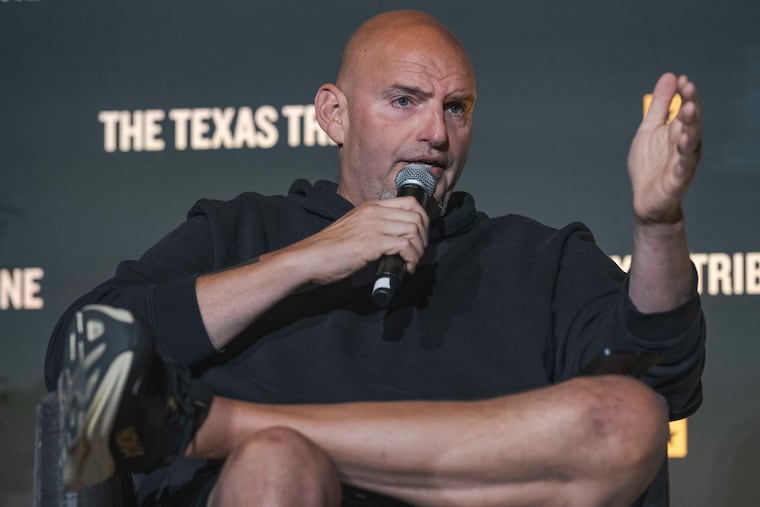
Presumptive U.S. Rep. Chris Rabb won by changing the math.
After the 2023 Philadelphia mayoral primary, my colleagues on the newsroom’s data and politics teams put together a remarkable map of the city. It identified roughly six distinct voter groups: Black pro-establishment voters, less politically affiliated Black voters, young white progressives, wealthy white liberals, white working-class moderates, and Latinos (although, has anyone ever said that this group is not a monolith?).
Pennsylvania’s 3rd Congressional District is home to large concentrations of the first four groups, while lacking a significant presence of the last two. Rabb ran as an unabashed progressive. But unlike many of his left-leaning comrades, he broke the model.
Rabb scored big wins in progressive strongholds like South Philadelphia, taking 76% of the vote in the 1st Ward, and 65% of the vote in the 2nd. But he also won areas that are traditionally associated with affluent liberal voters. While he did not cross the 50% threshold, Rabb was the top vote-getter in Center City’s 5th and 8th Wards, and won a majority of votes in the 15th and 30th Wards, which are right outside the city’s urban core. Rabb also made gains in areas dominated by the Northwest Coalition. He even won, albeit narrowly, the 50th Ward in Northwest Philadelphia. In 2023, Mayor Cherelle L. Parker won 71% of the vote in the 50th, while progressive standard-bearer Helen Gym secured less than 7%.
Undoubtedly, Rabb’s campaign was aided by the fact that he represented the 50th in Harrisburg for years. But this was not the only part of the map where he made serious inroads with Black voters. Even in areas where Rabb placed third, he still outperformed Gym.
It may be that Rabb’s strength comes down to the weakness of his opponents. While pediatric surgeon Ala Stanford began the campaign as the front-runner, she found it difficult to answer hard questions. She also ducked WHYY’s debate, which was hosted by the well-respected journalists Cherri Gregg and Avi Wolfman-Arent. In The Inquirer Editorial Board’s endorsement interview with the three leading candidates, she seemed to struggle with criticism.
State Sen. Sharif Street, for his part, found it hard to win over voters who were skeptical of his strong association with the Democratic establishment. Growing up in Philadelphia, political dynasties were a fact of life. They existed statewide and in both parties. With Street the latest fortunate son to fall short at the ballot box, it may be that both city and commonwealth have turned a page on machine politics and its relationship-focused form of campaigning.
Party’s over
For some, the strong victory for Rabb is a sign that the mayor herself could be vulnerable to a challenge next year. While a contested race would be a boon for political reporters and columnists, I’d pump the brakes on anyone predicting a Parker loss.
The 3rd Congressional District does not cover the whole city, and there are relatively few progressive voters in Brendan Boyle’s 2nd District. Additionally, any progressive challenger would be hard-pressed to repeat Rabb’s performance in Northwest Philadelphia’s Black middle-class neighborhoods, where both he and Parker have deep roots. There’s also the fact that Parker has delivered on what voters across the city described as their biggest concern three years ago: public safety. Last year saw the lowest rates of homicide since the 1960s, and there has been a further 40% reduction so far in 2026.
There is someone who’s likely in trouble, and that’s former congressman and local Democratic Party Chairman Bob Brady.
Not only did Brady’s longtime ally, Street, lose the congressional race, but the local Democratic Party increasingly struggles to fill committeeperson seats and keep progressive challengers from winning them. In both gentrified areas like Fishtown and diversifying areas like Lower Northeast Philadelphia, traditional party leaders are increasingly out of step with the communities they are supposed to represent.
Given Brady took over the party chairmanship before I was born, perhaps it is time to make way for new people and ideas. District Attorney Larry Krasner called for Brady to step aside Thursday on Instagram, saying it was time to put the future ahead of the past.
On the other side of the aisle, the city’s much-maligned Republican establishment managed to defeat its own challenger. Flip Philly Red activist John Allante McAuley, a regular public commenter at City Council who wears his bright red MAGA hat nearly everywhere, finished sixth in the GOP contest for five seats at the State Party Committee. Three years ago, local Republican leaders also managed to keep Sam Oropeza, another MAGA-style activist, from making the fall ballot for Council at-large.
Of course, if President Donald Trump had chosen to intervene, as he did in a congressional race in Kentucky and a Senate race in Texas, perhaps things would have gone a different way.
Tax time
For the last four years, Harrisburg has talked about the need to tax and regulate so-called games of skill. These slot machine-style devices have proliferated at bars, corner stores, and social clubs across the commonwealth. Critics say they are extractive and exploitative and have turned commercial corridors into ersatz casinos. Supporters say the machines help support the small businesses and VFW halls that host them.
Last year, an eleventh-hour push to secure sustainable funding for the state’s transit agencies failed, in part, because legislators were spooked by an ad campaign from sports betting agencies, who would have faced increased taxes in the deal.
According to Spotlight PA political reporter Stephen Caruso, the skill games and sports betting industry spent roughly $10 million to push out incumbent Republicans whom they perceived as hostile to their industry. All three of the targeted Republican state senators appear to have won their primaries.
Consistency needed
Councilmember Quetcy Lozada and her political allies have made it clear they are tired of people questioning their opposition to Turn the Key housing proposals in Norris Square. The problem there, they say, is concern about gentrification, that the homes are targeted at families with too high an income level, and that any development using public land should aim higher.
Yet, when it comes to a Philadelphia Housing Authority proposal to add 61 senior apartments, targeted to folks at roughly the same income levels as Turn the Key, Lozada is supportive. She told the city’s civic design review board that “the development will enhance the streetscape, reinforce neighborhood character, and contribute positively to the long-term vitality of the area.”
I agree with her and am glad she’s supporting new housing in her district.
My question, though, is where’s the consistency? I share the concern that Philadelphia remains affordable for working-class Black and Hispanic families, but that’s exactly what Turn the Key was created to do. According to data supplied by the Land Bank, the vast majority of prospective homeowners in the program are people of color, and their incomes are firmly working-class.
Asking pertinent questions of people in power is my job as a political columnist. It is telling that Lozada has been unwilling to answer.

Inquirer Opinion Newsletter