The killing of Kada Scott ratchets up a clash over development in Germantown | Shackamaxon
Did a City Council member block the sale of a vacant school building where the body of the 23-year-old recent college graduate was later found?
This week’s Shackamaxon focuses on blight and budgets.
The new Battle of Germantown
Despite being initially settled by peace-loving Quakers in the 17th century, Germantown served as the scene for what was likely the largest-ever battle in Philadelphia’s history in 1777.
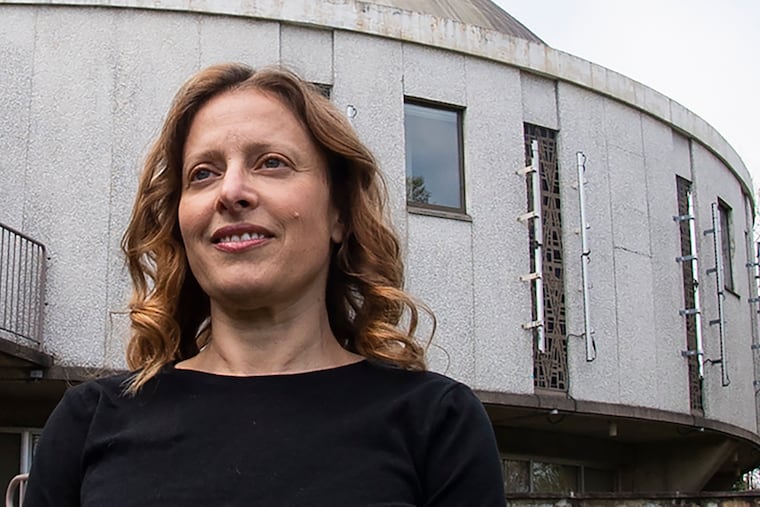
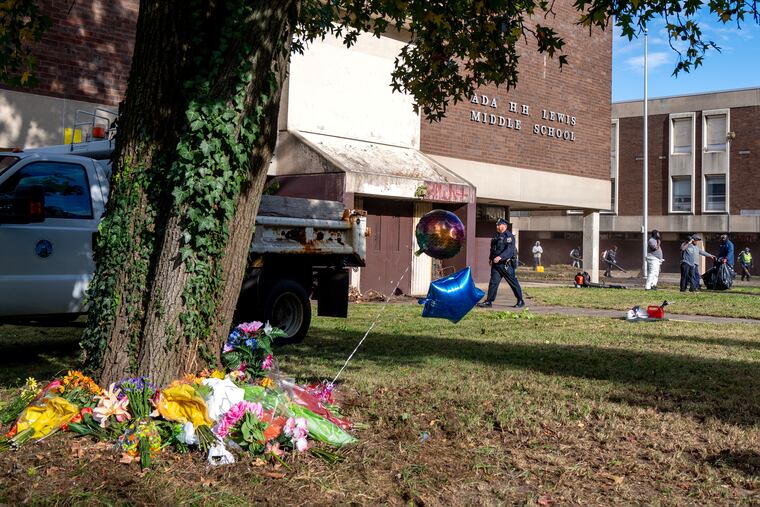
These days, a different sort of fight is the talk of the neighborhood. Tensions in the long-running war of words between Philadelphia City Councilmember Cindy Bass, who has represented the neighborhood since 2013, and developer Ken Weinstein have been ratcheted up by the killing of 23-year-old Kada Scott. Scott’s body was found Oct. 18 in a shallow grave on the grounds of the former Ada H.H. Lewis Middle School, which has sat empty for more than a decade.
The middle school is just one in a series of major properties that have been left empty and undeveloped under Bass’ leadership. The former Germantown YWCA and town hall are also idle, and Bass has proved reluctant to utilize Turn The Key, the city program designed to spur the redevelopment of vacant land.
Residents hope that Turn The Key will prove especially beneficial to their community, which is still recovering from the 2010 bankruptcy of Germantown Settlement, a nonprofit then-managed by Emanuel Freeman, which accumulated dozens of homes in the neighborhood and allowed them to fall into various states of disrepair. These blighted properties attract crime and disorder, and lower the area’s quality of life.
Weinstein, who specializes in reusing historic buildings, signed a letter of intent with the school district back in 2021. He proposed demolishing the school and replacing it with 78 homes.
His plan was endorsed by the local registered community organization and supported by the board of the nearby Awbury Arboretum.
It was not, however, supported by Councilmember Bass.
While Bass denies responsibility for blocking the sale, it did not happen, despite continued interest from Weinstein and initial approval from the district.
Then Scott’s body was found on its premises, provoking the latest salvo.
Weinstein pointed out that the property should not have been left vacant, unused, and available to criminals like Scott’s killer. Bass called the developer’s comment insensitive. She then wrote an op-ed for the Chestnut Hill Local saying that community is more important than profits, asserting that Weinstein’s ideas don’t have backing from the community, and would lead to gentrification in the area.
Council and community
Philadelphia’s district Council members often invoke “the community” to defend decisions that are hard to justify based on facts and reason. Yet, who belongs to “the community” can seem quite self-interested. It often seems like if you agree with the relevant member, you are part of the community. If you don’t, you aren’t.
Yvonne Haskins, who has lived in and around Germantown for 50 years, said Bass hasn’t been listening. She’s particularly saddened by the lack of redevelopment at the former Germantown YWCA.
Bass (here she is again) opposed a plan from Weinstein (here he is again) for the site, which would have included affordable housing.
Instead, Bass steered the property to an out-of-town developer, KBK. The firm has yet to make any progress in renovating the property.
After growing up in the Jim Crow South, Haskins found the story of how the Germantown branch of the Y integrated itself — giving everyone access to the pool inside — inspiring. No white folks were jumping in the water with her down South.
As a product of integration myself, I appreciate Haskins’ admiration for Germantown’s legacy of pluralism and anti-racism. She said that Weinstein, contrary to his portrayal as the greedy pied piper of displacement, is actually a model developer and community member.
Weinstein is working with SEPTA to rehab and reuse five vacant Regional Rail stations, and has fostered the growth of Jumpstart, a program that helps undercapitalized Black and brown Philadelphians break into the real estate industry. Weinstein’s program has been so successful that it has been exported to other cities.
Haskins is also skeptical of claims that Germantown would soon become a new focal point for gentrification in the city. The neighborhood has always hosted a mix of incomes, with affordable apartments and massive mansions sometimes sharing the same block.
The situation on the ground may validate Haskins’ doubts. While Germantown has seen some development interest, it is hardly a real estate gold mine. In fact, nearly 400 units in the neighborhood were recently sold to the Philadelphia Housing Authority, primarily because their owners could not generate the projected profits.
Budget saga ends
All year, Harrisburg Democrats promised that public transit funding was their top priority this year. This turned out to be untrue.
After all, how else can so many of them call this budget deal, which does not add any new money for mass transit, a win?
Gov. Josh Shapiro has said that public transportation is off the table until 2027, which is after his own reelection. This seems to take for granted that he will win, and that the math in the Pennsylvania Senate will change.
While last week’s election results were encouraging for Shapiro and his party, there’s no guarantee the public will feel the same way next year. Even if Shapiro is handily reelected, he could yet again face the same Senate Republican majority that has stymied him his entire first term.
Throughout the budget process, Philadelphia’s delegation repeatedly declined to issue any ultimatums on mass transit, insisting that they trust their party’s leaders to deliver. For the third year in a row, they haven’t.