As the antisemitic Barstool incident shows, there’s nothing ‘provocative’ about hate
Slurs don’t just offend; they deepen fear, inflame tension, and contribute to a climate where people targeted question their safety.
I’m a lifelong Philadelphian. I was raised here, built my life here, and now work daily to advance a more just and pluralistic society in this city.
I’ve always believed in what Philadelphia’s founding promise is: liberty, fairness, and shared responsibility. But in this moment, as a Jewish Philadelphian, I — and many others — feel shaken by how far we are drifting from those values.
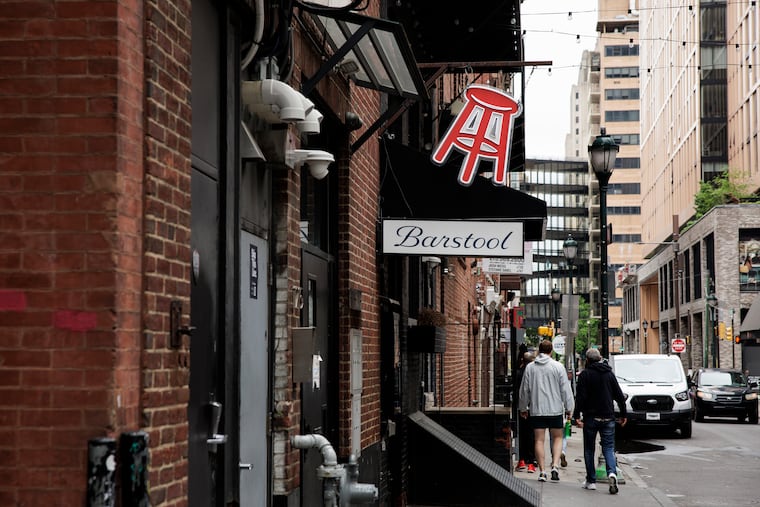
Last week, a disturbing incident took place at Barstool Sansom Street. Patrons ordered a light-up bottle service sign that featured a hateful message that mocked the identity and trauma of Jewish people.
What followed was even more revealing. One of the individuals involved later appeared on a platform known for promoting white supremacist views, where a Jewish business owner was smeared with a slur that has long been used to justify violence and exclusion.
In this moment, as a Jewish Philadelphian, I — and many others — feel shaken.
When challenged, the student claimed on social media that he was merely sharing “a provocative message.” Let me be clear: Bigotry is not provocative — it’s harmful.
Slurs don’t just offend; they deepen fear, inflame tension, and contribute to a climate where people targeted question their safety in spaces that should feel like home.
As someone who works daily to build bridges across Philadelphia’s diverse communities, I know that hatred — whether spoken, posted, or implied — doesn’t exist in a vacuum. It shapes behavior. It forces people to hide parts of themselves. It erodes trust between neighbors.
According to the Anti-Defamation League’s most recent “Audit of Antisemitic Incidents,” Pennsylvania recorded the fourth-highest number of such incidents in the United States in 2024.
These aren’t just statistics. They represent swastikas graffitied in schools, slurs hurled in the streets, online harassment, intimidation on college campuses, and physical threats against Jewish families and institutions. Far too many Jewish Philadelphians are adjusting their routines out of fear — mirroring findings from a recent American Jewish Committee report showing that, for the first time, a majority (56%) of American Jews say they have changed their behavior due to safety concerns.
Parents are having new and heartbreaking conversations with their children about how to stay safe. Students are asked to choose between their Jewish identity and social belonging.
That is not the Philadelphia we should aspire to be.
Far too many Jewish Philadelphians are adjusting their routines out of fear.
And yet, through all of this, Jewish Philadelphians remain deeply engaged in the fabric of our city — guided by a commitment to compassion, justice, and community care.
Our values call us to seek peace, build understanding, and support our neighbors. This spirit is reflected in ongoing efforts to foster dialogue and respond to moments of need with empathy and solidarity.
At the Jewish Federation of Greater Philadelphia, where I work, we are growing our efforts to bring people together across lines of difference. We are expanding school and workplace programming, partnering with faith leaders, and working with allies from all backgrounds who believe — as we do — that hate has no place in our city.
But we cannot do this work alone. We need our city’s leaders — in government, education, business, and culture — to speak out with consistency, not just in moments of crisis. We need policies that protect all communities. And we need public conversations that go beyond sound bites to address the complexity of identity, history, and belonging.
Philadelphia has always prided itself on being a city of bold ideals — revolution, resilience, and responsibility. We’ve been tested before, and we’ve come through stronger. This moment is another test.
Hatred directed at any group undermines the foundations of a just society. It isolates, divides, and makes us all more vulnerable. If we truly believe in brotherly love and sisterly affection, now is the time to live those values out loud.
Let’s not respond with silence. Let’s lead with clarity. Let’s say — together — that there is no place for hate in our city. Not in our bars. Not on our campuses. Not in our streets. And not in our silence.
Philadelphia is better than this. Let’s prove it.
Jason Holtzman leads the Jewish Community Relations Council at the Jewish Federation of Greater Philadelphia.