5 actions leaders of the city’s behavioral health system must prioritize now
DBHIDS must respond to a city contending with overlapping crises: the overdose epidemic, gun violence, rising youth suicide, homelessness, loneliness, and generational trauma.
In October 2020, the Scattergood Foundation published an op-ed outlining eight urgent priorities for Philadelphia’s next commissioner of the Department of Behavioral Health and Intellectual disAbility Services (DBHIDS). Nearly five years later, many of those challenges persist and are compounded by growing hostility toward public health investments and evidence-based approaches. In this context, strong and visionary leadership is more important than ever.
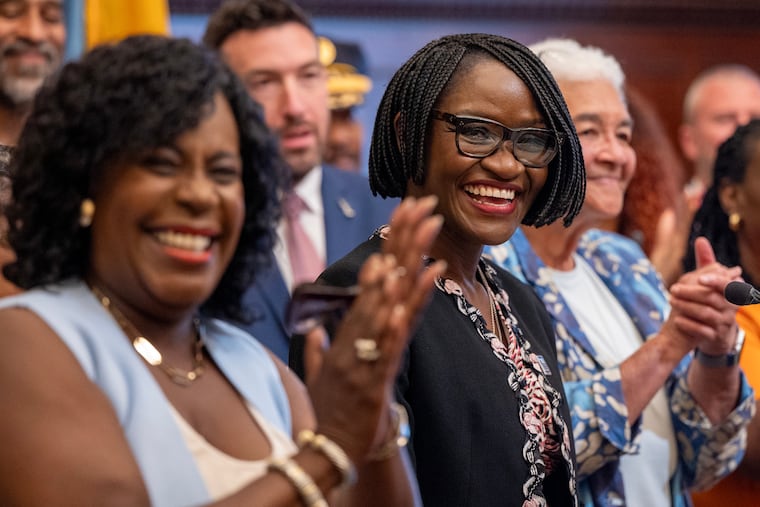
Last week, Mayor Cherelle L. Parker appointed Kehinde “Kenny” Solanke as the new DBHIDS commissioner. She will join Donna Bailey, the Parker-appointed CEO of Community Behavioral Health (CBH), to lead the city’s $1.7 billion behavioral health system.
At the Scattergood Foundation, we’ve had the privilege of working closely with both Solanke and Bailey, and are confident that together, they will bring bold, equity-driven leadership to the role.
This transition comes at a critical moment.
With provider closures and impending Medicaid cuts, the department must respond to a city contending with overlapping crises: the overdose epidemic, gun violence, rising youth suicide, homelessness, loneliness, and generational trauma.
In order to meet these goals, the newly appointed Solanke should work together with Bailey and CBH to prioritize the following five actions:
1. Use data to drive equitable action
Cuts to Medicaid at the federal level will put pressure on our already stressed provider network. In this time of having to do more with less, leadership must critically evaluate the network — its accessibility, quality, and cultural responsiveness.
Drawing from CBH data and metrics that incorporate social determinants of health, leadership can identify both community strengths and risk factors that can align programs to community needs.
Disaggregating data by race, ethnicity, and geography is essential for equitable resource allocation, especially as behavioral health needs rise among immigrant communities, youth, and people in underresourced neighborhoods.
2. Rebuild public trust through accountability and transparency
A 2021 report from the city controller called for stronger oversight. Leadership should seek to expand value-based purchasing and pay-for-performance models to hold providers accountable for quality outcomes. Transparency around performance metrics will increase public confidence and elevate standards.
Moreover, diversifying the DBHIDS and CBH oversight boards — by including service users, family members, immigrants, youth advocates, employers, and workforce leaders — will ensure decision-making reflects the full spectrum of community voices.
3. Bridge city systems and silos
Behavioral health does not exist in a vacuum. Solanke and Bailey must work together to coordinate with the mayor and across agencies, including the Departments of Public Health and Human Services, the police department, the Office of Homeless Services, and the school district, to enable strategic data-sharing and coordinated care.
This includes strengthening support for youth mental health in schools and improving transitions between hospitals, shelters, and community-based services.
4. Build a strong, diverse, and supported workforce
Sustainable, high-quality treatment depends on a well-compensated and representative workforce. Together, Solanke and Bailey can work to improve pay for providers in the CBH network, invest in pipeline programs for professionals from historically marginalized racial and ethnic groups, and value peer specialists — especially those embedded in nontraditional settings, like Same Day Work and Pay programs.
Workers with lived experience should be paid a living wage and have clear paths to advancement.
5. Invest in prevention, recovery, and community wellness
Behavioral healthcare must move beyond crisis response.
The commissioner and CBH should champion initiatives that build well-being across the life span — particularly for youth, immigrants, and isolated adults. This includes:
Expanding access to culturally relevant, community-based care for immigrants and refugees.
Scaling programs that foster connection and healing, especially for youth and older adults.
Maximizing home- and community-based services through digital tools and mobile outreach.
Clarifying and communicating policies in neighborhoods like Kensington to rebuild trust and reduce tensions between providers and residents.
Advancing coordination around the 988 crisis line to ensure smooth linkages to care, especially for people navigating multiple systems.
Proactively addressing Medicaid funding shifts that threaten provider stability.
The challenges are complex, and the stakes are high. But with visionary, equity-driven leadership, DBHIDS and CBH can work toward healing, safety, and resilience across Philadelphia.
The Scattergood Foundation remains steadfast in our commitment to partnering with DBHIDS and CBH, the mayor’s office, and community stakeholders to make this vision a reality.
Joe Pyle is the president of the Scattergood Foundation. Kim Paymaster is the grants director for the Conservation Alliance and board chair of the Scattergood Foundation.