Seeing eye dog? This blind Philadelphian says ‘No, thanks’
Stories about volunteers training guide dogs for the blind are feel-good stories. But has anyone bothered to ask blind people why so few of us have service dogs?
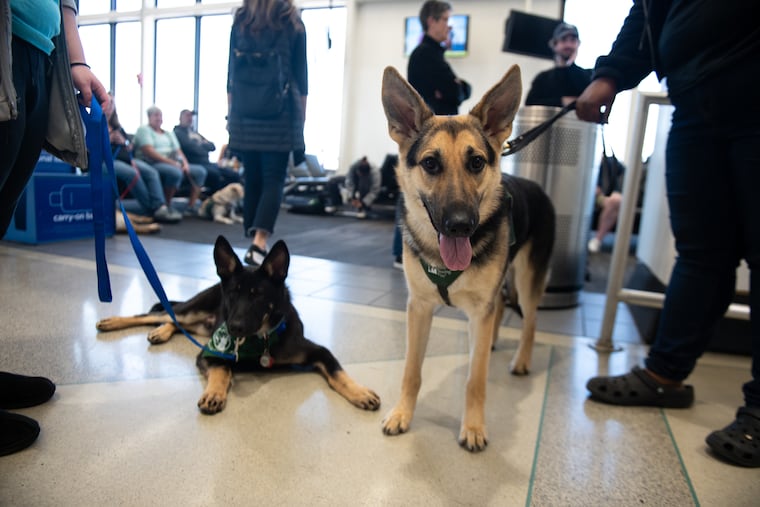
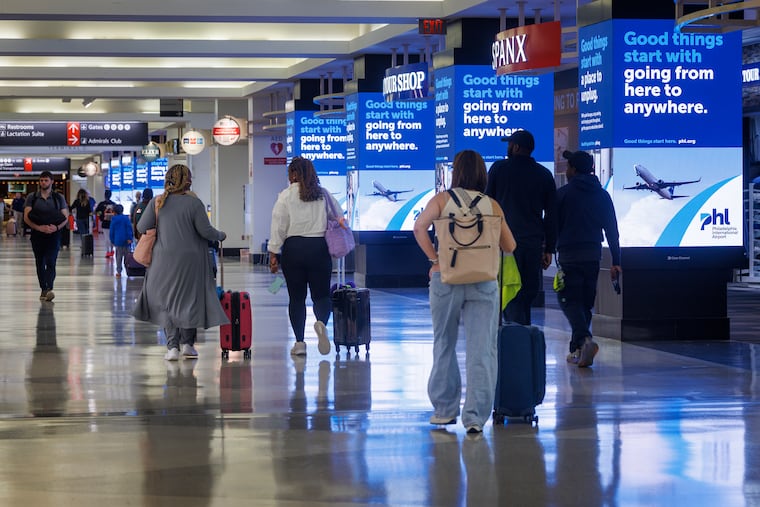
There is nothing quite like a feel-good fluff story. There was a good one recently, about Seeing Eye volunteers acclimating puppies to the Philadelphia Airport concourse and to an airplane. You will be forgiven if you came away from it thinking that all must be well in the world of blind people — because we have such wonderful dogs.
But ... only 5% of blind or severely visually impaired people have guide dogs and few people bother to ask us why that is.
Consider this my testimony.
First of all, to have a guide dog, it helps if the blind person lives in a home with certain accessibility — including nearby veterinary care, dog parks, safe areas to walk the dog, proximity to pet supply stores, and so forth. The home itself must not contain items, plants, other animals (or people!) that could harm the dog.
Since 75% of blind people are unemployed, even during good times the probability of living in such ideally situated and appointed homes is not guaranteed.
Blind people suffer from a lot of stereotypes and barriers in our society that prevent and limit our full participation. Guide dogs can, and often do, attract more of these difficulties.
Ride services such as Uber and many restaurants simply do not want to accommodate guide dogs. Even though the law says you must allow guide dogs to enter a transit vehicle or restaurant, many do not permit it. A significant number of the legal disputes between blind people and institutions are over service animal issues. And that means a blind person must have access to legal representation. Many of us are having a hard enough time without this added layer of difficulty.
Also, depending on the guide dog, it can require a lot of extra time to care for the dog and to make sure the dog uses its leading skills every day.
There are many circumstances in which using a guide dog is not recommended. These can include loud environments — for example, the hundreds of rock concerts I produced professionally, and from which I made a living.
Additionally, many blind people do not take their guide dogs on vacations, particularly to conventions where other guide dogs might be present, or choose not to take their guide dog to a wilderness area.
In all of these instances it means the guide dog is going a prolonged time without its accustomed routine. And without that routine, the guide dog’s effectiveness will diminish when the blind person returns and needs to rely on it.
Further, there is the inappropriate attention the dogs get from the general public. Many people will go over to the dogs and talk to them or pet them while they are working. This can interfere with the dogs’ service.
There are also differences depending on the facility that trains them, but generally guide dogs know only a couple of commands beyond what a typical pet dog would know. Most of these commands have to do with simple directions such as left, right, forward, and stop.
And it’s important to remember that the dogs do not know where the Philadelphia Airport is, nor Independence Mall, nor LOVE Park, or any other location. The dog is under the control of the blind person, not the other way around.
Most blind people do very well with traditional cane skills and their senses, especially hearing and common sense.
» READ MORE: Changing the timing of traffic lights in the city would make it safer for disabled pedestrians | Opinion
Many will also supplement with audible GPS units, which can inform them as to the addresses and businesses around them as they walk. Such GPS guidance can be done with smart glasses or loaded onto cell phones. Many of the simpler GPS systems for the blind don’t cost any money.
These are just a few of the reasons why blind people choose not to have guide dogs.
Instead of the thousands of dollars that it takes to get a dog to a blind person, plus the countless hours of training, most blind people will continue to get a long white cane. They cost a lot less. And even if you break one every once in a while, or have to replace the tips, you probably won’t spend more than $30 or $40 on a cane over a couple of years.
I can only think of one good reason to have a guide dog and that is — you were going to have a pet dog anyhow. And so you decide that the dog might as well earn its keep.
And, if you are a responsible blind person and go to a responsible training center and follow all of the necessary rules, then I am happy for both you and your dog.
But for me it is a clear, and resounding, “No, thank you.”
David W. Wannop is a resident of the Washington Square West section of Center City.