How and why Trump’s Caribbean Sea operation is being conducted has endangered trust
If this is a hemispheric war — and not peacetime — Congress should constitutionally “declare war” rather than an abrupt renaming of civilian drug runners as “narco-terrorists.”
There’s a military saying that “piss-poor planning means piss-poor execution.”
Unfortunately, the execution of how the Trump administration is using America’s military to conduct its counter-drug operations in the Caribbean Sea has had poor planning.
First, 100% of fentanyl comes across the U.S.-Mexican land border — usually carried by U.S. citizens — while almost three-quarters of U.S.-bound cocaine sails via the Pacific Ocean.
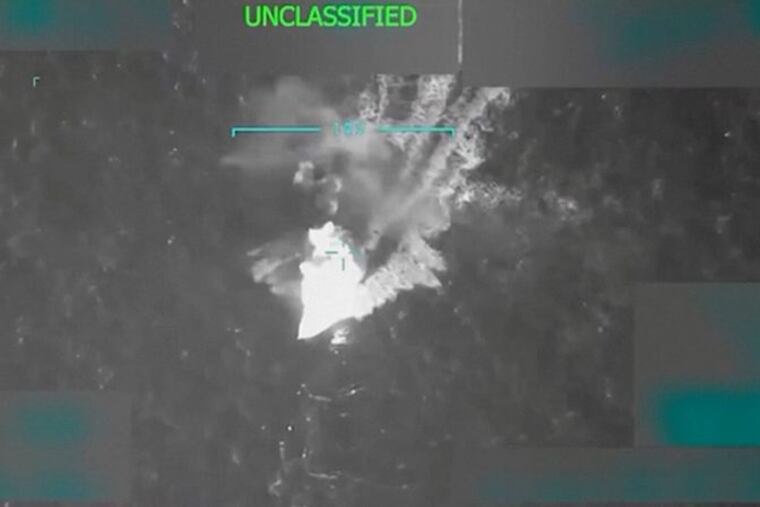
The residual cocaine begins a Caribbean transit, but only 3% is en route to our water borders. Most sail to Central America or Mexico for land transport to America. The first five small vessels our military has struck, killing 32, were in the transit zone for cocaine destined not to the United States, but for islands that forward it to Europe and West Africa.
As a result, the administration’s current approach in the Caribbean makes any meaningful interdiction of drugs headed to America unlikely in what is an already tough hunting ground: 100,000 or more vessels — including unregistered or unbeaconed watercraft — are normally at sea in the Caribbean. I experienced this vast challenge while supporting a U.S. Coast Guard Law Enforcement Detachment (LEDET) onboard my ship, understanding why the Coast Guard’s interdiction rate hovers between 7%-15%.
Moreover, drug cartels recruit vulnerable U.S. citizens to be the primary “mules” for fentanyl because they are less likely to be inspected at legal U.S. border crossings. That is where substantial interdiction must occur if the administration is serious about stopping drugs from coming to the United States.
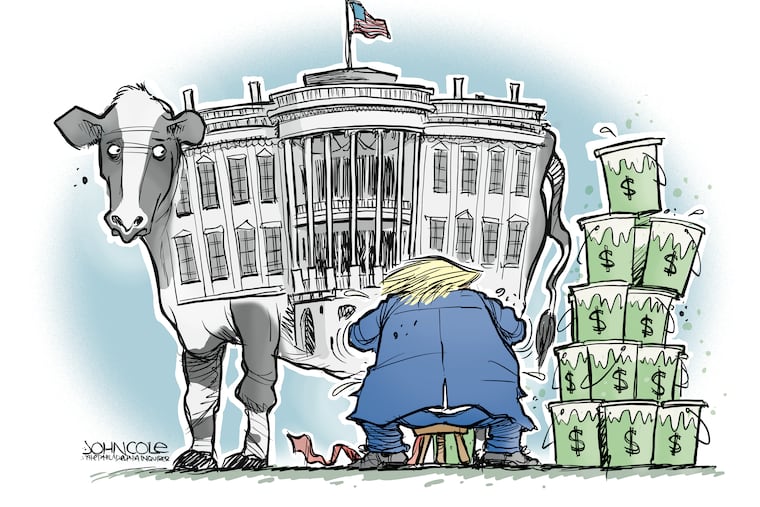
Similarly, the cartels elicit the impoverished — such as poor fishermen — to do their seaborne smuggling. Criminals? Yes. “Narco-terrorists”? According to the administration, yes, after President Donald Trump designated eight drug cartels as foreign terrorist organizations (FTOs).
Just as it did for al-Qaeda and ISIS, an FTO designation makes drug-runners and carriers “unlawful combatants” in a “Non-International Armed Conflict (NIAC).”
The appropriateness of [U.S.] justifications has consequences for military commanding officers.
Also, like them, to be legally labeled as an FTO, the drug cartels must: 1) exhibit “politically motivated violence,” 2) execute a combination of frequent and/or severe hostilities, and 3) have an extensive command and control structure.
However, the administration’s two principal justifications for meeting these three criteria were the number of U.S. drug overdose deaths (80,000 last year) and that the cartels’ violent activities are undermining the stabilization of the Western Hemisphere.
The appropriateness of these justifications has consequences for military commanding officers: U.S. and international law forbid them to use deadly force against both American and international civilians. Operational officers go through rigorous training regarding this “principle of distinction.”
Moreover, since the Navy operates on the “public commons” of the seas, it issues the Commander’s Handbook on the Law of Naval Operations that makes it clear it is “manifestly illegal” to comply with “an order directing the murder of a civilian [or] a noncombatant.”
Adm. Alvin Holsey, commander of U.S. Southern Command overseeing the counter-drug interdictions, recently resigned, reportedly because he deemed the strikes as possibly illegal.
It’s unquestionably disconcerting to be given a new legal interpretation of “political violence” and “severe hostilities” that suddenly changes who has always been a “civilian” into a “combatant.”
It’s disquieting because it’s already tough “out there” in terms of ensuring wise judgment. For example, in 1988, a Navy cruiser in the Persian Gulf shot down an Iranian airliner with the loss of 290 civilians because it had mistaken it for a fighter plane in peacetime.
A few years later, as I entered the Strait of Hormuz, an Iranian warplane took off from a nearby airfield and headed for my ship. My crew was well-trained, with missiles ready if “hostile intent” was determined. It flew low overhead — the first time the Iranian military had done so — then continued on its way, much as Chinese warplanes have done.
If this is a hemispheric war — and not peacetime — Congress should constitutionally “declare war” rather than an abrupt renaming of civilian drug runners as “narco-terrorists.” Otherwise, the sudden denial of “civilian-ship” after years of legal and moral training places our military leaders’ judgment into its own legal and moral quandary.
This is especially pertinent coming after Defense Secretary Pete Hegseth’s recent admonition to senior military leadership that there should be “no more politically correct and overbearing rules of engagement, just common sense, maximum lethality and authority for warfighters.”
This followed the secretary’s removal of the head of each service’s Judge Advocate General’s Corps (the military’s legal branches), as well as his closure of the Civilian Protection Center of Excellence, established to minimize civilian casualties in military operations.
Finally, with a tenth of all deployed U.S. Navy combatant forces now dedicated to drug interdiction — a nuclear submarine, a three-ship amphibious ready group, and five surface combatants — there is a cost to warfare training. We should be focused on our responses to threats from sophisticated subs, missiles, ships, aircraft, and space — especially as coordination is jammed and cyberattacked within a carrier battle group of ships.
» READ MORE: America’s warfare readiness may be a concern, but Hegseth is looking in all the wrong places | Opinion
Losing this type of training has come when warfare readiness is already poor: 40% of the U.S. attack submarine fleet is out of commission for repairs — double the Navy’s target rate, overall amphibious ship readiness for war is just 41%, and while surface combatant readiness has risen, it is only 68%.
If, as reported, the less adept — although deadly — Caribbean operation is intended as a prelude to force Venezuelan President Nicolás Maduro from office, the American people should know why their military men and women are sailing in harm’s way.
Trust in a commander — or commander in chief — is the military’s most precious asset. And while trust might be the biggest deficit in politics, it is not in warfare.
How and why this Caribbean Sea operation is being conducted — either as a professional drug interdiction operation or as a prelude to an intervention in another country — has endangered this trust.
As the top operational commander’s resignation appears to confirm.
Joe Sestak is a former Navy vice admiral, a former U.S. representative for Pennsylvania’s 7th Congressional District on the House Armed Services Committee, and director for defense policy of the National Security Council staff.