Americans told to watch what we say about ‘free speech icon’ Charlie Kirk
Professors, teachers, journalists, and others get canceled for what they said about right-wing free speech advocate Charlie Kirk.
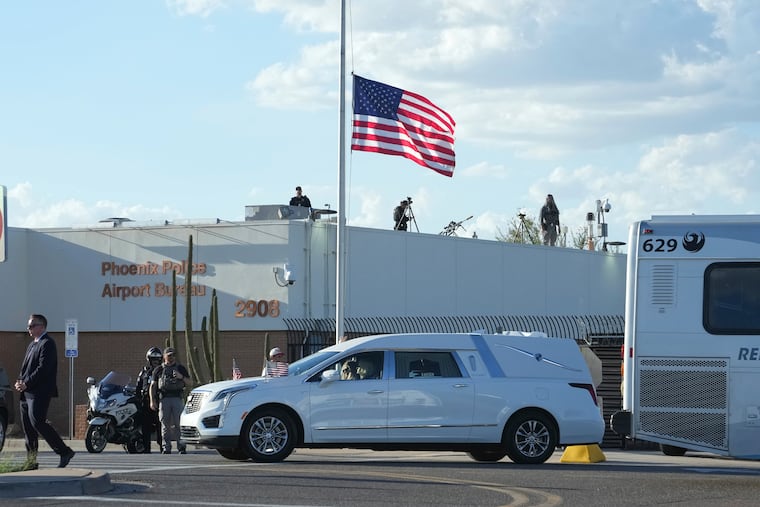
It was oddly fitting last Thursday to see the breaking news about the hunt for the campus assassin of right-wing radical Charlie Kirk merge almost seamlessly into the national commemorations for the 24th anniversary of the Sept. 11, 2001, terror attacks.
While the scale of tragedy was vastly different, it was quickly becoming clear that Kirk’s murder was on track to produce the same type of numbing, censorious, and ultimately undemocratic aftermath, even as Republican leaders hail the slain 31-year-old activist as an avatar for the American right to free speech.
You could hear echoes from the fall of 2001 — a moment when any stray comment that didn’t jibe with the enforced national mood could get you fired, and a cowed news media put on American flag pins and fell in line. It was best captured by then-White House press secretary Ari Fleischer, who famously told a briefing two weeks after the al-Qaeda attacks struck New York, Washington, D.C., and Shanksville, Pa., that “all Americans … need to watch what they say, watch what they do.”
Fleischer’s remarks were viewed by some contemporary critics as un-American (and he has strived to downplay them). A generation of national devolution into unfiltered political rage later, those comments from the White House podium feel practically quaint.
In a Fox News segment discussing what the conservative network branded “the left’s dangerous rhetoric,” top White House aide Stephen Miller proclaimed this weekend, in a presumed shot at those still criticizing Kirk’s extremist views after his death, that “the power of law enforcement under President [Donald] Trump’s leadership will be used to find you, will be used to take away your money, take away your power and if you have broken the law, take away your freedom.”
What a beautiful tribute to Kirk’s professed love for campus free speech, which … OK, hopefully my sarcasm here won’t get me in trouble with either the U.S. government or the pro-Trump online goon squads. But it might.
A week before Kirk is memorialized at an Arizona football stadium and buried, an assortment of Americans, ranging from high-profile TV pundits and professors to everyday folks like schoolteachers, are getting fired or facing dire threats because of their comments following the assassination.
Some seemed to celebrate his death — terrible, but also not illegal — but others face sanctions for daring to speak the truth: that Kirk’s love for free speech was mainly for those who agreed with him, and that he frequently used his First Amendment rights to spew hate speech toward Black people, the LGBTQ community, immigrants, and liberals.
Exhibit A is Matthew Dowd, who — irony alert — was chief political strategist for George W. Bush when he was reelected after 9/11 in 2004, and later became a Trump critic and commentator on MSNBC … until Wednesday. That’s when Dowd noted on air, just a short time after Kirk was shot at Utah Valley University:
”He’s been one of the most divisive, especially divisive younger figures in this, who is constantly sort of pushing this sort of hate speech or sort of aimed at certain groups. And I always go back to, hateful thoughts lead to hateful words, which then lead to hateful actions.”
Harsh words, for sure, amid the surge of raw emotions as Kirk’s shooting and death were still being reported — but everything Dowd said was either true or a valid assessment of the cyclical nature of political violence. Yet, MSNBC — yes, the same so-called liberal network that in 2003 fired a progressive Phil Donahue as out of step with the post-9/11 zeitgeist — canned Dowd in a matter of hours.
To be sure, some public reactions to the murder of the divisive Kirk — the Carolina Panthers communications staffer who posted Wu-Tang Clan’s “Protect Ya Neck,” alluding to the site of the fatal wound — were gross and called for sanctions (he was fired). But many other incidents reeked of McCarthy-era paranoia. Reuters summed it up with perhaps the perfect headline: “Charlie Kirk’s allies warn Americans: Mourn him properly or else.”
For example, a reporter for the website Floridapolitics.com was suspended last week for texting the MAGA extremist U.S. Rep. Randy Fine a post-shooting question about, well, Florida politics — specifically the gun control issues raised by a shooting on a college campus. Fine complained to the reporter’s boss that the question was wildly inappropriate just minutes after he’d learned of Kirk’s death.
An assistant dean at Middle Tennessee State University posted online that she had “ZERO sympathy” for Kirk after the shooting, and immediately came under attack from her state’s powerful GOP Sen. Marsha Blackburn, who tweeted the woman should be ashamed and fired. Subsequently, the MTSU administrator was indeed sacked.
» READ MORE: Charlie Kirk’s murder is a wake-up call for both the left and right: We need college free speech | Will Bunch
Some of this unholy war against Kirk critics is led by powerful and politically connected private citizens, like close Trump ally Laura Loomer, or one of the world’s richest people, Elon Musk, who used his massive platform X to share a list of 66 mostly everyday folks who’d posted negatively about Kirk, which seemed certain to sic an online mob against them.
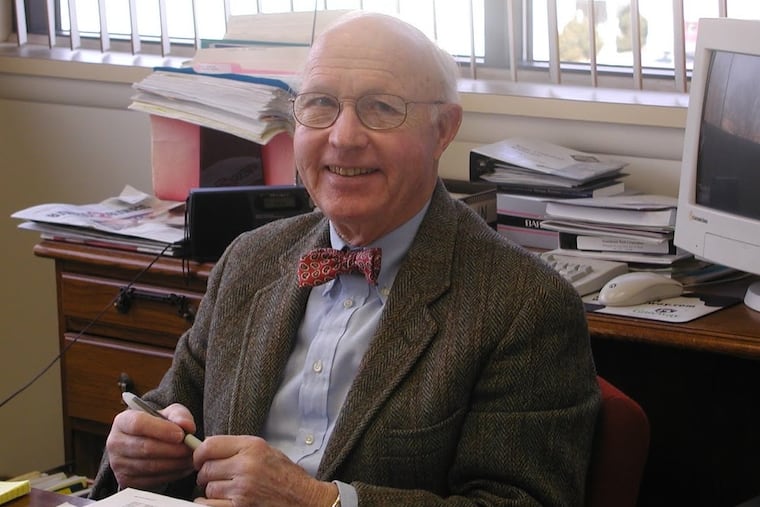
I find this disturbing, yet not as troubling as the role of elected officials like Fine, Blackburn, or Pennsylvania GOP Sen. Dave McCormick, who has called on the University of Pennsylvania to take “decisive action” against its top climate scientist, Michael E. Mann (a personal friend of mine), after Mann reposted but later deleted some online criticisms of Kirk.
It’s legal for a private employer to fire or suspend you for something you say, but it’s unconstitutional for the government to sanction citizens for voicing their opinions — even crude or unpopular ones. Yet, that’s where this thing is rapidly heading.
Florida’s GOP education commissioner warned classroom instructors that their teaching licenses could be suspended or revoked for making what he called “disgusting” comments about Kirk’s killing — a civics-textbook-worthy First Amendment violation. Added Louisiana GOP Rep. Clay Higgins: “I’m going to use Congressional authority and every influence with big tech platforms to mandate immediate ban for life of every post or commenter that belittled the assassination of Charlie Kirk.”
These threats would be alarming on their own, but they come against a backdrop of growing conservative threats to academic freedom that make a complete mockery of the same Republicans praising Kirk’s complicated commitment to free speech. Wrapped around the assassination came the firing of a Texas A&M instructor for bringing up gender in a children’s literature class, and Stanford officials giving the Trump regime a list of 160 students and professors who might be linked to antisemitism, an ear-splitting echo of the 1950s’ Red Scare.
Will this new GOP McCarthyism emerging from the tragedy of Kirk’s murder force Americans to “watch what they say, watch what they do”? It clearly already is. We don’t know how many random online posters have pulled their punches in calling out Kirk’s long and well-documented history of hateful comments. But we can see the mainstream media — the same folks who were afraid to question the rush into an unrelated and pointless war after 9/11 — now working overtime to whitewash Kirk’s legacy.
The much-criticized New York Times column by Ezra Klein, which argued that the slain right-wing rabble-rouser “did politics the right way,” or surprising comments from the revered sportswriter Sally Jenkins that “he argued with civility,” marked a complete suspension of the core journalistic value of looking at what Kirk actually believed and said.
Sure, Kirk went to college campuses and didn’t ban liberals from his events, and looked to debate them — a good thing that we should hope to see emulated in a time of angst over free expression. But Kirk was also a raging hypocrite about free speech — his Turning Point USA sought to blacklist scores of liberal academics — and made so many immoral or false statements about his fellow Americans who were gay or transgender or Black or Latino or liberal that it would require a whole separate column.
Do words, and the content of what people say, even matter anymore? As Kate Tuttle, the books editor of the Boston Globe, posted: “I shouldn’t be shocked, but I’m still always brought up short to realize how many people think ‘civility’ means ‘white people speaking in relatively calm voices’ no matter what vile [stuff] they say.”
No matter how much either cowed or vision-impaired journalists and Democrats prattle on about civility, it’s increasingly clear that incendiary GOP rants like Miller’s are not idle talk, but a raging desire to use the fallout from this assassination to bludgeon their enemies on the left. The right-wing poster who gleefully said the quiet part out loud and compared Kirk’s killing to the 1933 Reichstag fire that enabled Nazi dictatorship may have been exaggerating, but only slightly.
Asha Rangappa, the lawyer and former FBI agent, said that what people need to understand about the Kirk fallout is that “Americans are being conditioned to be snitches on their fellow citizens who don’t toe a party line on what is ‘allowed’ to be expressed. And employers are going along. It’s the new secret police.”
It would be pointless to call out the utterly ridiculous irony of turning Kirk into a statue-worthy icon of American free speech while threatening to destroy any citizen who offers a different opinion — or merely repeats the things Kirk actually said. That’s because the fascists who run our government and are now pressing its full weight upon our free speech don’t do irony. Millions of Americans are already terrified to say what they really think. Those of us who aren’t yet intimidated now know that every public opinion might be our last.
» READ MORE: SIGN UP: The Will Bunch Newsletter