The street of the future isn’t just for cars — it’s designed for life
An innovation in Chinatown that uses a movable market stall to turn a roadway into a pedestrian plaza could create temporary community spaces throughout the city.
We are standing at the crosswalk of a bold new era in street design and management.
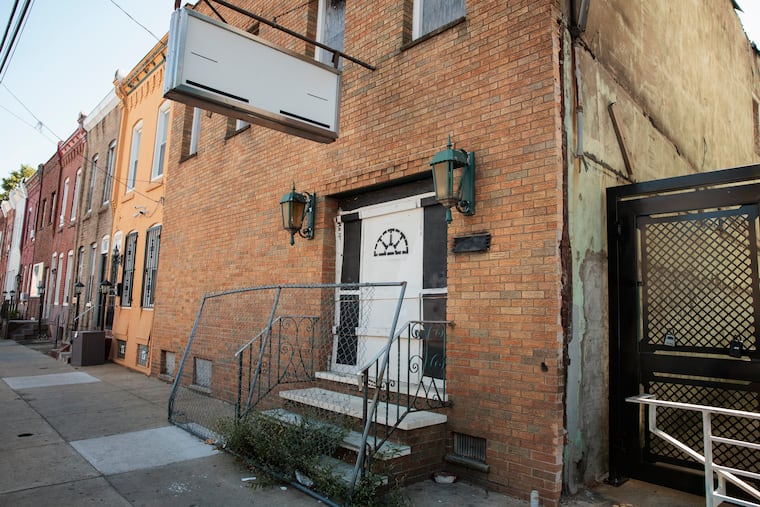
Streets make up roughly 30% of a Philadelphia’s land. Yet, most are locked into a single use: moving and storing cars. What if, instead, we treated them as dynamic public spaces capable of changing function and meaning depending on the time of day, the season, or the needs of the neighborhood?
That question guided a recent pilot project I helped lead in Chinatown, which will be unveiled next month. As part of "the Chinatown Stitch" — an ambitious effort led by the city’s Office of Transportation and Infrastructure Systems, with state and federal partners, meant to heal a neighborhood long divided by transportation infrastructure. Our team designed a movable market stall, a piece of street furniture that serves as both a vendor kiosk and a community gathering space.
During Chinese New Year or other festivals, when the streets overflow with people and energy, the stall slides into the roadway, transforming asphalt into a festive plaza. When the celebration ends, it retreats, making way for traffic once again.
A vision for cities that recognizes streets as living systems, not fixed infrastructures.
For a neighborhood starved of public space, this small, movable structure has become a powerful symbol: The street itself can flex, adapt, and respond. It embodies what planners and landscape architects call the Flexible Street Strategy — a vision for cities that recognizes streets as living systems, not fixed infrastructures.
Open Streets
For more than a century, street planning has been governed by rigid right-of-way definitions. Sidewalks for walking. Lanes for driving. Curbs for parking. These rules answer only one question: what belongs where? The flexible street concept asks another: when? When should a street prioritize cars, and when should it belong to people?
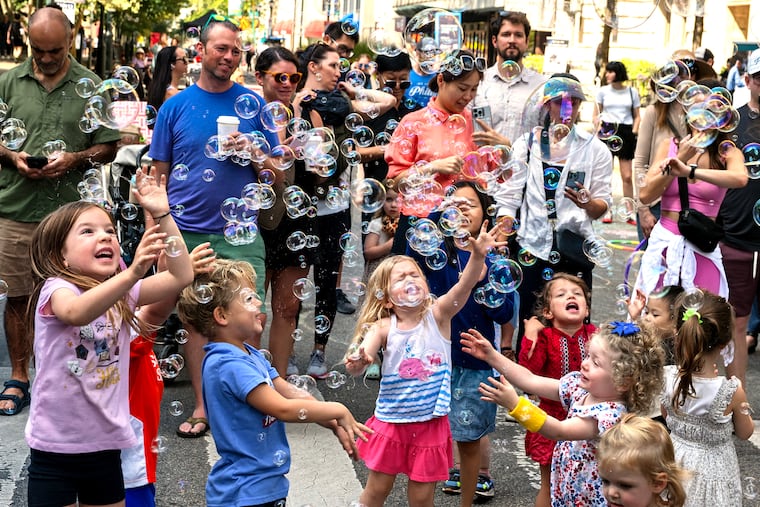
We’ve already seen glimpses of this transformation elsewhere in my hometown. Consider Philadelphia’s Open Streets: West Walnut, hosted by Center City District. Every Sunday from 10 a.m. to 5 p.m. in summer, several downtown blocks are closed to vehicles and opened to people.
Based on research my team completed last summer, the results have been stunning. Foot traffic soars. Businesses thrive. And, perhaps most tellingly, children return. On a normal day, we counted two kids passing through a block in 15 minutes. During one Open Streets event, that number jumped to 39.
It’s not just a statistic; it’s a story of safety, belonging, and joy. For once, the street was everyone’s.
When the Open Streets program began, its organizers expected bureaucratic hurdles — clashes between departments, debates over lost parking revenue. Instead, city agencies from streets to parking embraced it. Post-pandemic, there’s a new understanding: Streets are no longer merely conduits for cars. They are the connective tissue of civic life.
The success of the program, first launched in 2024 and revived last summer, has inspired plans to expand across downtown. But as encouraging as such pilots are, they still exist as exceptions to the rule. But the Flexible Street Strategy holds that flexibility should not require special permission. It should be baked into the DNA of how cities plan, design, and manage their streets.
This means rewriting the system itself. Instead of rigid right-of-way codes, cities need regulatory frameworks that acknowledge streets as time-based spaces — spaces whose use shifts dynamically according to demand, culture, and context.
To move from philosophy to practice, flexibility can now be managed with precision through technology.
Using digital twin models, IoT sensors, and AI-driven analytics, our team is building a data platform that identifies “flex windows” — hours when converting a street from traffic to pedestrian use offers the greatest benefit with the least disruption. The system integrates live data on street anchor activities (schools, restaurants, parks, etc.), traffic volumes, safety, and equity to recommend optimal transformation times.
A community stage
Still, the real power of the flexible street idea lies in its simplicity. It doesn’t require new infrastructure — just imagination, data, and a willingness to test. Its nonpermanent, pilot-friendly nature allows cities to experiment at low cost and low risk. Just like the market stall installed in Chinatown, which amplified existing street events and vividly showed how a street can transform into a stage for community life.
If the official Chinatown Stitch aims to reconnect neighborhoods divided by a sunken highway through large-scale infrastructure, our market stall serves as a micro-stitch — achieving the same goal on the scale of the city block by redefining the street as public space and reconnecting residents, shops, and everyday social life.
Although the Chinatown Stitch funding was cut by the Trump administration’s One Big Beautiful Bill Act, the project has still secured planning funds. Led by OTIS and PennDot, the whole design team is actively finalizing the design. The market stall pilot project is part of this work and serves as an important advocacy and outreach tool for the overall project, supported strongly by Philadelphia Chinatown Development Corporation.
At the end of the day, whether they recognize it or not, our cities no longer have the luxury of static infrastructure. Between climate change, social fragmentation, and changing mobility patterns, flexibility is not a design preference — it’s survival. The street of the future isn’t just paved for movement; it’s programmed for life.
If we want streets that truly belong to everyone, we must give them the freedom to change.
Yadan Luo is a landscape architect, lecturer in the Department of Landscape Architecture at the University of Pennsylvania Stuart Weitzman School of Design, and the creative director of YH LAB.