Kensington cannot be explained by a one-day survey of its homeless population
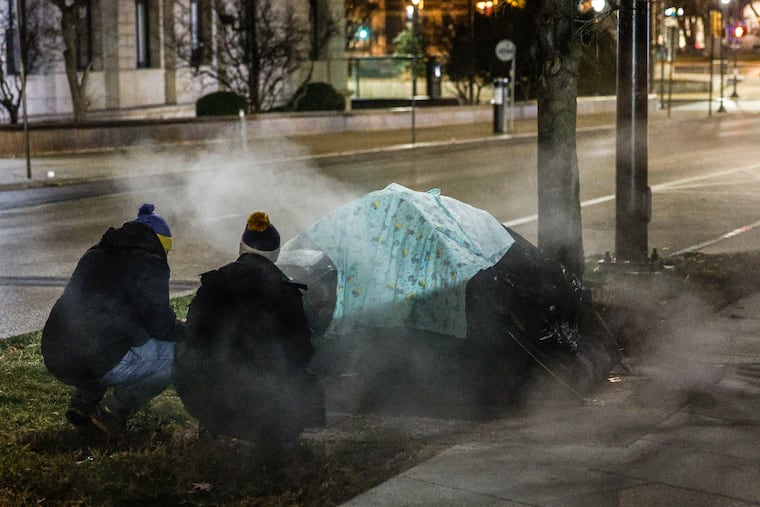
When I see Kensington, where tents cluster under the El, I do not see people who chose this life. I see what happens when everything holding a person up falls away, writes Danea Glover.
A few months ago, I quietly disappeared.
I did not move. I did not stop caring about people. I got sick. Chronic health problems forced me out of the normal rhythms of life. I stopped showing up to church, work, gatherings, the everyday places where people knew my name. At first, people checked in. Then less. Then life moved on. No one meant to leave me behind. They just could not see me anymore.
It is startling how quickly a person can become invisible.
During that time, I learned something I cannot forget. Stability is not just about determination. It is about structure. Routines. Responsibilities. Places to be. People expecting you. When those disappear, even capable people struggle to stay grounded.
I had housing, education, medical care, family, and faith. And still, I felt myself drifting.
So when I see Kensington, especially the blocks beneath the Market-Frankford Line where tents cluster against concrete pillars, I do not see people who chose this life. I see what happens when everything holding a person up falls away.
Each year, Philadelphia conducts what’s known as a point-in-time count, a federally required survey that tallies people experiencing homelessness across the city on a single winter night. The most recent count found more than 5,500 people without stable housing, with a large share living unsheltered.
But Kensington cannot be explained in one night.
What is visible there today took decades.
When people talk about Kensington, they talk about drugs, crime, tents, danger. It sounds as if the neighborhood suddenly collapsed. But no one wakes up one morning and decides to ruin their life. Neighborhoods do not fall apart overnight either.
Kensington is not a failure of character. It is a failure to step in early.
For years, we have responded to addiction only after things reach crisis level. Outreach teams arrive after people are already on the street. Treatment comes after years of trauma and instability. Police step in after harm has happened.
Moving people from one block to another does not fix what led them there.
Long before drugs enter the picture, warning signs are there. Childhood adversity, unstable housing, untreated mental illness, and chronic poverty all increase the risk of substance use and homelessness.
The things that protect people are not complicated. A stable place to live. A school that works. A job that pays enough to survive. Safe public spaces. Doctors who are accessible. Neighbors who know you. Someone who would notice if you stopped showing up.
Most of all, people need to feel they belong somewhere.
When that disappears, people find whatever helps them get through the day.
Many people in Kensington are not only dealing with addiction. They are dealing with loneliness, trauma, fear, and exhaustion. Drugs may look like the problem from the outside, but often they are also a way to dull pain that has nowhere else to go.
Moving people from one block to another does not fix what led them there. Arrests remove individuals, not the reasons they fell through the cracks. Short-term solutions can make things look better without making lives better.
Meanwhile, children are growing up in the same unstable conditions that produced this crisis in the first place.
If we want to prevent another Kensington, we have to act earlier. Support families before they disintegrate. Make schools places of stability. Expand mental healthcare. Create real job pathways. Invest in communities so people do not have to leave to survive.
Recovery is not only medical. It is social. People need safety before stability, housing before progress, and connection before hope.
» READ MORE: HUD funding shift would disregard proven solutions to homelessness and destabilize programs | Opinion
My own period of isolation showed me how much we all rely on community to stay afloat. Take that away, and even resilient people struggle. Multiply that experience across years of poverty, violence, and untreated trauma, and the outcome becomes painfully predictable.
Kensington is not an exception. It is a warning.
Counting people on one winter night may help direct resources, but it will not stop the next wave of suffering.
The question is not how to clean up Kensington. The question is how to stop creating more places like it.
Danea Glover is a public health doctoral student studying prevention, trauma, and community resilience.