Words have consequences, especially when you are Jewish
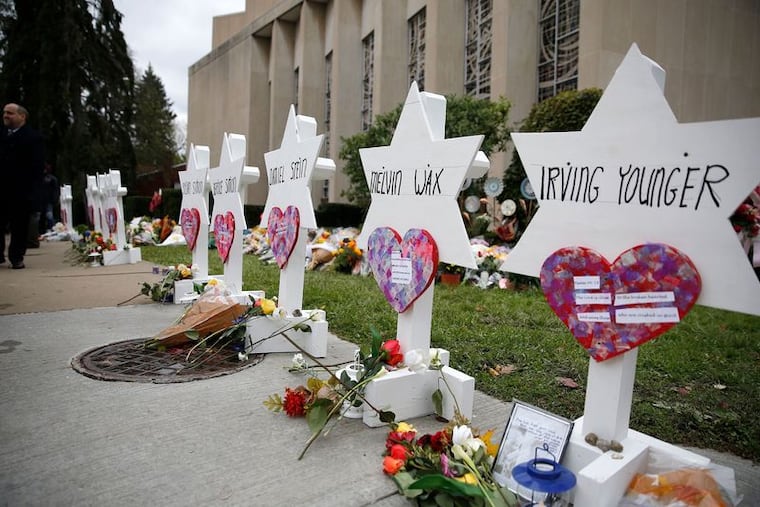
Jews in America had long been insulated from violent antisemitism. The Tree of Life synagogue massacre in Pittsburgh, and the hundreds of incidents it precipitated, have changed that.
Last month, a Pittsburgh-area man admitted in federal court that he made an online antisemitic threat to a public official.
“Go back to Israel or better yet, exterminate yourself and save us the trouble,” Edward Owens Jr. wrote on Facebook Messenger, adding, “we will not stop until your kind is nonexistent.”
This was not some random act — it is part of a larger issue of rising political violence, and an example of what many Jews encounter when they turn on their phones or scroll through their feeds.
The American Jewish Committee’s just-released “State of Antisemitism in America 2025 Report” lays bare the scope of the problem. Online is where American Jews experience antisemitism the most, with 73% seeing or hearing antisemitic content or being personally targeted.
Of those who experienced online antisemitism, 54% found it on Facebook — up 7 points from 2024 — while 38% experienced it on YouTube. That is an especially alarming number, given that it demonstrates an 11-point jump from the year before. Instagram and TikTok also saw concerning increases in reported antisemitic content.
What were once quiet murmurings are now getting very loud. Words matter. AJC’s report found that 55% of American Jews are altering their behavior out of fear of antisemitism. That includes the 39% who are not posting content online that could identify them as Jewish or reveal their views on Jewish issues.
The report found that 55% of American Jews are altering their behavior out of fear of antisemitism.
It’s self-censorship as a means of self-preservation. You don’t know who is reading or who may be triggered by what you post. The Pittsburgh Jewish Chronicle reported that the FBI examined Owens’ phone and found searches tied to antisemitism and “Pittsburgh Jews.”
Owens also texted a friend that he was “ready to hunt down Jews for extermination.” Those may have just been the words of a bitter man who felt Jews were to blame for everything lacking in his life. But Owens also owned several guns, including a 9 mm pistol FBI agents found in his truck with hundreds of rounds of ammunition.
We don’t know whether Owens’ words would have turned into violence — the online threats and gun charges were handled separately in this case. However, we also don’t have the luxury of parsing whether someone is merely spewing venom to put a scare into people or is contemplating something more sinister.
Either way, it has an impact. AJC’s report found that 21% of American Jews who experienced antisemitism online felt physically threatened by these incidents.
Put yourself in the shoes of the official who received Owens’ message. Chances are you’ll be rattled by what you read and contact the authorities, who are better equipped to hunt down cowards like Owens who use online aliases. Then you’ll have a better idea of what it’s like to be an American Jew in 2026.
Jews in America had long been insulated from violent antisemitism. It was something that happened elsewhere. Then, the 2018 Tree of Life synagogue massacre in Pittsburgh, where 11 people were murdered, changed that and precipitated hundreds of incidents in which Jews have been targeted simply for being Jewish.
Last April, Gov. Josh Shapiro’s residence was torched on the second night of Passover. As with the Owens case, this is what public officials who are also publicly Jewish are currently facing.
Owens is a sorry footnote in this spasm of hate. He will rightfully be forgotten after he is sentenced in April. But what we can’t forget is that he has plenty of company. Jewish or not, that should worry us all.
Marcia Bronstein is the director of the American Jewish Committee’s Philadelphia/Southern New Jersey regional office.

Inquirer Opinion Newsletter