Despair is not a strategy. Reshaping Philly’s budget is.
The mayor and City Council need to go back to the drawing board on the budget to address the impending catastrophic impact of federal funding cuts.
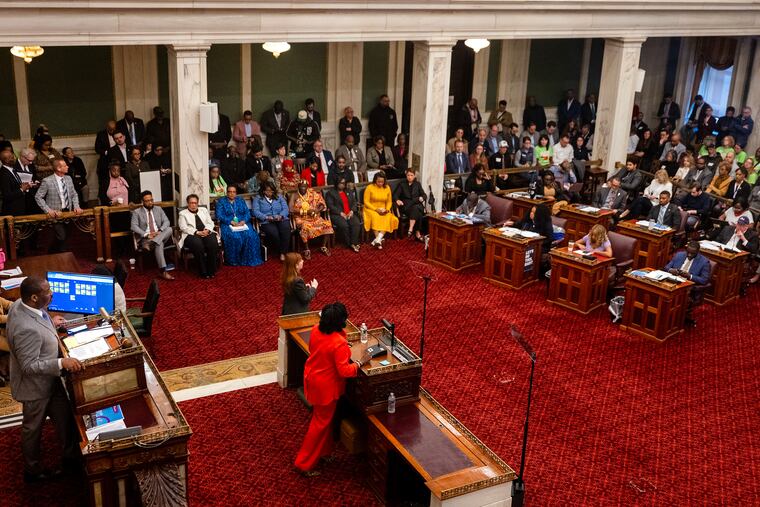
I recognize that the mayor, City Council, and residents of Philadelphia have put so much time into developing Philadelphia’s new budget, and that there is danger in saying this — but we must pause, reset, and go back to the drawing board.
We need a budget that truly reflects the urgency of the time we are in, as we experience slashes to federal funding and attacks on civil society.
There is precedent for redoing a budget this late. In March of 2020, in the midst of budget season, as a city, we recognized that whatever our initial desires had been just a few months before, the most dominant force we needed to respond to was the COVID-19 pandemic. As a result, the mayor and City Council developed a new budget that reflected the reality of the moment.
Due to the onslaught of ongoing and impending federal funding cuts, we are in a situation that is worse than 2020 — at least financially.
We are not facing a public health catastrophe the federal government mobilized and poured resources into fighting. Instead, we are facing a man-made, federally created war on cities, war on the working class, war on the poor, on women, on people of color, on immigrants, on the LGBTQ community, on education, on health, on our environment, on history, and on our humanity — with no outside assistance coming.
This past week, during New Kensington Community Development Corp.’s board of directors meeting, I was detailing the cuts that had either happened already or were going to happen to NKCDC and partner organizations, and their deep impacts on our communities.
I shared about the recent attacks on the U.S. Department of Housing and Urban Development and, as a result, on the Local Initiatives Support Corp., which invests in communities to close health, wealth, and opportunity gaps.
I spoke about the recent gutting of AmeriCorps and how that impacts successful programs such as PowerCorps, as well.
I shared how the Department of Government Efficiency (DOGE) was currently attacking NeighborWorks America, thereby directly attacking 250 of the highest-performing community development corporations across the country that are essential to developing affordable housing across Philadelphia and the nation.
And I told board members how, just the day before, we had learned the U.S. Department of Justice had eliminated not just ours but hundreds of other successful evidence-based community violence intervention programs across the country.
We discussed the cumulative and long-term impact of all these cuts in Philadelphia.
How, while the weather is getting better now, next winter some of our most vulnerable residents will look up and realize there is no Low Income Home Energy Assistance program to provide an average of anywhere between $200-$1,000 in aid for low-income families living in those housing units the mayor has said she aims to secure.
We discussed the impact on individuals and families of losing an average of $200 a month in SNAP benefits, and how the canceled funding for food banks will mean hunger and food insecurity for hundreds of thousands of Philadelphians.
We discussed how the proposed 20%-30% cuts to Medicaid will lead to skyrocketing medical costs for families throughout Philadelphia, and that the costs to the medical system will multiply as people receive less preventative care or lose access to healthcare altogether.
We discussed how if any Philadelphian is only directly impacted by one of these factors, they will be lucky — because many will be impacted by multiple factors, or all of them.
About 20% of Philadelphia’s population lives below the poverty line, and in 2024, more residents experienced being unhoused than ever before. The impending federal cuts will be disastrous for the poorest major city in America.
We even spoke of how in crisis moments like these — as we experienced during the pandemic — issues like violent crime tend to skyrocket, and that as a result of recent cuts, the successful violence intervention efforts will no longer exist to address those downstream issues.
I recognize the enormity of the issues at hand. But because we all operate in silos, we may not be seeing all the interconnected cuts that are taking place, as well as the direct attacks on universities, civil liberties, and the nonprofit sector as a whole.
Every resident of Philadelphia will feel the impacts.
During the conversation, a board member I greatly respect reminded me that “despair is not a strategy,” and that luckily, we are at a moment of opportunity where we can heed the alarms. We can get ahead of some of the inevitable turmoil and suffering that is coming our way.
We cannot react to what is coming by adding small pieces to the budget or making small adjustments.
This conversation shook me up, and I had to reflect and recognize that the shock-and-awe approach and the trauma it had imposed on me had successfully turned me from a strategic, predictive, tactical, super-forecaster to having a scarcity, fear-based mindset that was only focused on surviving the now.
Multiple board members reminded us that we faced the pandemic at a similar time of year and at a similar point in budget negotiations, and we stopped and reset our priorities based on the reality of the moment. The budget was rewritten to address what we could foresee.
We cannot react to what is coming by adding small pieces to the budget or making small adjustments. Just as we did in April of 2020, we need to start over and acknowledge the magnitude of what is happening at this moment, and how far-reaching it will be.
We recognize that city governments do not control where federal resources go, but we can use this moment to be proactive and prepare for the storm to come.
» READ MORE: Change in Kensington requires a change in mindset. We’re proof it’s possible. | Opinion
The mayor and City Council have the opportunity now to cocreate a budget with those who will be most impacted by the threatened funding, and with the expertise to help guide us toward the best solutions.
Our city’s budget reflects our values as a city — we cannot abandon the most vulnerable, the working class, the poor, the sick, the aging, the children, to the approaching storm. We need to mobilize and scale resources now. To do otherwise risks permanently destroying the critical resources our communities rely on.
And we can begin by recognizing that there is no shame in making such a big adjustment now. Reassessing so that we can put up the figurative storm shutters and make sure we have enough food and water is, rather, a sign of leadership and strength.
I’m asking individuals, organizations, and politicians to respond to the urgency of this moment and call for a pause and reset to the budget process so we can address the issues set forth here.
I’m asking the mayor and Council to listen, take a step back, and start over again, as we did during the pandemic. And, as during the pandemic, we all stand ready to collectively support the efforts going forward that come from the process.
I am asking everyone reading this to share this call to reshape Philadelphia’s budget before we miss this opportunity to actualize a strategy.
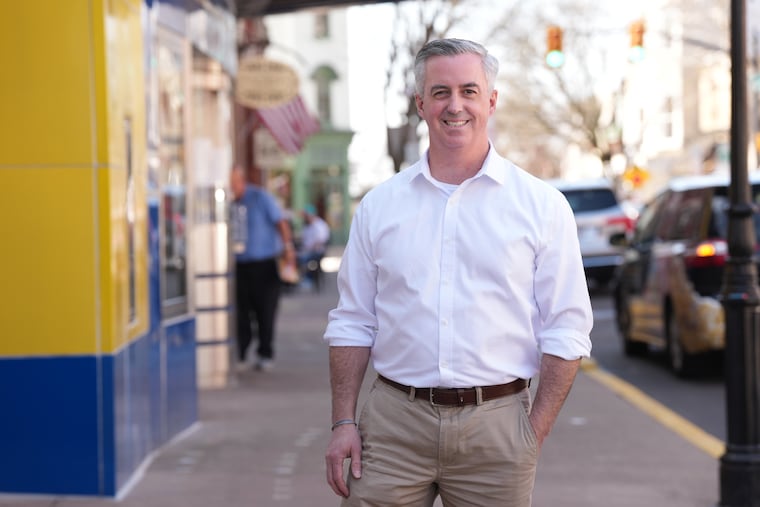
Bill McKinney is a Kensington resident and the executive director of the New Kensington Community Development Corp.