No matter what some lawmakers think, SEPTA is not a burden — it’s an opportunity
As a visitor from Berlin, what strikes me most about the fight over SEPTA funding is how public transportation is looked at by some as a vexatious budget item, when it's the exact opposite.

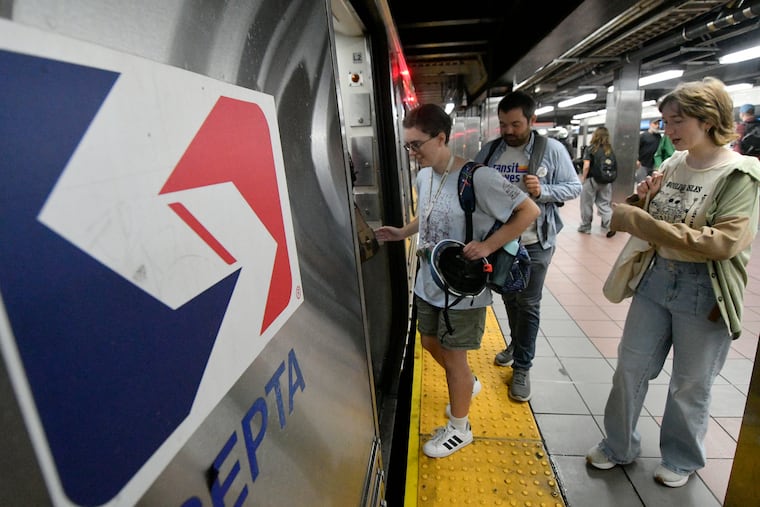
The first place I went after arriving at Philadelphia’s majestic 30th Street Station last month — a journey that took me from my native Berlin via train from Washington, D.C. — was the not-quite-so majestic SEPTA Drexel Station at 30th Street nearby.
And the first thing I saw there? Absolutely nothing.
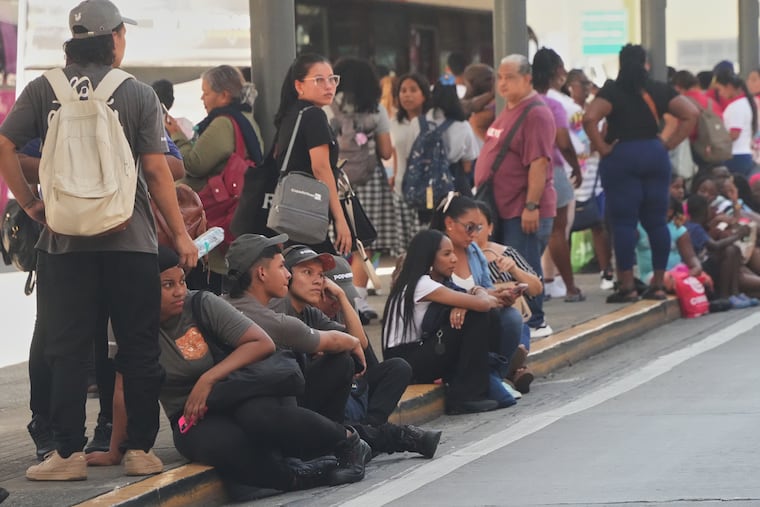
When will the next train come? I thought after a couple of minutes. The small screens by the platform wouldn’t tell me. Is there a problem with train service today? I wondered after five. No announcement was made. Will there be a train at all? I asked myself after 10. No one in the growing crowd around me seemed too concerned.
That’s when it hit me; my first Philly epiphany: You don’t find SEPTA, SEPTA finds you. Eventually.
Philosophical musings aside for a second, the installation of real-time countdown clocks (a common feature in Europe) was supposed to start on SEPTA platforms in 2020, then in 2023. “The full rollout of countdown clocks has been delayed,” SEPTA spokesperson Andrew Busch told me, “but we are still moving the project forward.”
After learning about SEPTA’s funding plight, I understood the malfunctioning displays are emblematic of the status public transportation enjoys, even in a relatively well-serviced U.S. city like Philadelphia — it is not a service, but a grace provided to the carless, the dependent, and the stubborn.
Imagine, in contrast, a dense, reliable, and modern transit system, with subway trains running in the inner parts of the city every five minutes, and with commuter and regional lines reaching remote surrounding townlets in a time you often can’t beat by car, even if you take the fastest lane on the autobahn. This is a reality in Berlin, Munich, and Frankfurt, as well as in Barcelona, Madrid, Paris, and Lyon.
Don’t get me wrong, SEPTA usually gets you where you need to go, and certainly, European cities have their own problems sustaining reliable public transit. But what strikes me most as a visitor watching the scuffle around SEPTA’s financing is the degree to which public transport seems to be looked at by some foremost as a burden, as a vexatious budget item.
When, in fact, it’s the exact opposite.
Public transit boosts urban economies and generates much more revenue for society than it costs. Many cities throughout Europe have hugely profited from it in recent decades.
For every euro spent on German public transit, the economy gets 3 euros in return. This is the takeaway from a 2025 study commissioned by the German state railway. Not only do subways, trolleys, and buses generate income for the employees of transit companies and the industries that build tracks and vehicles, the study says. They also help grow small businesses, promote tourism, and add value to real estate.
Take Madrid, where the central shopping street, Gran Vía, was closed to car traffic for the first time during the 2018 Christmas season. Businesses saw an almost 10% hike in sales over previous years.
Take Nantes near the French Atlantic coast, where in the first 20 years after the opening of a new trolley system in 1985, every fourth new apartment and office space was built within walking distance of it.
Take Strasbourg in the east of France. After two trolley lines were opened, the number of Saturday shoppers in the city center nearly doubled, from 88,000 (in 1992) to 160,000 (in 2000).
Beyond the economic impact, Philadelphians could profit from higher-quality public transit in other ways. Due to its 19th-century structure, space in the city is notoriously limited. I’ve read that people get into arguments (and worse) over parking spots. This is absurd.
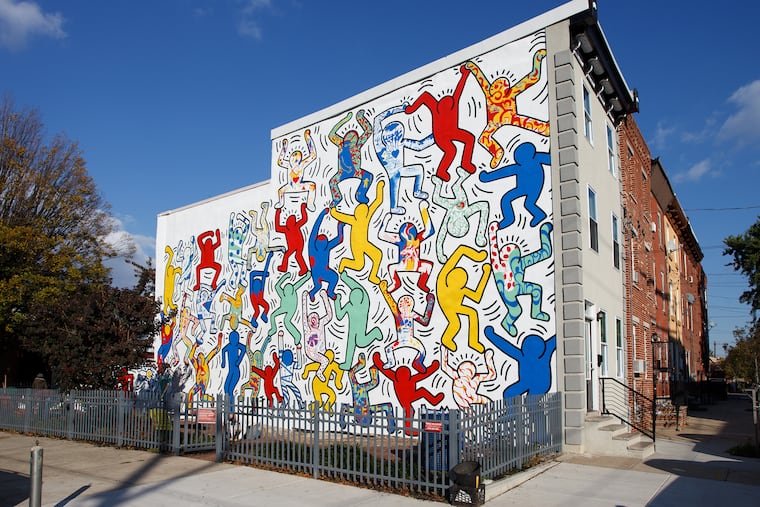
Rather than setting aside communal space for cars, the extension of public transport can be the opportunity to design an environment that people actually enjoy spending their time in.
Public transit systems have become an icon in some cities, despite and because of their shortcomings. When, in 2015, the Berlin transport authority introduced a tongue-in-cheek rap song titled “Is mir egal” (roughly translated as “I don’t care”), it became an instant hit.
The song’s comic video features a cross section of Berliners — from mariachi players to leather-clad punks, from a fastidious old-timer to bearded drag queens — involved in everything from grating onions to doing splits. Public transit becomes a symbol for a lifestyle in which anything goes, and everyone gets to where they need to be.
SEPTA hasn’t put out its own rap song, not yet, but Philadelphians should also have a public transit system they can be proud of.
While lawmakers continue to debate transit funding, there are some signs of hope.
When I dropped by Drexel Station on Thursday, nearly two weeks after my first visit, I looked up to see that the arrival time clocks were running.
Adrian Schulz is a journalist with Der Tagesspiegel in Berlin and an Arthur F. Burns fellow at The Inquirer.