Republican public transit proposal is too little, too late | Editorial
The plan does not provide the sustainable funding solutions needed for public transportation systems across the commonwealth.
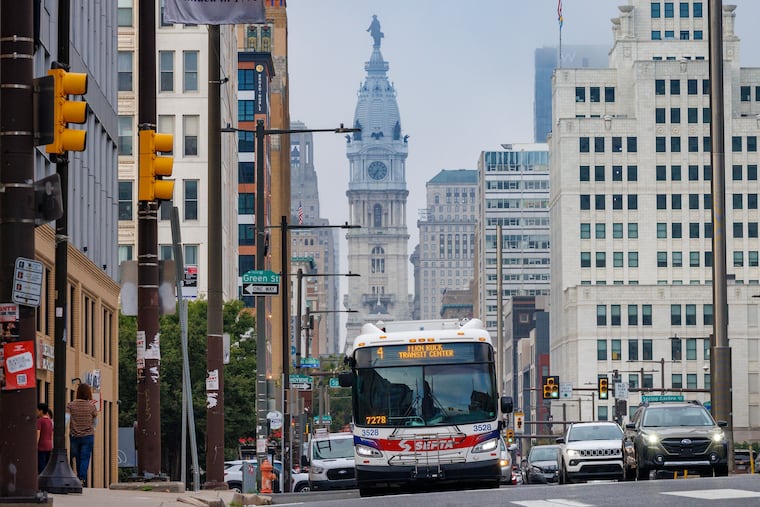
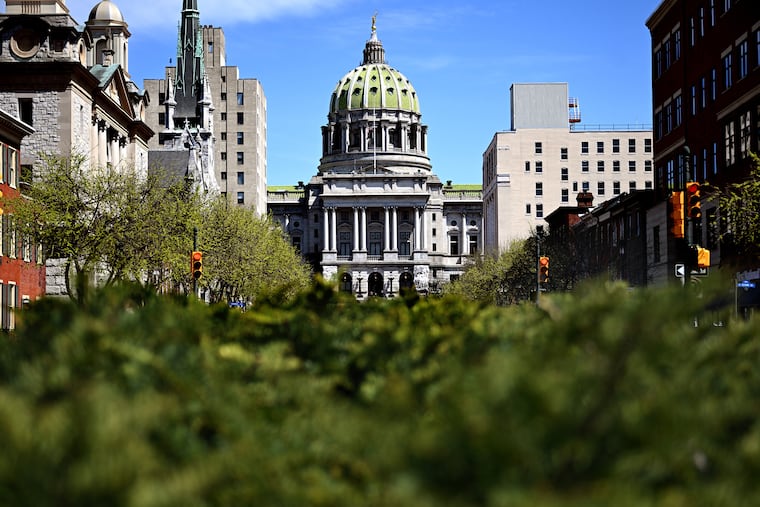
After the GOP-controlled state Senate issued what many saw as a last-minute reprieve Tuesday of the beleaguered transit system that helps power the economic engine of the Keystone State, it seemed like SEPTA was saved. At least for now. Maybe.
By Wednesday, though, SEPTA General Manager Scott Sauer had pumped the brakes, saying the service cuts scheduled to take effect Aug. 24 were moving forward because there was no final vote on the funding by Thursday’s deadline. The transit agency needs at least 10 days to program any changes into its system.
Democrats in the state House have so far rejected the Republican proposal, which means SEPTA — and the roughly 700,000 Pennsylvanians who depend on its services every day — will have to continue fighting for their supper in Harrisburg.
The Senate vote on a $1.2 billion transportation plan did not provide the sustainable funding solutions needed for transit systems across the commonwealth. What it did include was a torrent of resentment, as Senate Majority Leader Joe Pittman revealed that grudges going back decades motivated much of his thinking.
» READ MORE: State Senate Republicans must step up for all Pennsylvanians | Editorial
In a rambling speech kicked off by a paraphrased recital of John Mellencamp’s “Small Town,” the Republican hearkened back to decisions made under former Gov. Ed Rendell — who left office 14 years ago — to justify his approach.
Repeating the phrase “and now you come to me,” Pittman asked why he should support Southeastern Pennsylvania when the southeast doesn’t support projects in his neck of the woods, where there’s “one stoplight.”
He then offered transit systems a two-year deal that draws from the critical Public Transportation Trust Fund — a $2.4 billion account funded by sales tax revenue set aside for capital projects — which is money meant for maintenance and safety updates. The transit money would also go to support new and expanded roads in other parts of the state.
Pittman framed the move as payback for Gov. Josh Shapiro’s decision to direct federal highway funding toward transit systems last year. Except, unlike SEPTA’s proposed cuts, no one lost access to an existing transportation option due to Shapiro’s move. The highway projects affected were not even delayed.
Contrary to Pittman’s claims, Harrisburg lawmakers can hardly be accused of neglecting rural roads. If anything, it is SEPTA — which provides more trips per day than even the Pennsylvania Turnpike — that has not had a significant expansion in decades.
» READ MORE: There is no room for error — Harrisburg must fund public transit in Pa. now | Editorial
Residents of rural areas, even those with declining populations, would scarcely be expected to tolerate such a lack of investment in their communities. Under the leadership of Pittman, however, rural Pennsylvania seems happy to impose this on the southeastern corner of the state.
In fact, during his 12-minute speech, Pittman mocked SEPTA for a series of train fires, while simultaneously advocating to gut the fund meant to prevent them.
Perhaps most galling for SEPTA riders is the reality that Pittman’s proposal was supported by three Philadelphia-area Republicans: Joe Picozzi of the Northeast, Frank Farry of Bucks County, and Tracy Pennycuick, who represents parts of Berks and Montgomery Counties. These members, no matter what spin they put on the situation, voted for a deal soaked in contempt for their own constituents.
The Republican offer, while it at least recognizes the need to fund public transit next year — as Philadelphia plays host to the Semiquincentennial, Major League Baseball’s All-Star Game, and NCAA tournament and World Cup matches — is not good enough.
The problem isn’t Pittman’s love of small towns, but the apparent petty grievances that keep him from seeing the full picture: If SEPTA fails, the economic ripples will eventually stretch from our part of the state to his own.

The transit cuts proposed due to a financial shortfall would be a setback to the entire region — and state.
Read more from Inquirer Opinion:
- Harrisburg can't afford to let SEPTA fail | Editorial Board
- I wouldn't be here without public transit | Daniel Pearson
- Despite our complaints, SEPTA is actually efficient | Alan Fisher
- We deserve transit investment, not just survival | Jay Arzu
- SEPTA cuts would make our air dirtier | Christine Knapp
- Masterman students could lose a lifeline if services are cut | Leila Golzari-Hunt and Olivia Kang
- How SEPTA cuts could affect Pennsylvanians | Daniel Pearson
- Transportation in Pennsylvania is a bipartisan issue | Mark Schweiker and Ed Rendell