Even before the shutdown imperiled SNAP benefits, the federal budget bill did. But we can take action.
Without a citywide effort to protect access to SNAP, work requirements will leave Philadelphians without food on the table.
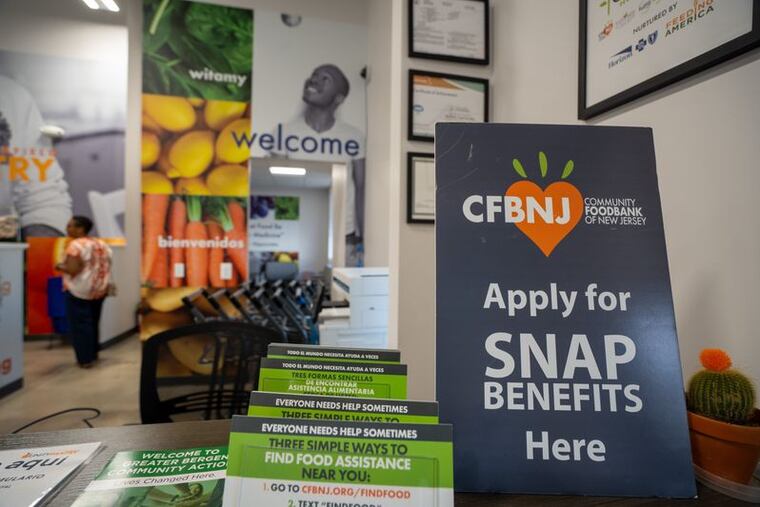
Nearly two million Pennsylvanians may wake up on the first of the month and discover they don’t have any money for groceries.
As a result of the federal government shutdown, the Pennsylvania Department of Human Services (DHS) has announced that Supplemental Nutrition Assistance Program (SNAP) benefits will not be paid until the shutdown ends and funds are released to Pennsylvania.
But SNAP was already in jeopardy before the shutdown.
Even as families scramble to find a way to keep food on the table right now, many must also take immediate action to protect their SNAP in the long run. The federal budget bill enacted in July threatens to take food away from millions of people with disabilities, caregivers, and older adults who cannot afford food. In fact, tens of thousands of Philadelphians are in danger of losing their SNAP this winter.
DHS has estimated that as many as 65% of Pennsylvanians subject to work requirements will lose SNAP.
But it’s not too late to ensure families can avoid hunger when SNAP resumes.
For the first time ever, Philadelphians must satisfy harsh and ineffective work requirements that impose a time limit on SNAP benefits for many adults. People who do not meet an exemption or cannot prove they work at least 20 hours per week will be able to get only three months of SNAP every three years.
This time limit began on Sept. 1 for adults ages 18-54 who do not receive a disability benefit and who do not live in a SNAP household with a child under 18. On Nov. 1, the clock starts for older adults ages 55-64 and parents of children ages 14 and older.
Very soon, DHS will issue its first cutoff notices, alerting people ages 18-54 who have not been found exempt or compliant with work requirements that they will lose their SNAP effective Dec. 1.
Moreover, many humanitarian immigrants who came to the United States seeking safety and prosperity will no longer be able to get SNAP at all. Under the new law, the only groups eligible for SNAP will be United States citizens, some green-card holders, certain Cuban or Haitian entrants, and a very few others. These devastating restrictions also take effect for new applicants on Nov. 1.
Refugees, people granted asylum, and victims of trafficking and abuse who don’t yet have green cards will be left to worry about where their next meal is coming from, and there are no exceptions to these rules.
As paralegals at Community Legal Services of Philadelphia (CLS), we have advocated for hundreds of clients who have been wrongfully denied SNAP because of red tape and paperwork errors. Without a citywide effort to protect access to SNAP, work requirements will leave Philadelphians without food on the table.
DHS has estimated that as many as 65% of Pennsylvanians subject to work requirements will lose SNAP. We cannot accept this fate.
The best way to protect SNAP is to help eligible people claim an exemption from work requirements. Many adults meet at least one exemption, which will allow them to keep their SNAP until their next annual renewal. Importantly, workers who earn at least $217.50 per week before taxes are exempt as long as the County Assistance Office (CAO) knows about their work. Many others must claim an exemption.
Our client J.P. (we are using client initials to protect their privacy) was immediately distressed when told about work requirements. J.P. would love to be able to work, but he can’t. A 56-year-old, he gets dialysis three to four times a week to treat chronic kidney disease. He and his 76-year-old mom, V.P., survive on SNAP and her meager retirement benefit.
Even with food assistance, V.P. has just $49 to her name each month after paying the bills.
To preserve his SNAP and V.P.’s razor-thin budget, J.P. must ask his doctor to complete Pennsylvania’s SNAP medical exemption form (PA 1921) to prove he has a medical condition that limits his ability to work. Many people, including workers pushing through conditions like pain, fatigue, and depression on the job, will qualify for this exemption. Healthcare providers should readily complete the PA 1921 so that their patients can make healthy decisions without fear of losing access to adequate nutrition.
The medical exemption form is one of many exemptions available to SNAP recipients who cannot satisfy work requirements. Adults are also exempt if they are taking care of a sick family member, pregnant, unable to work because of domestic violence, participating in a drug or alcohol treatment program, receiving unemployment compensation, or are experiencing homelessness.
CLS has trained thousands of service providers on how to help people claim exemptions and how to ensure eligible green-card holders do not lose their SNAP. We hope many others will join this collective effort.
» READ MORE: Federal cuts to SNAP will create preventable crises that will touch every area of my patients’ lives | Opinion
Accessing SNAP has never been easy for families like J.P.’s, and for other hardworking Philadelphians we all depend on — restaurant workers with irregular hours, school bus drivers, and dedicated caregivers. Work requirements and the paperwork burden that comes with them punish workers for their lack of stability. If their hours fall below 20 hours per week, they will be required to report this change to their caseworker within 10 days, and the three-month time limitation will begin.
Most SNAP recipients who can work already do work. But job seekers who have applied for hundreds of jobs to no avail, perhaps because of their age, a suffering job market, or a criminal record, get no credit for their efforts, and are considered not to be complying with work requirements at all. They must meet an exemption to keep their SNAP.
Without SNAP, families are likely to fall behind on bills, causing collateral consequences like utility shutoff or eviction. Our communities will bear the cost of SNAP cuts through higher healthcare costs and loss of income for local businesses.
Philadelphia can’t afford to leave anyone behind. From legal advocates and community organizations to city government, medical care teams, and neighbors next door, our city must come together to ensure fellow Philadelphians do not lose SNAP.
Daryn Forgeron and Anaga Srinivas are paralegals in the Health and Independence Unit at Community Legal Services of Philadelphia.