Philly’s World Cup summer is showing us what belonging looks like. Will that feeling outlast the tournament?
The pride we’ve experienced over the last month doesn’t have to be seasonal. It doesn’t need a stadium ticket or a festival permit, writes Saadia Khan.
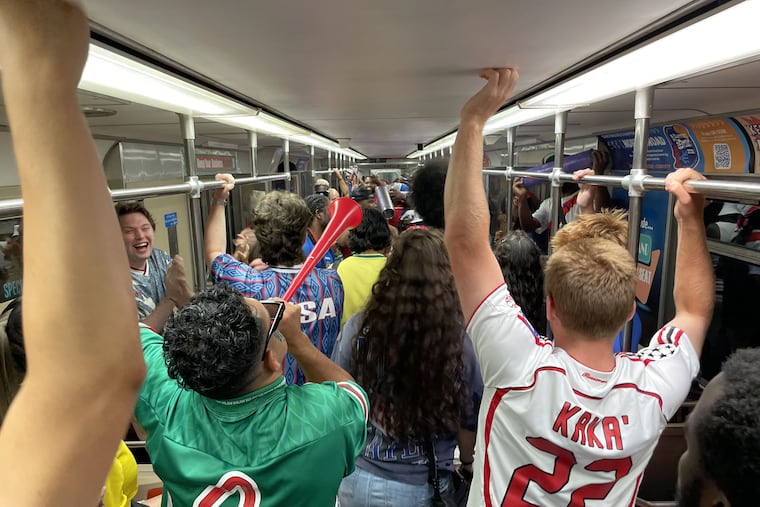
On Juneteenth, while South Philadelphia was still humming from Odunde — the country’s largest African American street festival, now in its 51st year — fans in green and orange filled the seats at Lincoln Financial Field for the World Cup match of Brazil against Haiti.
A few blocks and a few days apart, two of the same story: people showing up, in public, as exactly who they are.
That’s what this World Cup summer has felt like across Philadelphia. Six matches at Lincoln Financial Field (or what was called Philadelphia Stadium for the tournament). A 39-day Fan Festival at Lemon Hill drawing tens of thousands a day. Northeast Philly, long home to one of the city’s largest Brazilian communities, turning into a sea of yellow jerseys. Africatown is filled with the flags of Ghana, Côte d’Ivoire, Curaçao. None of it required anyone to tone anything down.
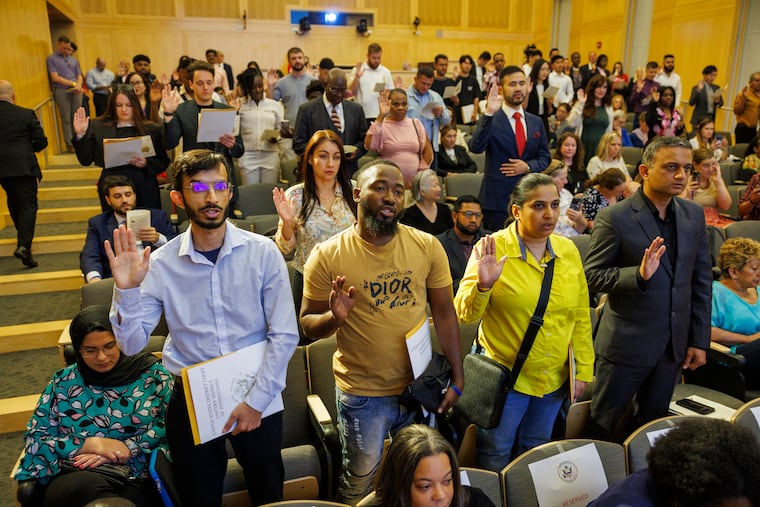
I’ve spent years thinking about what it costs people to make themselves “easier to hold.” I host a podcast called Immigrantly, and after more than 4 million downloads and conversations with guests from New York City Mayor Zohran Mamdani and political candidate Darializa Avila Chevalier to comedians Hari Kondabolu and Aparna Nancherla, the thing I hear most often isn’t about policy or politics.
It’s usually much simpler: First- and second-generation immigrants didn’t know they were allowed to be complicated. Allowed to hold two, three, four places inside themselves at once without apologizing for the seams.
I know that erasure personally. I was born in Pakistan and built my adult life in America, and for years I made myself legible in rooms that hadn’t asked me to. I told myself it was politeness. It took me well into my 30s to understand it was a choice I’d been making so often it stopped feeling like one.
Which is why this summer has been disorienting in some ways. On the one hand, the World Cup has allowed people to make their origin pride more legible publicly. On the other hand, visibility doesn’t necessarily mean safety, warmth, or belonging.
Philadelphia has spent 2026 rehearsing its own origin story — the run-up to the country’s 250th birthday, with a Round of 16 match on July Fourth itself, in the city where the Declaration of Independence was signed.
And at the exact same time, in the exact same city, thousands of people have been reminding us that America was never actually one thing. It was Curaçao and Ghana and Ecuador and Brazil and Haiti, all at once, all unbothered, in a city built by people who never stopped arriving.
Mayor Cherelle L. Parker put it plainly after the festival’s opening weeks: The energy across the city, she said, reflected Philadelphia “at its best — welcoming, diverse, joyful, and proud.”
I believe she meant it. I also know that sentence is easy to say about a festival and much harder to sustain on an ordinary Wednesday, after the last match, after the Fan Festival tents at Lemon Hill come down and Kelly Drive goes back to being Kelly Drive.
That’s the question I can’t stop asking: What happens on July 20?
Because the pride on display this summer isn’t new. The Brazilian families in the Northeast, the West African community that fills Africatown, the Haitian, Ghanaian, and Ivorian Philadelphians who’ve been here for decades — they didn’t invent their culture for this tournament.
What the World Cup did was give them permission to bring it fully into public view, and give the rest of us permission to celebrate it instead of asking it to quiet down.
I think about the women I talk to through my work — the ones fluent in code-switching, who’ve spent decades reading a room and calibrating themselves to fit it. I want to point them toward Lemon Hill in July and say: Look at what happens when nobody has to shrink. Look at what this city sounds like when everyone’s whole self shows up at once.
The tournament will end. The flags will come down. Philadelphia will go back to being, simply, Philadelphia.
But the pride we’ve watched all summer doesn’t have to be seasonal. It doesn’t need a stadium or a festival permit.
It can be what a Tuesday looks like here, if we decide it is — a city that doesn’t just tolerate its immigrants during a global tournament, but actually wants to see them, unedited, all year long.
Saadia Khan is a Pakistani immigrant and mother, host of the podcast “Immigrantly,” a Columbia University human rights graduate, and creator of Belong On Your Own Terms, an app for multicultural individuals reclaiming their full identity. Find her work at immigrantlypod.com.