The U.S. is targeting researchers who help us understand the effects of social media
Those at risk include nonprofit workers who fact-check misinformation about natural disasters and disease outbreaks on social media, and who may now be forced to leave the country or abandon the work.
The U.S. government is using immigration policy to threaten researchers with detention and deportation for their work.
In March, the organization I run, the Coalition for Independent Technology Research, filed a lawsuit challenging the policy and asked a federal judge in Washington, D.C., to block it through a preliminary injunction. The court recently heard arguments on that request. As part of the litigation, the government publicly released for the first time a memo defending the policy.
Over the past several months, technology professionals across fields have been living with a new fear: that they, like Mahmoud Khalil, Badar Khan Suri, Rümeysa Öztürk, Mohsen Mahdawi, and others, could be detained in the United States or deported to far-off locations for exercising rights the First Amendment protects.
If we are to properly regulate AI, social media, or other emerging technologies, we must first be able to study them.
This fear is not abstract. It stems from a new government policy designed to silence people who research and report on social media platforms.
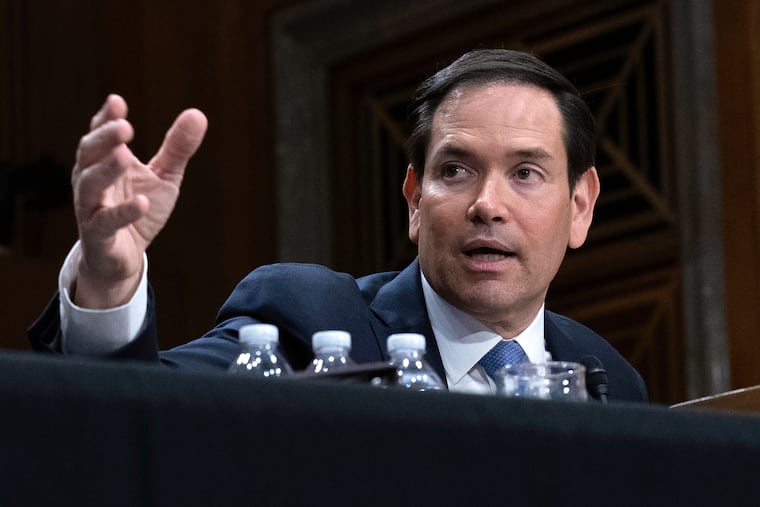
The policy, first announced by Secretary of State Marco Rubio in May 2025, allows the government to deny entry, revoke visas, and detain or deport noncitizens it believes are responsible for “censoring” Americans online. The newly released memo provides a nonexhaustive list of what foreign regulatory actions the Trump administration considers to be “censorship,” but it provides no clarity about which individuals it deems “complicit” in those actions, or why their family members should also be excluded.
In practice, this is the weaponization of immigration policy to censor and chill critical research.
Those at risk include artificial intelligence researchers who now worry about the immigration consequences of publishing work on, for example, how untested surveillance technologies are being integrated into autonomous military systems.
They include nonprofit workers who fact-check misinformation about natural disasters and disease outbreaks on social media, and who may now be forced to leave the country or abandon their work.
They include academics whose research helps prevent the spread of child sexual abuse material online, and who must now consider whether continuing that work is worth the personal risk.
These are researchers, students, and nonprofit workers analyzing how information spreads online. They do not wield the power to censor the speech of Americans. Instead, what they share is work that helps the public understand and scrutinize these systems.
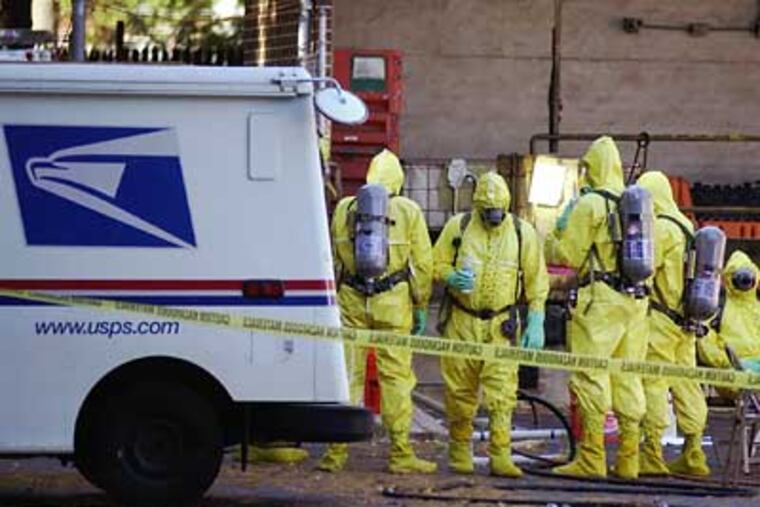
In the past, moments of corporate negligence have led to greater oversight. After the 1982 Tylenol murders, in which seven people died after consuming cyanide-laced capsules, public pressure drove sweeping reforms in product safety and packaging, along with greater oversight of how corporations deliver products.
Today, by contrast, the Trump administration’s emphasis has been on deregulating Silicon Valley, even as companies continue to integrate these technologies into military, financial, healthcare, and surveillance systems, and evidence of their harms becomes clearer.
If we are to properly regulate AI, social media, or other emerging technologies, we must first be able to study them.
I work with researchers, students, and nonprofit workers who help explain how technology shapes our thinking, our relationships, and our access to information. Their work is a crucial line of defense against the unchecked power of tech companies, which too often decide what the public does and does not know about the technologies they create. And yet, it is this very group that senior officials in the Trump administration are targeting.
» READ MORE: Where did higher education go wrong? Turning its back on diversity. | Opinion
The hypocrisy is now unmistakable. A policy framed as a defense against “censorship” is being used to suppress lawful research and reporting. It is, in effect, a campaign of censorship itself.
The policy and its enforcement are already having a chilling effect, particularly on noncitizens who now fear detention or deportation simply for doing work that helps people understand social media. This chilling effect isn’t a byproduct of the policy; it’s by design.
To understand how we got here, we need to understand the broader pattern of government retaliation against scientists, academics, journalists, fact-checkers, and others.
In a December report, Free Press, the nonpartisan group that advocates for net neutrality, media diversity, and press freedom, documented nearly 200 actions the government took in 2025 to restrict speech, including arrests, verbal harassment, vexatious lawsuits, regulatory pressure, and even deploying military and paramilitary forces against dissidents.
At the same time, technology companies have waged an assault on independent research over the past year, cutting off academics’ and nonprofits’ access to data and pursuing legal action against researchers studying their platforms.
Taken together, these pressures are pushing us toward a future with less transparency, less accountability, and fewer answers to critical questions about the systems that shape our lives.
When people read headlines about the economic impacts of AI on workers, or social media driving addictive behavior, or another vulnerable person harmed by a chatbot, they are often encountering the work of the very researchers now being targeted. Removing the people uncovering these truths won’t make the problems disappear. It’ll just make them harder to see.
If the United States forces out the people who study these technologies, it will not be protecting free expression. It will be ensuring the most powerful systems in our society remain the least understood and the least accountable. In that scenario, Silicon Valley wins.
Brandi Geurkink is executive director of the Coalition for Independent Technology Research, a network of researchers and organizations focused on technology, policy, and the public interest. The coalition is currently challenging a U.S. immigration policy affecting researchers in federal court.

Inquirer Opinion Newsletter