The founders’ vision on the limits placed on power is being tested
Friday’s Supreme Court decision matters far beyond tariffs. The court reminded the executive branch of a basic constitutional principle: Decisions on taxation and tariffs must originate in Congress.

America is not facing a policy disagreement.
America is facing a constitutional stress test.
Every generation eventually discovers whether it truly believes in the limits placed on power — or only supports those limits when they restrain political opponents. The moment we are living through now forces that question upon us.
The Founding Fathers of the United States did not design government for efficiency or speed. They designed it to restrain ambition. When they embedded the separation of powers into the Constitution, they were responding to centuries of human history that proved a simple truth: Unchecked power eventually silences the people.
They understood human nature’s tendency toward absolutism. Kings centralize authority. Leaders justify overreach. Governments expand unless they are deliberately restrained. The American republic was built differently. Authority was divided so that no single person could ever claim to speak fully for we the people.
That is why last Friday’s U.S. Supreme Court decision matters far beyond tariffs or commerce. The court reminded the executive branch of a basic constitutional principle: Decisions concerning commerce — especially taxation and tariffs — must originate in Congress.
Yes, the process is messy. Debate is slow. Compromise is imperfect. But the friction is intentional. The founders built resistance into the machinery of government so that sweeping economic power could never again be exercised by personal decree.
If tariffs are truly wise policy, then Congress should debate them openly. Legislators should defend them before voters. That is representation. That is accountability. That is self-government.
What should concern Americans today is not disagreement with the court’s ruling, but the reaction that followed.
Our nation was born out of resistance to unilateral taxation. The Boston Tea Party of 1773 was not simply protest theater — it was a rejection of economic authority imposed without representation. The Constitution ensured such power would never again rest in one individual’s hands.
When one branch exceeds its authority, another branch must respond. That is not dysfunction; it is design. The judicial branch exists precisely to interpret the law and restore and remind us of the constitutional boundaries when political actors drift beyond them.
» READ MORE: The president is wrong — the discussion of slavery in our nation’s past is essential to America’s present | Opinion
Courts have not always been right. History reminds us of poor decisions that took decades and courage to correct. Yet, judicial independence remains essential. Without it, constitutional limits become optional.
What should concern Americans today is not disagreement with the court’s ruling, but the reaction that followed.
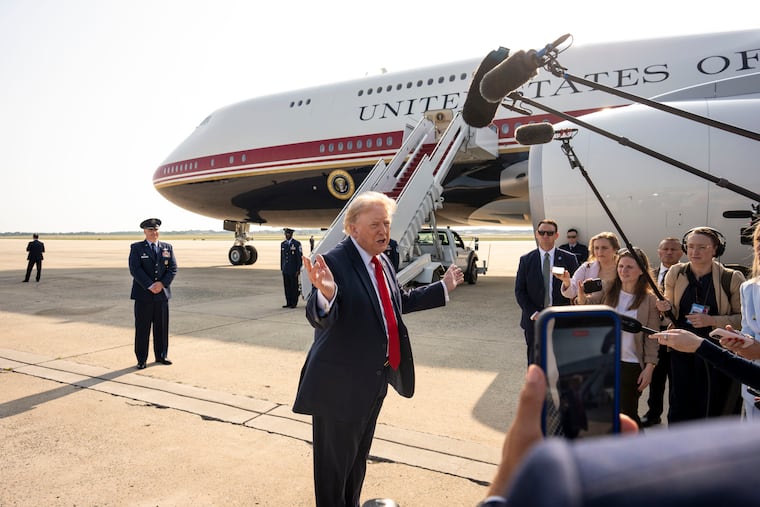
Instead of accepting the decision, the executive branch responded with personal attacks against justices carrying out their constitutional duty. Even more troubling were the immediate efforts to search for ways around the ruling — to achieve the same outcome by different means.
That should unsettle every citizen, regardless of party affiliation.
I remember when one of my children was young, and my wife placed a forbidden toy on a high shelf for their safety. Determined to retrieve it anyway, the child stacked books and climbed upward, trying to bypass the boundary we had set. The creativity was impressive. The disobedience was undeniable.
A constitutional ruling is that high shelf.
Attempting to maneuver around it rather than respecting it undermines not only the court’s authority but the rule of law itself. The Constitution works only when leaders accept limits they dislike.
» READ MORE: JD Vance says America is a ‘Christian nation.’ Is it? | Opinion
Equally troubling was the suggestion that a president could act militarily against another nation at will while being constrained economically. The Constitution says otherwise. The power to declare war rests with Congress. The president commands the military, but he does not possess unilateral authority to wage war or impose economic punishment without legislative participation.
The founders feared concentrated authority in every form — economic, military, and political. Their caution was wisdom born from history.
The question before us now is not about one ruling or one administration.
Republics rarely collapse in dramatic moments. They erode gradually — one ignored boundary at a time. One exception becomes precedent. One act of defiance becomes normalization.
The question before us now is not about one ruling or one administration. It is whether Americans still believe constitutional limits apply equally to those who govern and those who are governed.
The founders’ vision was never about strong personalities. It was about strong institutions accountable to a free people.
This feels like a dark chapter in the life of our republic. Yet, darkness often clarifies responsibility. Citizens must decide whether we will defend the structure that preserves our liberty, or remain silent as its guardrails are tested.
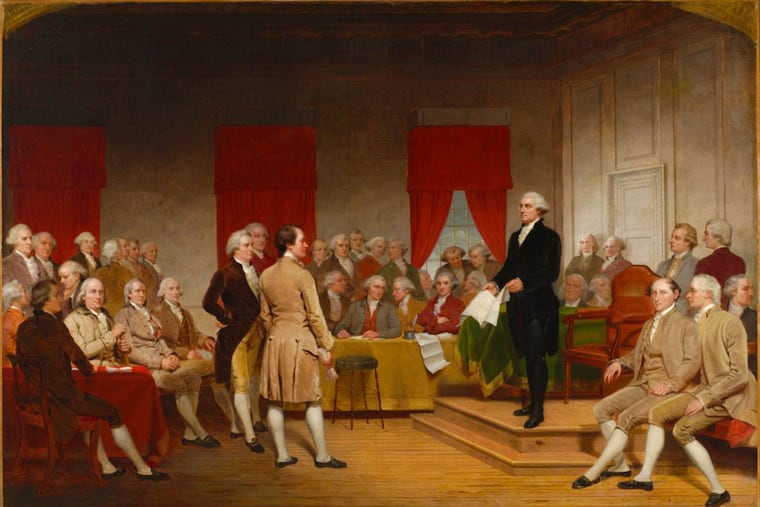
At the close of the Constitutional Convention in 1787, a woman asked Benjamin Franklin what kind of government had been created. Franklin replied with words that echo across generations: “A republic, if you can keep it.”
The question is no longer theoretical.
Now, we the people must decide whether we will.
The Rev. Dr. Michel J. Faulkner, a former NFL player, community leader, pastor, and registered Republican, is chair of the board of directors of the Philadelphia Council of Clergy.