The Donald J. Trump Primary School? Officials in a N.J. town should proceed carefully before acting on a renaming plan
Public schools serve families of every political belief. Choosing a living political figure as the namesake risks turning a place meant for education into a symbol of political division.
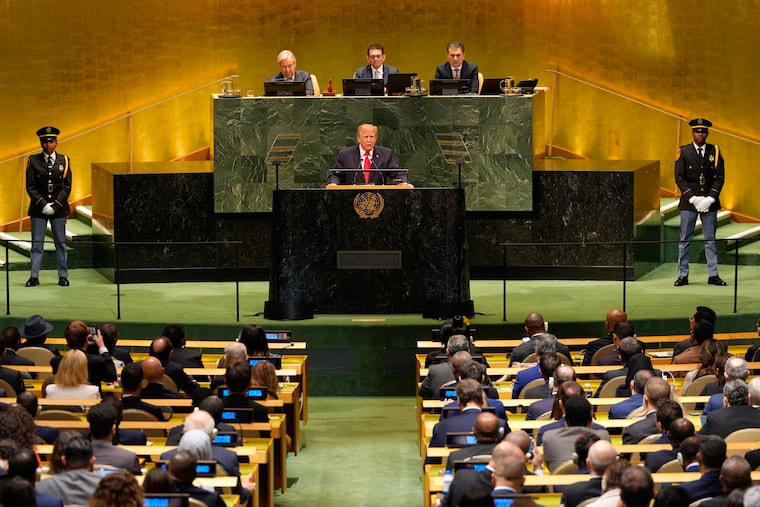
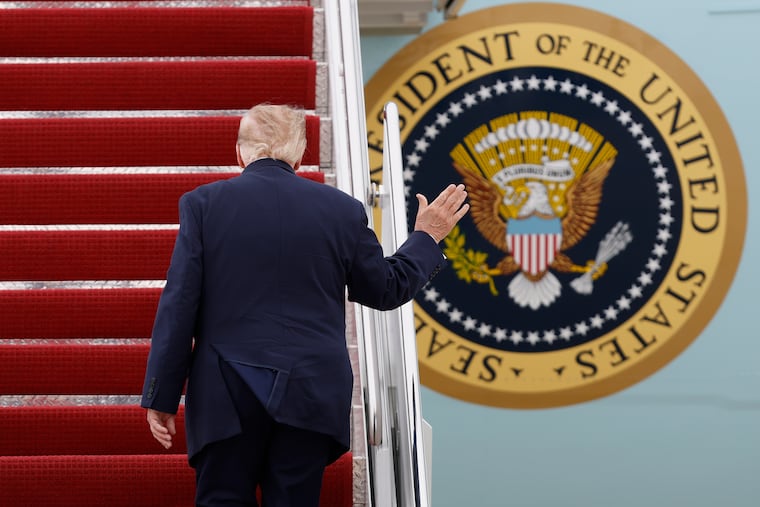
A recent debate in Colts Neck, N.J., about whether to name a public school after President Donald Trump might appear to be a local issue. In reality, it raises a broader question communities across the country are increasingly confronting: What kinds of legacies should public schools celebrate?
School names are not trivial matters. They appear on report cards, diplomas, sports uniforms, and school buildings. They are spoken every day by teachers and students. In that sense, the name of a school becomes part of the civic education of the children who attend it.
» READ MORE: Finally, Taney Street no more | Editorial
Because of that, communities should think carefully about the values those names communicate.
Public schools serve families of every political belief, religion, and cultural background. Choosing a living political figure as the namesake of a school risks turning a place meant for education into a symbol of political division. Schools work best when they represent shared civic ideals rather than partisan identities.
That is why many communities historically have named schools after individuals whose contributions reflect broadly accepted values such as public service, courage, and the pursuit of equality.
If a community wants to inspire students through the legacy of a public figure, civil rights leaders offer powerful examples. One such figure is the Rev. Jesse Jackson, who died last month. Jackson’s decades of advocacy focused on expanding voting rights, encouraging civic participation, and building alliances across racial and economic lines.
Jackson’s work with the Rainbow Coalition emphasized cooperation among diverse communities and the belief that democracy functions best when everyone has a voice. Regardless of one’s political views, the idea that citizens should participate actively in civic life is a principle at the core of American democracy.
Naming schools after figures associated with the Civil Rights Movement can also provide an educational opportunity. It encourages students to learn about the ongoing struggle to make the nation’s founding ideals — liberty, equality, and justice — real for all Americans.
The debate in Colts Neck, which involves changing the name of the Conover Road primary school, is not merely happening in one town. Across the country, communities are reconsidering the names of public institutions and asking what stories those names tell. Some towns are moving away from figures connected to painful chapters of history. Others are choosing to honor leaders whose work promoted inclusion, education, and democratic participation.
Whatever decision a community ultimately makes, the guiding question should be simple: Does the name reflect values that unite rather than divide?
Public education plays a unique role in American life. Schools are places where students from many backgrounds learn not only math and science but also the principles of citizenship and civic responsibility. The symbols associated with those schools should reinforce those lessons.
The debate that began in one New Jersey town highlights a challenge communities everywhere face. When we name public institutions, we are also making a statement about what kind of society we hope the next generation will build.
Choosing names that emphasize civic engagement, equality, and service can help ensure that message is one that brings communities together rather than pushing them apart.
Michael A. Gottesman is the founder of the New Jersey Public Education Coalition, a member of the League of Women Voters of New Jersey Education Committee, and the director of communications for the Energizing Young Voters initiative.