Jesse Jackson’s death during Black History Month only magnifies an already immense loss
After the Rev. Martin Luther King Jr.’s death, Jackson picked up the mantle of leading the civil rights movement. His passing — when Black history is under assault — seems to hit especially hard.
Pick any of the seminal moments from Black history over the last six decades — from the assassination of the Rev. Dr. Martin Luther King Jr. in 1968 to Barack Obama’s first speech as president-elect 40 years later — and the chances are that the Rev. Jesse Jackson Sr. was there, front and center.
Jackson had spoken to King only moments before the civil rights leader was fatally shot while standing on a balcony of the Lorraine Motel in Memphis on April 4, 1968. Even though he was only 26 years old, Jackson went on to position himself to take up the mantle of leading the civil rights movement.
Years later, Jackson explained to an interviewer, “What I was clear on was that we could not let one bullet kill the whole movement.” He used the analogy of an athletic event during which the best player gets hurt. The answer, he said, isn’t to forfeit the game: “You can’t run away. You’ve got to keep fighting.”
And that’s what he did for the rest of his life, advocating tirelessly for an end to racial injustice as well as for economic opportunities for poor people of all racial backgrounds through his iconic Rainbow coalition and during his two historic runs for the presidency.
Back when most Americans couldn’t conceive of a Black man becoming president of the United States, he could and tried to get the rest of us to believe in it, too. Jackson launched his first bid for the Democratic presidential nomination in 1984 and again in 1988.
Jackson rarely gets the credit, but his run for the White House helped lay the groundwork for the election of Obama, who fulfilled Jackson’s vision.
And, yes, when Obama gave his victory speech in Chicago’s Grant Park on election night 2008, Jackson was there, too. While Obama spoke, Jackson could be seen holding a miniature American flag with tears streaming down his cheeks.
“I wish for a moment that Dr. King or Medgar Evers” — the civil rights leader who was assassinated in Mississippi in 1963 — “could’ve just been there for 30 seconds to see the fruits of their labor,” Jackson later told the Associated Press about his emotions that night. “I became overwhelmed. It was the joy and the journey.”
Jackson’s death on Tuesday at the age of 84 came after years of illnesses, including a rare neurological disorder. Even in his later years, however, he stayed in the game — to continue his football metaphor — making an appearance onstage to thunderous applause during the Democratic National Convention in Chicago in 2024.
News he had died hit me as hard as if I’d lost a dear relative. I didn’t know Jackson personally, but had the privilege of interviewing him multiple times during my career.
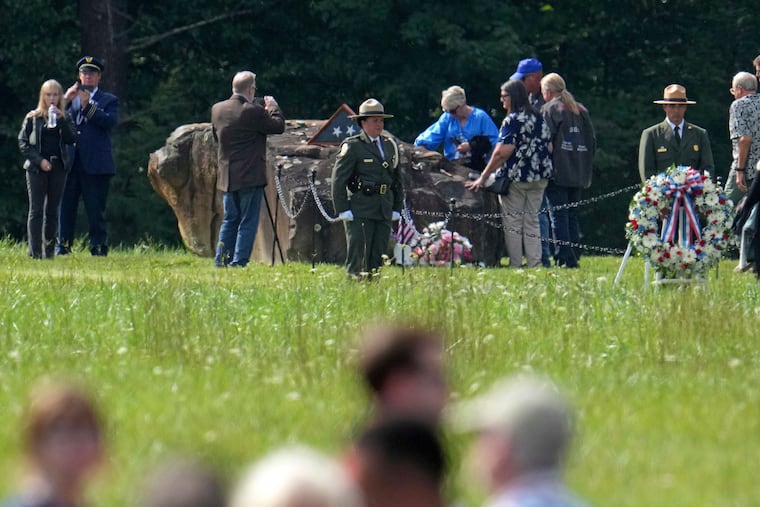
In fact, the first time I met him was as a student journalist on the campus of Howard University. The last time I’d actually gotten a chance to interview him was in 2018 during the 50th anniversary commemoration of King’s assassination in Memphis outside what had been the Lorraine Motel, which is now part of the National Civil Rights Museum. I wish I’d kept the recording of what he said.
» READ MORE: Jesse Jackson set the stage for modern-day American politics | Jenice Armstrong
As I processed the news of his death, I made a point of posting on Abby Phillip’s Instagram page a brief note of thanks for her work chronicling Jackson’s life and legacy in her book, A Dream Deferred: Jesse Jackson and the Fight for Black Political Power. Phillip told me last year that she knew she was working against time and Jackson’s frail health to finish the project before his death.
Her goal, she said, “was to make sure that this chapter didn’t get lost to history.”
I was a kid in the 1970s during the Black Power era who repeated his chants, “I am somebody!”
Back then, it was affirming to see Jackson on TV with his then-signature Afro, or later delivering electrifying speeches during his groundbreaking runs for the presidency. We used to chant, “Run Jesse Run!”
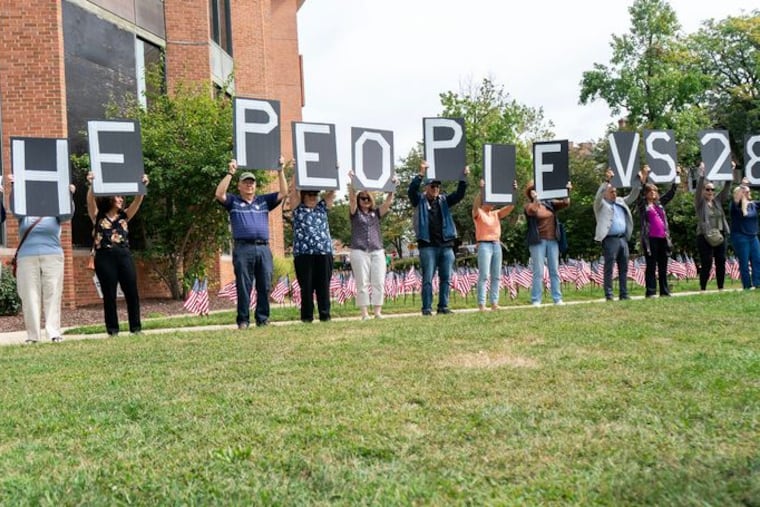
One of the first articles I wrote for my student newspaper was about Jackson’s Operation PUSH, or People United to Save Humanity.
Jackson spent his adult life at the forefront of the pursuit of equality for African Americans, and for that, we should always be grateful.
To me, losing this great leader in February during Black History Month — at a time when our people’s contributions to the nation’s history are being threatened with erasure — only magnifies the sense of loss. It should also remind those of us who care about civil and human rights that it’s our turn to take up the struggle — and keep fighting.