How slain NYC cop Didarul Islam shattered Trump’s immigration lies
The Bangladeshi American cop slain in midtown Manhattan lived an American Dream nothing like the president's Big Lies.
For much of the 21st century, the American Dreamers of a fast-growing Bangladeshi diaspora have been hiding in plain sight in places like New York City’s Bronx borough — new arrivals who fled adversity, economic or otherwise, in South Asia. Many with college degrees worked at low-paying jobs such as selling doughnuts, or as a school crossing guard, anything to gain a foothold in the United States.
But since Donald Trump returned to the White House in January, thousands went into actual hiding.
“Many Bangladeshis are avoiding going out unless it is necessary,” an immigrant to New York, who didn’t want his name used, told the Dhaka-based Daily Star in April. “Some haven’t even visited local markets in months.”
There was good reason to be frightened. The Daily Star reported in the same article that 31 Bangladeshis were deported in the first three months of the Trump regime, amid reports that dozens more were held in detention by U.S. Immigration and Customs Enforcement, or ICE. Officials in the mostly Islamic, eighth-most-populous nation in the world considered it a small victory when U.S. authorities agreed not to handcuff Bangladeshis during deportation flights.
This spike in deportations went almost as unnoticed as the fast-growing Bangladeshi community itself. But that all changed in a few shattering seconds in Midtown Manhattan early Monday evening, when the American ambitions of 36-year-old New York City police officer Didarul Islam came face-to-face with our national nightmare of mass shootings.
At 6:28 p.m., a 27-year-old Nevada man with a history of mental illness and a grudge against the National Football League entered the Park Avenue office tower that houses the NFL headquarters with an M-4 assault rifle. The first person the gunman encountered was Islam, working — in uniform — as building security in a second job to make some extra cash for his growing family in the Bronx.
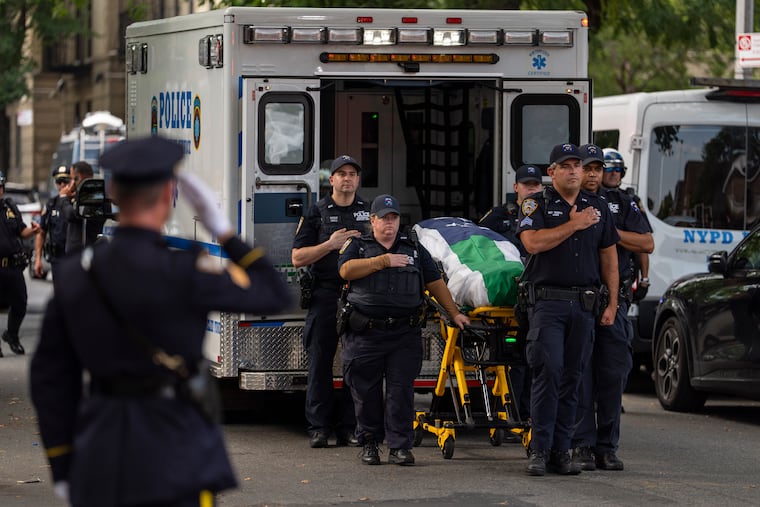
Islam was reportedly shot in the back by the gunman who eventually killed three others before taking his own life, and the officer died in surgery a short time later. In death, he was hailed for bravery by high-ranking officials and saluted with mournful pomp and circumstance. But arguably Islam’s greatest act of heroism was how he lived — devoting what little spare time he had to his two young sons, his eight-months-pregnant wife, his Muslim faith, and telling others in his tight-knit community of Bangladeshi immigrants that they could join him in making the most of what America has to offer.
Along a business corridor in the Bronx’s Parkchester community now called Bangla Bazaar, nearly everyone seemed to know Islam. A fellow police officer, Rakib Hasan, told CNN that his slain colleague was “humble, down to earth, very friendly, very approachable” and “a hardworking man.” In New York, Islam earned enough money from law enforcement to not only send some back to family in Bangladesh but also to donate thousands of dollars toward the launch of a new mosque in the neighborhood.
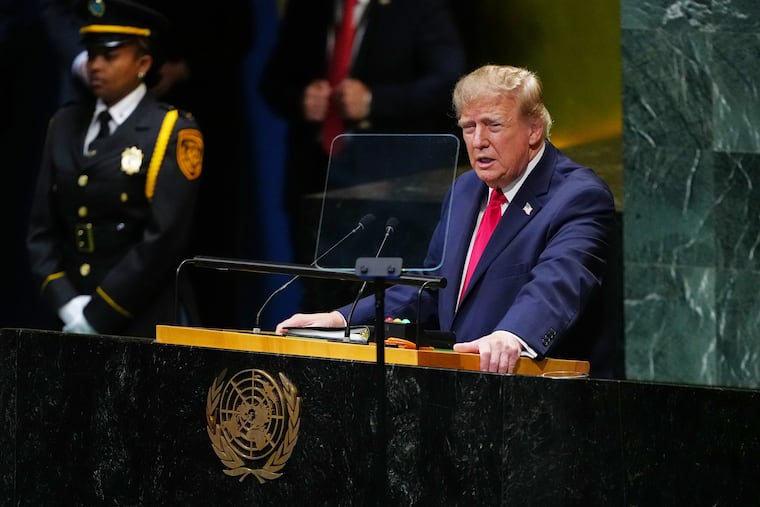
Even Trump had kind words in a post to Truth Social during his recent junket to Scotland, although he didn’t mention the Bangladeshi officer by name. “My heart is with the families of the four people who were killed, including the NYPD Officer, who made the ultimate sacrifice,” the president and native New Yorker wrote. “God Bless the New York Police Department, and God Bless New York!”
Still, as Islam is laid to rest Thursday after a prayer service at a Parkchester mosque, one can’t help but think about the rank hypocrisy that’s the unspoken part of this outpouring of civic grief for the murdered patrolman. Islam was a pillar of a thriving under-the-radar community of essential workers rejuvenating the once-declining Bronx — a community where many are now too fearful to merely buy groceries. And for what?
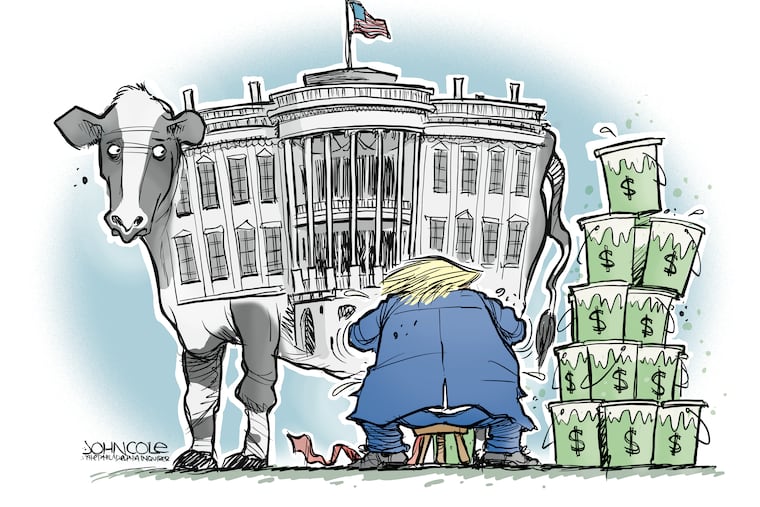
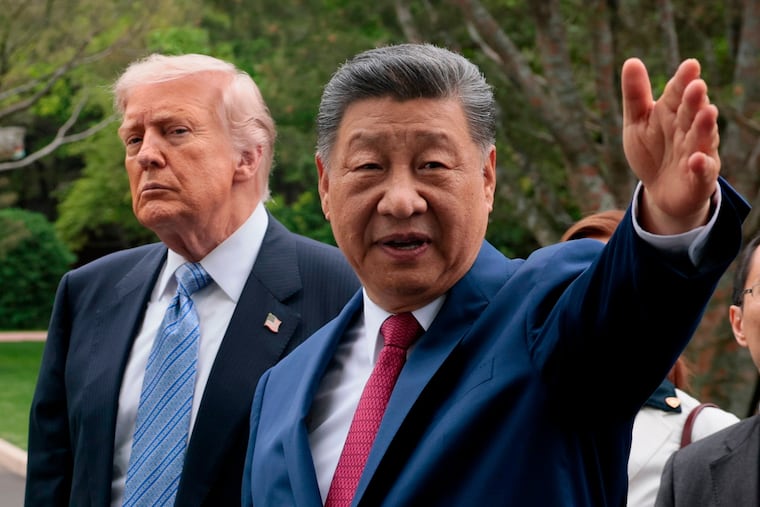
Last year, Trump was elected 47th president of the United States while pitching voters on a Big Lie that was arguably worse than his falsehoods about a stolen 2020 election, that immigrants are “poisoning the blood of our country.” Just over one year ago, I watched a packed Milwaukee arena go wild for this warped vision at the Republican National Convention, waving placards that read “mass deportation now!” Trump’s dark agenda even won a 2020 endorsement from the New York City police union — the same officers who now line the streets of America’s largest city and salute their Bangladeshi American colleague.
For some sad reason, it seems like tragedy is the only way to get everyday citizens and the news media to see the unvarnished reality of what immigration means to the heart and soul of the American experience. We saw it in March 2024 when six undocumented immigrants — doing essential, dead-of-night infrastructure repairs that so many native-born Americans refuse to do — died after a ship collided into and collapsed Baltimore’s Key Bridge.
These occasional news flashes remind us that immigrants do not “poison the blood” of America, but that new waves like the recent diaspora from Bangladesh are a much-needed transfusion of what actually makes us great. Yet these stories that we should be hearing are interrupted on the nightly news by images of masked secret police smashing car windows or tackling migrants just looking for a day’s work outside a Home Depot.
Like most immigrant communities in the United States, recent arrivals from the former East Pakistan that gained independence in 1971 after a bloody civil war come with a mixed bag of legal statuses. While some lack documentation or overstayed a visa, most arrived here legally and were essentially encouraged to come in the early 2000s through a “diversity visa” lottery program that targeted nations with low rates of U.S. immigration. So many Bangladeshis came — more than 200,000 at the start of the decade, with 93,000 in New York state — that their homeland was dropped from the diversity program in 2012.
Just three years ago, acclaimed international photojournalist Xyca Cruz Bacani published in the Asia Society Magazine her majestic pictures of their New York City community, along with an essay titled simply, “The American Dream of Bangladeshis.”
In the piece, she describes how the immigrants recreated a sense of belonging on the sidewalks of New York, aided by a large Facebook group called American Bangladeshi Community Help that assists with locating housing or jobs. “Going against deeply rooted American individualism,” Bacani wrote, “this sense of community has helped many navigate their new home country.”
Bacani also told the stories of individual Bangladeshis who give back at least as much to America as they get — arguably more. One was Mohammed Chishti-Shipu, an accountant who won the green-card lottery in 2010 and found his way to an overcrowded apartment in Queens, where he struggled to find work and even sold Jamba Juice on the street for a time.
Eventually he did find a job as an accountant, and although he faces what he calls “microaggressions,” and worries about barriers to promotion, over his brown skin and Muslim faith, Chrishti-Shipu said immigrants can succeed here through extra hard work. “America is the land of opportunity,” he told Bacani. “It is possible to be something or someone else. You must always be one step ahead of the locals to get more opportunities.”
Islam clearly lived by the same rules. A close family friend, Marjanul Karim, told the New York Times after Monday’s shooting that Islam, who worked as a school security guard before joining the NYPD about three-and-a-half years ago, had dedicated himself as a mentor to young Bangladeshi men, holding up his own path to the American dream.
» READ MORE: A ship crashed into a Baltimore bridge and demolished the lies about immigration
Indeed, one would struggle to invent more of a model citizen, including his deep belief in the power of his religion. Not long ago, according to the Times, Islam filmed a video taking in a lesson at the Bronx Islamic Cultural Center, to which he’d donated as much as $8,000, with his oldest son. New York’s embattled Mayor Eric Adams said it best after Islam’s murder: “He embodies what this city is all about.”
When a bullet shattered Islam’s dreams on Monday, it yet again obliterated the Big Lie about immigrants that has festered and metastasized over the last six months of masked kidnappings and swamp concentration camps, sweeping up many people with stories just like Islam’s. When you listen to the deserved praise and adulation for a hero cop on Thursday from America’s most powerful people, remember that not one word of this removes the fear that has paralyzed the Bangladeshi community, or millions of essential workers and students just like them.
No wonder the president won’t say Islam’s name, as his immoral Trump Tower of lies continues to crumble.