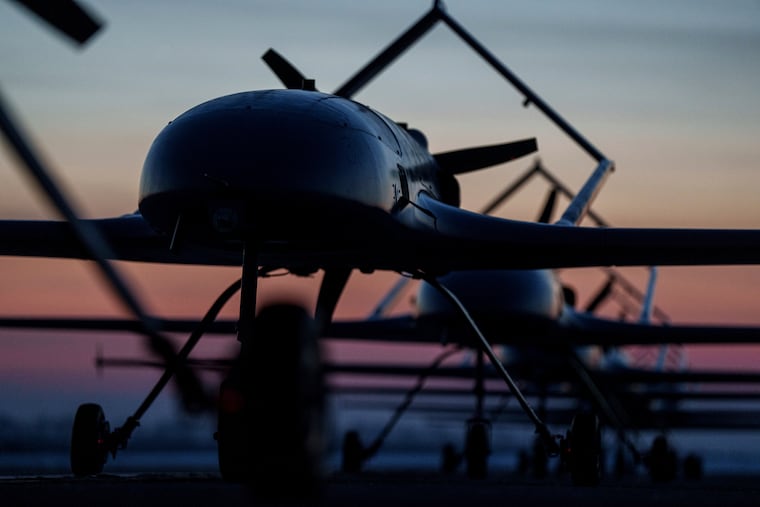
Drone technology is moving so fast, a whole new glossary may be necessary by next year. For now, here are a few terms needed to better understand drone operations.
UAVs: Unmanned, remote-controlled small aerial vehicles used for reconnaissance and attacks.
FPV (First-Person View) drones: Small, fairly cheap drones that transmit a live video feed to the operator, so he sees exactly what the drone sees.
Reconnaissance drones: FPVs used for spying on and mapping enemy positions, equipment and movements. Larger reconnaissance drones can loiter overhead for lengthier surveillance.
One-way attack drones: FPVs, or larger bomber drones and missile-carrying drones loaded with explosives and flown directly into a target.
Sea drone: Unmanned, remote controlled maritime systems that look like long, covered fishing boats filled with explosives and rammed into targets. Magura and Seababy drones, pioneered by Ukraine’s intelligence agencies, drove the Russian fleet out of the Black Sea. Some now carry missiles and have shot down helicopters and warplanes.
Land drones: Also known as land robots, these are small remote-controlled, cart-like vehicles on tracks or wheels used to carry supplies to or evacuate the wounded. They are also used for demining and some carry mounted guns or can fire rockets.
Fiber optic drones: Heavily used by Russia, they are guided by thread-thin fiber optic cables that can extend up to 25 miles, thus giving off no electronic signal. This makes them impossible to jam.
Long-range drones: Capable of flying deep into Russian territory but limited in how much explosives they can carry. Ukraine is focused on producing variants that can fly farther and carry larger missiles.
Interceptor drones: Drones that can destroy other drones in the sky. Ukraine is working intensely to develop and mass produce interceptors which can destroy the Russian Shahed drones that target civilian infrastructure.
AI Integration: Artificial intelligence is being rapidly integrated into drones so they can fly autonomously if their signal is broken and recognize targets. Ukraine insists targeting decisions will still be made by humans, but Russia shows no such concerns.
Drone pilots: Usually operating from close to the front lines, often using a headset, FPV goggles and a tablet, the pilot directs drones to their targets, using real-time data streamed by spy drones, and aided by a navigator who helps map the terrain and track targets.