The retirement loophole that just won’t die | Editorial
In 2010, Philadelphia thought it had fixed a technicality that let officials retire for a day, grab a lump-sum payment, and go right back to work. Two City Hall insiders still found a way to cash in.
City Hall just can’t quit abusing a retirement perk known as the Deferred Retirement Option Plan, or DROP, that was supposed to be self-sustaining but costs Philadelphians millions of dollars a year.
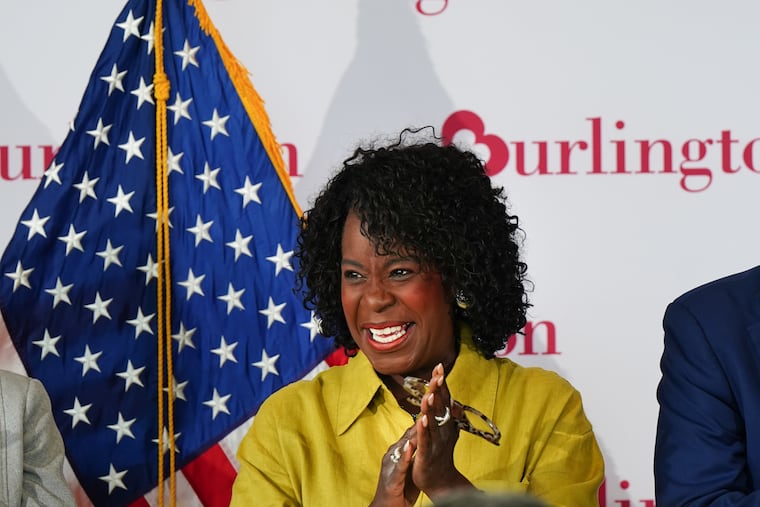
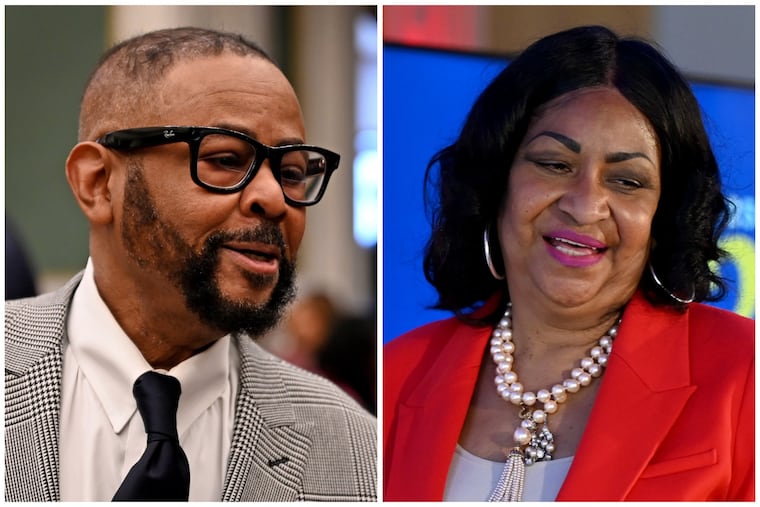
Now, along comes City Councilmember Curtis Jones Jr. and his wife, City Representative Jazelle Jones, to take it up a notch.
The power couple plans to collect up to $752,000 in combined retirement payouts. But rather than ride off into the sunset, they both plan to keep their respective six-figure jobs.
The scheme raises a question that has long plagued DROP: What is the point of a retirement incentive if the person doesn’t retire?
The problem goes back to 1999, when former Mayor Ed Rendell pitched it as a good government idea when it was really nothing more than a sweetheart enrichment program for city workers at taxpayer expense.
At the time, Rendell said DROP would not cost the city any additional revenue. But one study found that in its first 11 years, DROP cost the city $258 million, which is almost enough to cover the school district’s $300 million budget deficit this year.
For those unfamiliar with DROP, it is a program that allows eligible municipal employees to select a mandatory retirement date up to four years in advance. While they continue to get paid to do their job, the city makes pension payments into a special interest-bearing account that results in a lump-sum payout upon retirement.
» READ MORE: What lurks beneath Trump’s botched Reflecting Pool renovation | Editorial
After retiring, they receive their standard monthly pension. City workers contribute to the pension fund, but that does not cover all the pension fund liabilities, let alone the added costs of DROP, which are ultimately borne by taxpayers.
The added costs prompted several cities to eliminate or heavily restrict their DROP programs, including San Diego, San Francisco, Houston, and Baltimore.
In Philadelphia, more than 12,000 municipal employees collected DROP payments totaling $1.5 billion from 1999 to 2018. The payments have since topped $2 billion, according to one recent report by former Inquirer reporter Ralph Cipriano, who has long followed the program as an independent journalist.
Bottom line: DROP is not revenue-neutral.
Rendell’s other claim was that by entering DROP, the city would have four years to find or train a replacement for the retiring worker.
It was always ludicrous that it would take years to find or train a replacement when most places of employment manage to survive when a person gives two weeks’ notice. But that was the story, and the city stuck with it.
In the case of Jazelle Jones, four years’ notice was apparently not enough.
She was set to retire in September 2024, but Mayor Cherelle L. Parker asked her to stay on the job and issued a special exception so she could be rehired.
Following a one-day retirement, Jones, 70, received a $97,000 payout for unused sick and vacation time, in addition to a DROP payment of nearly $320,000. She was then rehired with a $4,000 pay bump.
Jones, whose annual salary is $199,000, serves as the city’s chief ambassador and director of special events, such as parades, concerts, festivals, and athletic events.
Parker defended the move because of Jones’ experience overseeing major events like the current World Cup games.
But there is no defending her Council member husband’s plan to collect his DROP payment and continue serving in office.
DROP was never intended for elected officials, since voters determine whether they get to keep their seats.
Controversy erupted in the early 2000s after several elected officials collected large DROP payments, retired for a day, and returned to office. City Councilmember Frank Rizzo Jr. lost his election bid in 2011 after he accepted a DROP payment.
In 2010, Council barred future elected officials from participating in the program — but grandfathered anyone already in office. That included Curtis Jones Jr., 68, who was first elected in November 2007.
He enrolled in DROP in August 2024 but plans to run for a sixth term next year. If Jones is reelected, he could then retire for a day in 2028, collect his $432,221 DROP payment, and then serve another four-year term. The Council member told The Inquirer he instead plans to retire in December 2027, collecting a reduced DROP payment closer to $350,000.
What a mensch.
Jones has publicly discussed delaying bridge repairs in his district to avoid traffic jams that may rankle voters during his reelection campaign.
Perhaps voters should beat a path to finding candidates who put the public’s interest before their personal gain.
Even better, the city should put an end to DROP.