Philadelphia School District just passed a $4.6B budget with classroom cuts
The school system faces a $300 million deficit after federal COVID funds dried up.
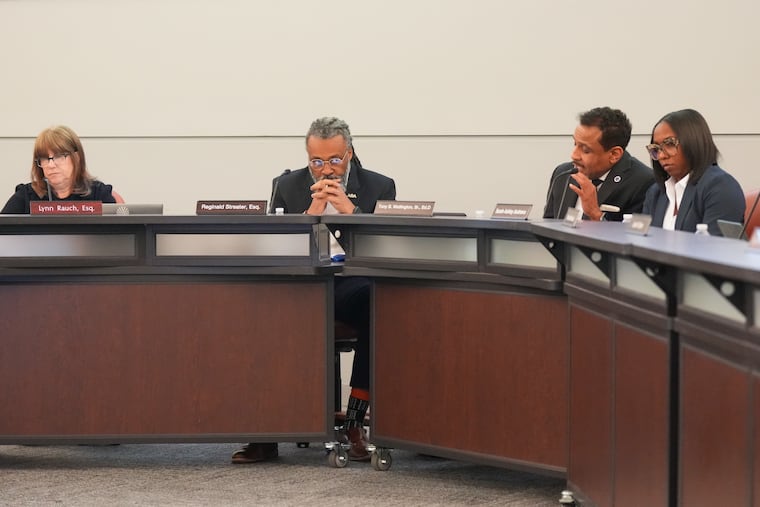
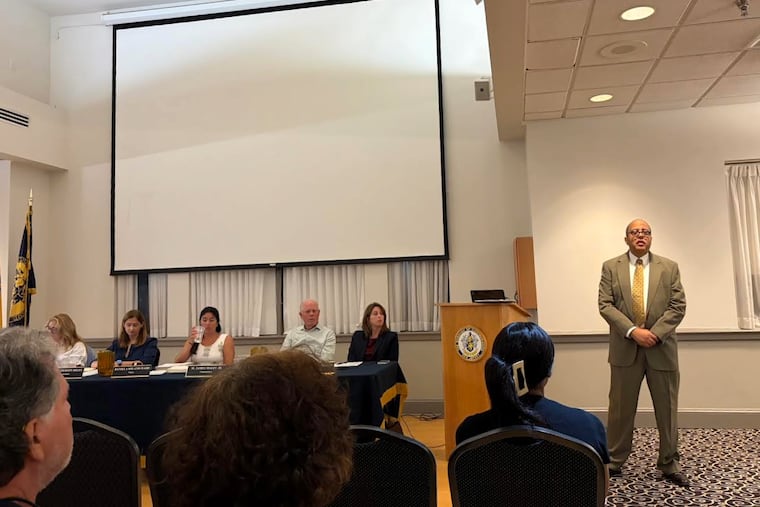
The Philadelphia School Board passed a $4.6 billion budget Thursday night — a spending plan that includes millions in classroom cuts.
The move comes as the school system faces a $300 million deficit after federal COVID funds dried up. The district is spending millions of its fund balance this school year to hold off cuts, but can no longer afford to keep doing so, Superintendent Tony B. Watlington Sr. has said.
To make ends meet, Watlington has ordered about $50 million in classroom cuts and an additional $169 million in central-office cuts.
» READ MORE: What budget cuts will mean for one Philly high school, which could lose 13 teachers and its college-prep program
Class sizes will rise as a result of the cuts. Across the district, 148 teaching positions and 117 climate positions will be lost, though no workers will be laid off.
In effort to stave off the cuts, Mayor Cherelle L. Parker has proposed a $1-per-trip tax on rideshare services such as Uber and Lyft that she has said would generate about $50 million and pay for the positions Watlington has said he needs to cut.
But the rideshare tax faces steep opposition, both from City Council and from companies like Uber, who have mounted a fierce public and private lobbying campaign. Watlington has said if the tax passes, the positions will be restored.
Some public-school advocates, including city principals, have said the district needs the Uber tax to keep afloat.
Tiffany Johnson Wilson, parent of a child at Nebinger Elementary in South Philadelphia, came to the board to express her “deep disappointment with the proposed FY26-27 budget and the significant school-based cuts being considered,” she said. “We cannot continue to ask our school communities, educators, and students to do more with less.”
Ernie Bristow, an activist with grandchildren in the district, said she was frustrated with “the continued failure to invest in our public schools, year after year.” Bristow urged the board to vote down the budget.
But the spending plan passed unanimously.
Chief financial officer Michael Herbstman praised Parker for her “courage” in proposing the rideshare tax.
“While I’m agnostic to how we get the dollars, I want to note that we desperately need additional revenue,” Watlington said.
And though the board’s $1.3 billion multiyear capital improvement budget also passed, board member ChauWing Lam voted no because of unresolved concerns.
That budget contains no funding for the construction of a new high school in the Northeast to relieve overcrowding. Such a school was promised in the facilities plan passed by the board on April 30, which plans 17 school closures, 169 modernization projects and the new school.
Deputy Superintendent Oz Hill said that construction project was not included because it’s dependent on state and philanthropic funding that has not been secured.
Anger over school closings lingers
Prior to the meeting, several City Council members held a rally to show they’re still furious about the board’s approval of a facilities plan that closes 17 schools while renovating 169.
The school system signed off on “Accelerating Philly,” the $3 billion buildings plan, on April 30.
That action exposed a chasm between the board and some members of City Council. Several Council members disrupted the April meeting, sending the board into a closed-door session to finish its vote via videoconference.

Wholesale changes are coming to the Philadelphia School District, with the school board passing a $3 billion facilties plan that aims to close 17 schools permanently, and renovate 169.
Superintendent Tony B. Watlington Sr. presented the plan to the school board Feb. 26 and it immediately faced strong opposition. After some amendments, the board passed the plan April 30. Here's what we do and don't know about it.
And to see the proposed list school closures and check how your school could be impacted, use our interactive charts.
Each of the schools proposed for closure has its own story. Find them all here.
Councilmember Isaiah Thomas said Council would keep up its activism until the board relented.
“We are asking them to come back to the table,” Thomas said. “Politics is a happy compromise. What you saw at the last meeting was our response to them walking away from the negotiating table.”
Asked if he would consider tying support for Parker’s Uber tax to movement on school closings as Council goes into a week where it could pass a city budget, Thomas shook his head.
“I see it as two separate issues,” said Thomas.
But, he said, he wants to work to “make sure that we do everything in our power that the school district has everything that they need.”
Earlier, Thomas and other Council members made several threats against the board, including possibly holding up funding and failing to vote for future terms for board members. Thomas also called for the resignation of every board member who voted for school closings.
He and others wanted Lankenau and Robeson high schools and Overbrook Elementary removed from the closing list.
Though Council has no direct say over the district’s decision-making process, it does control a significant chunk of the school system’s finances.
Unlike every other school system in Pennsylvania, Philadelphia cannot raise its own revenue — it falls to city and state lawmakers to do that. In addition to approving or squashing the Uber tax, Council is also responsible for appropriating about 40%, or $2 billion, of the money in the district’s general fund coffers.