Harrisburg finally passes a state budget, but it comes at a steep cost for Pa.’s antipollution efforts | Editorial
After four months of haggling, the General Assembly passed a $50.1 billion budget. Ultimately, the logjam was broken by a pledge to end the state’s participation in an effort to stem greenhouse gases.
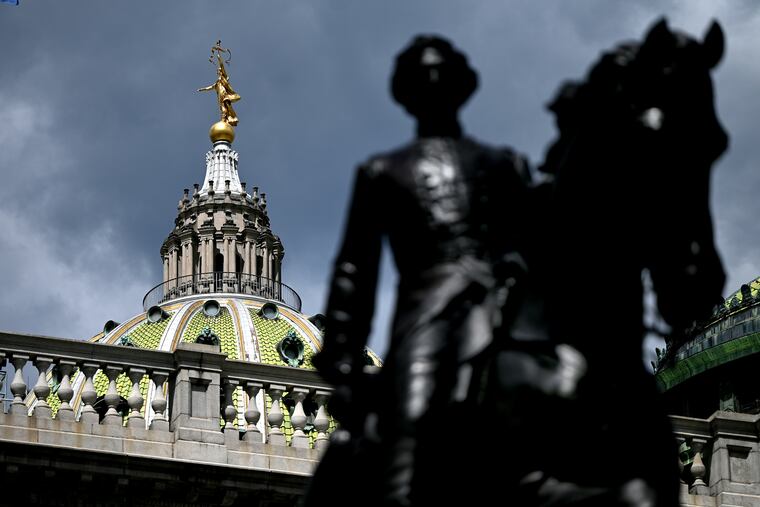
After more than four months of finger-pointing, Pennsylvanians finally have a budget.
Gov. Josh Shapiro and legislative leaders agreed to a $50.1 billion spending plan, with no new revenue sources. Residents, especially in the southeastern part of the commonwealth, can justifiably ask what took so long, and why their own priorities were sacrificed while other regions were rewarded.
Throughout the summer and early fall, the state Senate Republican majority and their allies decried what they described as out-of-control spending. In the end, they agreed to spend just $200 million less than a proposed budget passed by House Democrats barely a month ago.
Money, it turns out, was not the major sticking point. Instead, GOP lawmakers extracted a commitment for the commonwealth to abandon its participation in the Regional Greenhouse Gas Initiative, a plan by 11 states that requires the energy industry to reduce carbon dioxide emissions.
The state’s withdrawal from the initiative was an ask made by senators from Western Pennsylvania, where natural gas and coal power plants remain a crucial part of the local economy.
The initiative, known in political circles by its initials RGGI (pronounced “Reggie”), is a market-based effort to promote clean energy sources using strategies that Republicans once championed themselves.
According to the Southern Environmental Law Center, the states participating in the program have seen their fossil fuel emissions drop 90% faster than the rest of the country. The program also helps local communities anticipate the risks of climate change by investing in mitigation efforts.
Former Gov. Tom Wolf enrolled the state in the program through an executive order in 2019. Almost immediately, Harrisburg Republicans — concerned about how the program would affect the natural gas industry — challenged the legality of the state’s participation in a case that has long been pending before the Pennsylvania Supreme Court.
Environmentalists rightly decried Pennsylvania’s abandonment of the multistate, antipollution effort.
“The agreement by Democrats in the state House, Senate Republicans, and Gov. Shapiro to pull Pennsylvania out of what is arguably the most successful state-level program in the nation for reducing global warming pollution will be remembered as a day of climate infamy in Pennsylvania politics,” David Masur, executive director of PennEnvironment, a nonprofit advocacy group, told The Inquirer’s Frank Kummer and Gillian McGoldrick.
While hundreds of millions of dollars in additional education funding and an earned income tax credit for working families represent wins for the Democratic side of the aisle, it is worth asking why the party did not gain more in exchange for walking away from RGGI and giving up its quest for sustainable mass transit funding.
» READ MORE: Shapiro and Senate Republicans need to get SEPTA funding done | Editorial
SEPTA still has the oldest train fleet in the nation, will soon be operating nearly 20-year-old buses, and is the largest American transit system that is in a fiscal crisis.
If Republicans were able to repeal RGGI by holding out for weeks and months, why weren’t Democrats able to win more money for mass transit by doing the same?
Pennsylvania’s school districts, nonprofit service providers, and local governments can all express relief that funds will finally begin flowing again from Harrisburg.
They should also insist — as forcefully as they can — that next year must be different.