Report about security failings around the arson attack on Gov. Shapiro should be made public | Editorial
Pennsylvanians have a right to know what a report they paid for says about the failure of the law enforcement officers they employ to protect a mansion they built and the governor they elected.
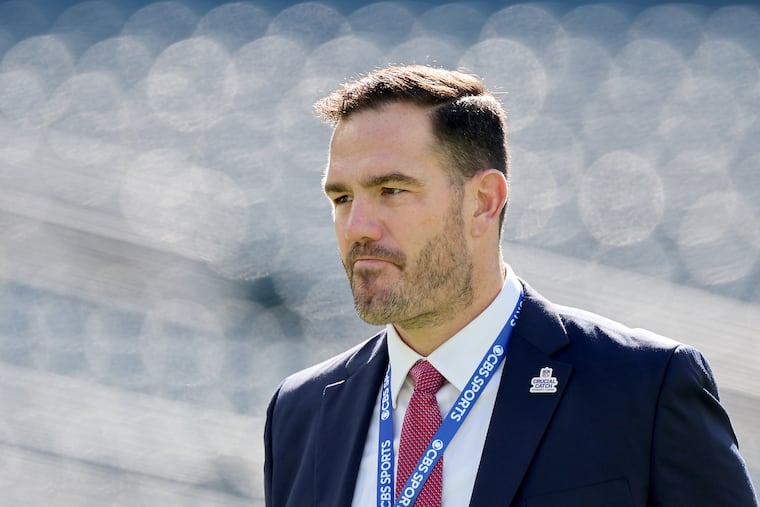
Editor’s Note: The editorial below about the investigation regarding security lapses leading up to the arson attack at the governor’s mansion failed to include additional context about the role the consultant who was hired to look into those failings had in an earlier case as head of security for the National Football League.
The consultant, Jeffrey B. Miller, had oversight of the NFL’s examination of allegations that former Baltimore Ravens player Ray Rice had physically assaulted his then-fiancée in the elevator of an Atlantic City hotel in February 2014.
The editorial failed to note that although the Associated Press reported that Miller had been sent a video of the assault, a subsequent four-month independent investigation led by former FBI director Robert Mueller found no evidence that the video was sent or, if sent, that Miller or anyone else at the NFL had received or viewed the video before it was published by the celebrity news site TMZ in September 2014.
The editorial also should have noted that while the Associated Press reported that a voicemail from an NFL office number confirmed receipt of the video and commented that it was “terrible,” the investigation conducted by Mueller’s team found no evidence that such a call occurred.
The complete report into the NFL’s handling of the Ray Rice case by the Mueller team can be found here.
The Inquirer regrets these errors.
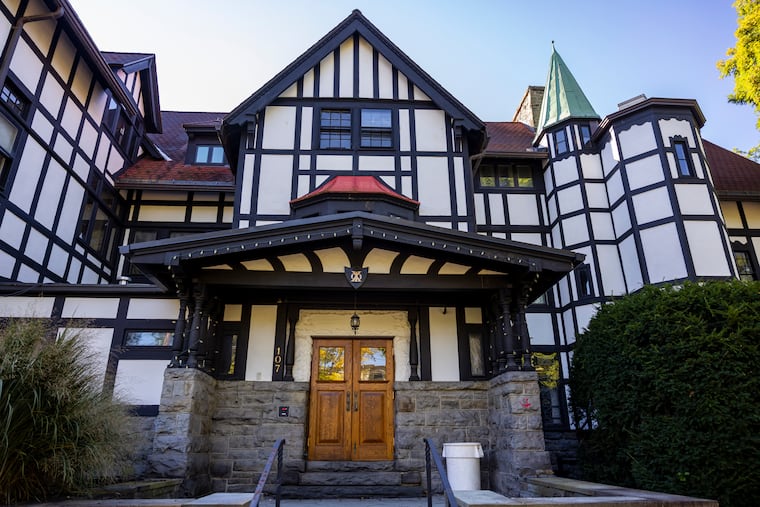
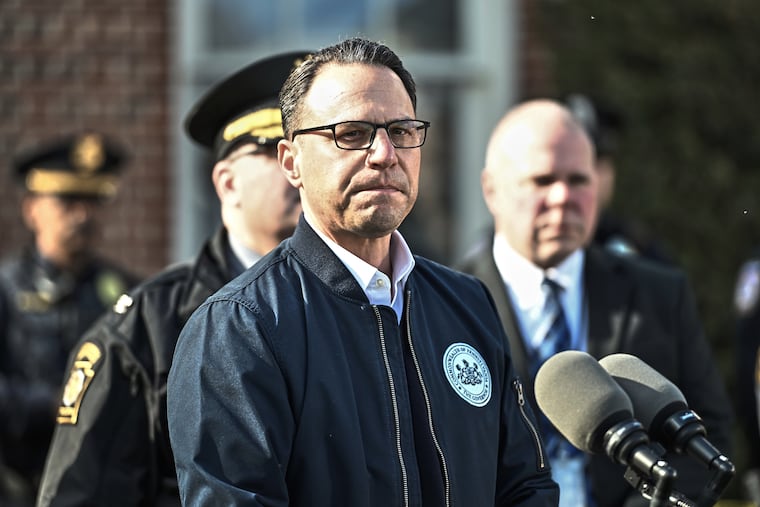
Last month, the security systems designed to protect Gov. Josh Shapiro, his family, and the governor’s official residence in Harrisburg failed.
A man armed with Molotov cocktails and a hammer was, the authorities allege, able to scale a fence, set a significant portion of the governor’s mansion on fire, and evade capture. The governor and his family — awakened by their security team — were able to flee the residence unharmed. But if not for a call confessing to the incident, the suspect, Cody Balmer — who, according to his family, was living with schizophrenia and bipolar disorder — might still be on the loose.
The event left Pennsylvanians with many questions: How was Balmer, struggling with mental illness, able to circumvent security protocols? Why didn’t scaling the fence or breaking windows trigger a more substantial law enforcement response? Why didn’t police act on Balmer’s earlier threats or desperate pleas from his family? How can we be sure the governor’s mansion is safe from future attacks?
Until the Pennsylvania State Police release the report it commissioned to investigate its errors, the public will not know the answers to these questions.
» READ MORE: The arson attack on Gov. Shapiro is yet another troubling escalation of political violence | Editorial
Rather than publish a redacted version of the report, Jeffrey B. Miller, the security consultant hired for the review, said the “sensitive nature” of the investigation’s findings precluded their release.
While the urge to safeguard detailed information about how law enforcement protects is understandable, Pennsylvanians have a right to know what a report they paid for says about the failure of the law enforcement officers they employ to protect a mansion they built and the governor they elected.
Additionally, the choice of consultant also leaves much to be desired.
Instead of hiring someone with no relationship with the state police, the review was led by a former chief who, to judge by his tenure as the head of security for the NFL, doesn’t exactly inspire confidence in his ability to examine all of the available evidence in a case.
When former Baltimore Ravens running back Ray Rice brutally beat his then-fiancée in an Atlantic City casino elevator in April 2014, it was Miller who was sent the evidence, which was labeled as “terrible.” Despite a league employee acknowledging the receipt of the video, Miller publicly claimed he didn’t see it until five months after it was sent — once its existence was reported by the tabloids. Two years later, Miller left the league.
This is hardly the first time state troopers and their conduct have been questioned. While troopers pull over drivers of different races and ethnicities at roughly comparable rates, they are more likely to conduct a discretionary search on Black and Latino motorists. Troopers have been known to shoot at fleeing vehicles despite the ill-advised nature of the practice. The agency even named Jay Splain as Trooper of the Year after he shot and killed an unarmed man in a Volkswagen Beetle, his fourth shooting.
» READ MORE: Stricter rules and accountability needed to curtail dangerous police pursuits | Editorial
This is also not the first time the agency sought to evade public and independent assessment.
The state police investigate their own shootings, a practice a grand jury called “arrogant.” It also ensures troopers will likely never face accountability, as no officer in the 120-year history of the force has ever been criminally prosecuted for firing their weapon.
So far, Shapiro has maintained a collegial relationship with the state police, an extension of his rapport with the agency when he was attorney general. He’s managed to pass significant funding increases for the agency in his budgets each year, even as priorities like public transportation have failed to make the final cut in his proposals.
The silence around the arson attack is yet another example of why state troopers need more accountability and independent oversight. Shapiro should demand it.
Pennsylvanians deserve a state police force that isn’t afraid of outside scrutiny.