Pennsylvania lawmakers passed a budget — and ducked every hard question | Editorial
The General Assembly avoided the state’s thorniest fiscal fights — skill games, minimum wage, transit funding. Voters should demand answers.
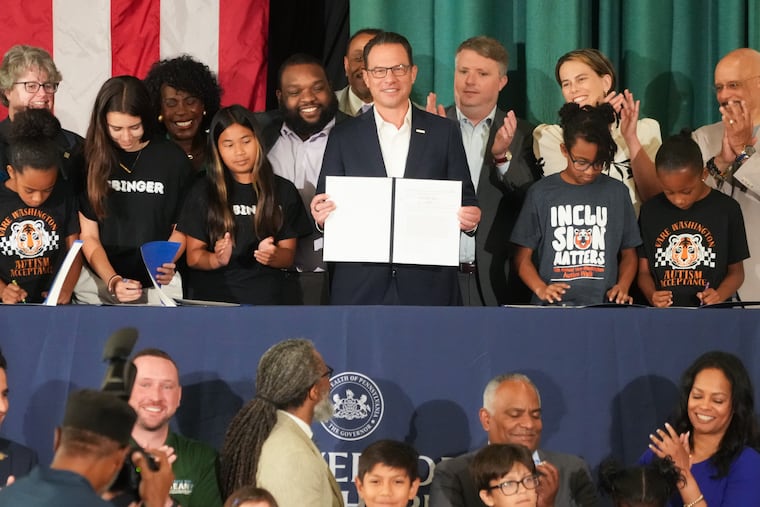
Unlike last year, when lawmakers missed the deadline for a new state budget by five months, Pennsylvania’s $50.8 billion spending plan has been approved by the General Assembly, signed by Gov. Josh Shapiro, and is now in place.
But faced with the prospect of another embarrassing budget impasse at the expense of state-funded services like schools and libraries, Harrisburg chose another shameful option: They punted.
The Keystone State has a divided legislature. In the Senate, Republicans hold 27 seats, while Democrats hold 23. In the House, the margin is even closer. Democrats hold 102 out of 201 seats. With the commonwealth this closely divided — and the state facing evident funding challenges — bipartisanship should be the order of the day, not political gridlock.
Voters have every right to ask their representatives why they still have not been able to find common ground on addressing such annually recurring budget topics as whether to tax skill games, whether there is a sustainable means to increase public transportation funding, or how to go about raising the state’s minimum wage.
» READ MORE: Todd Blanche hasn’t stopped putting Trump ahead of the law. That’s why he can’t be attorney general. | Editorial
By putting off decisions on those fiscal questions and others, Pennsylvania’s ability to invest in its infrastructure is limited to a narrow range of options that include raising taxes or raiding the Rainy Day Fund. This year’s budget also papers over a potential deficit by “rolling over” more than $1 billion in Medicaid spending until next year.
One of the biggest ways to generate more revenue for the state would be by taxing and regulating the slot machine-like devices known as games of skill. While many Harrisburg observers felt that a recent state Supreme Court ruling classifying these devices as a form of gambling would spur action, legislators chose to do nothing.
Of course, if state leaders were more driven by doing the right thing than by thinking mostly of political convenience, they’d ban the devices altogether. But lawmakers can’t even find a way to agree on such basic questions as what rate to tax the machines at, which agency should regulate them, and what priorities should be funded by the money they generate.
Another untapped revenue source is recreational marijuana. While that money comes with legitimate concerns about public health and regulatory conflicts, the reality is that residents of the commonwealth already have access to cannabis products for recreational purposes. The money is just flowing to the black market and across Pennsylvania’s borders into nearby states instead.
Of the six states that share a border with Pennsylvania, only West Virginia continues to ban recreational use, even as the federal government moves forward with easing marijuana restrictions. While the bulk of the revenue from recreational marijuana sales should go to the general fund, some should also be reserved for research and prevention. Programs like Alaska’s Marijuana Education and Treatment Fund provide a good model. Some of the revenue could also be used to support more youth development programs.
The collective “Philly Shrug” by the General Assembly also means another year of uncertainty for SEPTA, which has made significant progress in reducing its deficit, increasing paid ridership, and keeping vehicles and stations clean.
» READ MORE: Trump’s all-out assault on free and fair elections undermines trust in democracy | Editorial
The transit agency’s customer satisfaction surveys show record-high results, serious crime is down, and the agency has saved around $30 million per year in operating costs despite investments in additional police and hundreds of new cleaners. If next year’s budget process fails to adequately fund transit, these efforts will not be enough to forestall the devastating service cuts the region narrowly avoided last fall.
That’s not to say there’s nothing to celebrate in this budget.
While Pennsylvania is still far from achieving the education funding parity laid out in the landmark Commonwealth Court ruling on education funding, state leaders did vote to send an additional $670 million to schools across the state, including $157 million more for Philadelphia. The bulk of that money will go through the state’s new “adequacy formula,” which was created to fix gaps in equitable funding.
It is good that the commonwealth avoided the months of delays that accompanied last year’s budget process. But unless there’s a change of heart — or in Harrisburg’s partisan makeup — it seems state leaders will continue to delay key decisions on critical issues at the expense of all Pennsylvanians.