Philly schools will get $157 million more in this year’s state budget. Gov. Josh Shapiro came to South Philly to tout the plan.
Philadelphia schools will receive $137 million in adequacy funding and $20 million in other new funding. The district will also be able to compete for money set aside for school facilities projects.
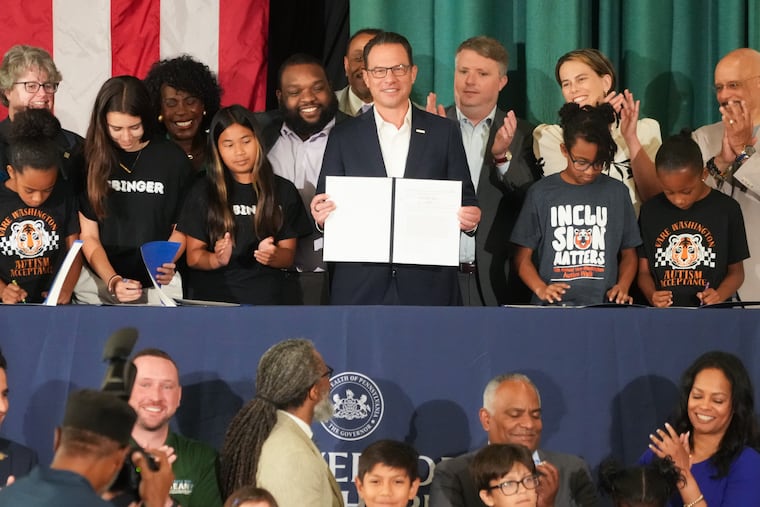
Gov. Josh Shapiro on Tuesday visited Vare-Washington Elementary School in South Philadelphia to tout the $678 million in new education funding included in the state budget deal finalized over the weekend.
The new education funding — including $565 million in “adequacy funding” to aid poorer districts — represented one of the most significant victories the first-term Democratic governor took home from the $50.8 billion state budget deal, which did not address lingering issues such as taxing so-called skill games and long-term funding for SEPTA and other public transit agencies.
» READ MORE: Here’s what’s in — and not in — Pennsylvania’s $50.8 billion state budget
The Philadelphia School District will receive $137 million in adequacy funding and $20 million in other new funding. The district will also be able to compete for a share of $125 million set aside for school facilities projects.
Philadelphia’s cash-strapped district, which entered this year with a $300 million structural budget deficit, still faces deep challenges. The school board this year approved a facilities plan to close 17 school buildings and renovate 169 more.
“We’re driving this money out to the schools that need it most — school districts like Philadelphia, Norristown, Pottstown, and Allentown, and others in our region," Shapiro said. “They were getting shortchanged, and now they’re getting the lion’s share of this new funding.”
While it broke little new ground, this year’s state budget deal helped avoid another prolonged impasse involving Shapiro, the Democratic House, and the Republican Senate. Last year, lawmakers failed to reach a compromise until 135 days after the July 1 budget deadline, leaving school districts and local governments across the state in limbo for months.
Lawmakers approved this year’s deal 12 days late.
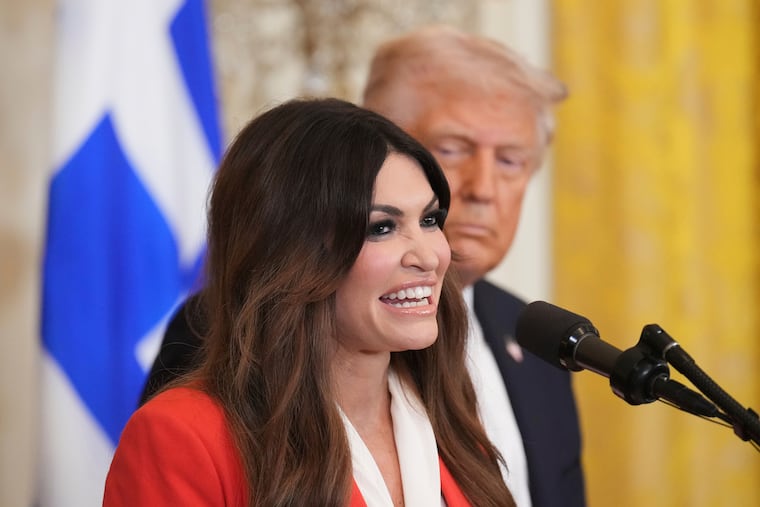
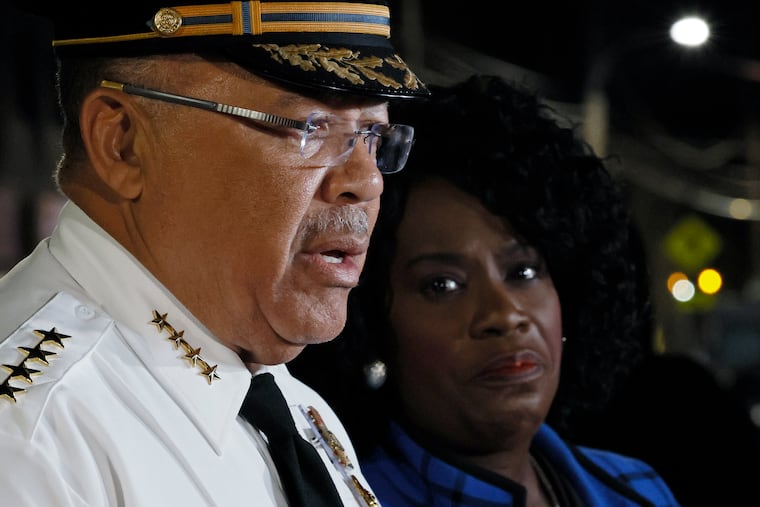
“I‘m one of the only governors in the country with a divided legislature, one of the only legislatures that has to negotiate with people on the other side who really have a very different view, who don’t think the way we do about investing in public education,” said Shapiro, who was joined by Mayor Cherelle L. Parker and numerous Philadelphia Democratic lawmakers. “We have all been clear that we would not get up from the table in Harrisburg until we fully funded public education, and we’ve done that.”
The new adequacy funding is the third infusion of money resulting from a formula lawmakers adopted in the wake of a 2023 Commonwealth Court ruling that said Pennsylvania’s former method of funding schools, which relied heavily on local property taxes, was unconstitutional.
The formula calculated that a majority of Pennsylvania schools were underfunded, by a total of $4.5 billion. For the last three years, the state has given those schools an extra $565 million a year, filling about one-third of the gap. The state plans to fully address the shortfall by 2032.
Advocates for underfunded districts, like Philadelphia’s, have credited the state for sticking with the plan, but have also said the money is flowing too slowly for struggling districts. Meanwhile, Republican lawmakers have challenged the increased funding for poorer districts, saying others are getting shortchanged by the new system.
Philadelphia’s school district, the only one in the state prohibited from raising its own revenue, relies on city and state lawmakers for its funding.
Parker this year clashed with City Council over how to deliver roughly $50 million to the district to help close a budget gap that threatened to eliminate 340 classroom positions. Council ultimately rejected Parker’s proposal — to levy a $1-per-ride tax on rideshare services like Uber and Lyft — and instead pulled from one-time funding elsewhere in the budget while promising to find a new recurring revenue source for the district.
“We have limited revenue-generating capacity in the city of Philadelphia,” Parker said Tuesday. “I wish I could tell you, as mayor, that we had all of the money that we needed to address problems, but that is not the case. Our city can’t be successful without a strong partnership from Harrisburg.”
Parker thanked Shapiro and the city’s delegation to Harrisburg for “keeping your word” and delivering more education funding to Philadelphia from the state.
Vare-Washington is one of 40 Philly schools included in Parker’s Extended Day/Extended Year initiative, which provides additional programming for students outside normal school hours.
During her remarks, Parker led the students assembled at the event in several call-and-response chants, including, “Excellence matters — at Vare-Washington!”
“I want to hear you say, ‘Thank you — Gov. Shapiro!’” Parker said in another chant. “‘Thank you — Harrisburg legislators!’”