Trump’s choice: Let Israel adopt his ‘Gaza Riviera plan’ and expel Palestinians, or press Netanyahu for a ceasefire
Israel wants to make Gaza uninhabitable and annex the West Bank to force Palestinians out.

The increasing recognition of Palestinian statehood at the United Nations won’t change the horrific plight of civilians on the ground in Gaza, which is growing deadlier by the day.
As moderate Arab leaders pressed President Donald Trump at a U.N. General Assembly meeting last week to put forward a coherent Gaza peace plan, Israel pressed on with its plan to wipe out Gaza City, home still to hundreds of thousands of civilians. The plan had been opposed by Israeli military leaders as likely to doom the 20 or so living Israeli hostages, since it meant abandoning any serious efforts to negotiate a ceasefire.
But Prime Minister Benjamin Netanyahu appears wed to a strategy dictated by his messianic far-right political allies, whose support he needs to retain power: raze Gaza’s cities, force most of the two million Gazans into a small confined space in the south, and make their lives so horrendous that the population agrees (or is forced) to flee into Egypt’s Sinai desert.
Trump’s “Gaza Riviera plan” — which he proposed in February, and calls for moving Gazans out to make way for a real estate bonanza of beachfront resorts and casinos — inspired this strategy.
Unless the president condemns it now and leans on Netanyahu to accept a ceasefire and and a serious plan “for the day after,” the prime minister will lead Gazans, along with Israel and peace-minded Arab states, toward disaster — and the blood of Gazan children and Israeli hostages will stain Trump’s hands.
This grim prospect has little to do with Israel’s justified military response to attack Hamas after its brutal Oct. 7, 2023, slaughter of 1,200 mostly civilian men, women, and children, and taking of 250 hostages.
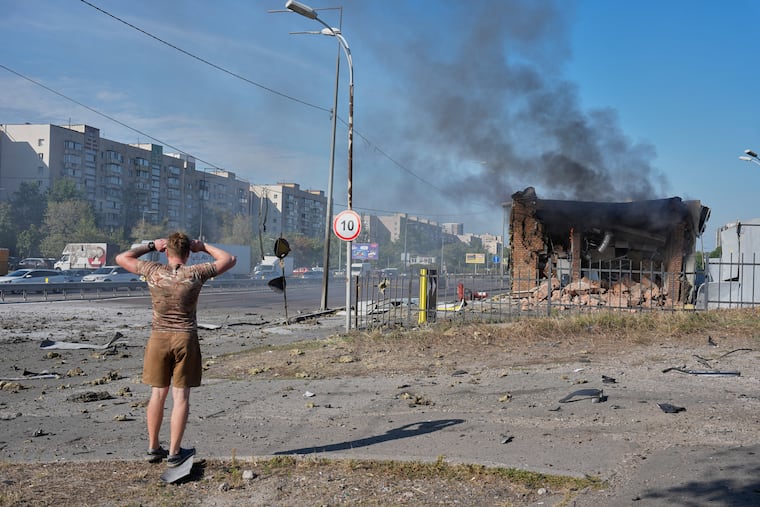
What has happened since is a deliberate Israeli government war on civilians that goes far beyond mopping up the remnants of Hamas. The destruction of Gaza City leads inevitably to the concentration of millions of civilians in a tiny space near the border with Egypt. It creates circumstances in which there is no way for them to survive.
To see the plan’s outlines clearly, let’s review recent history.
Two years of war have led to the destruction of Hamas leadership and the breaking of its underground structure, along with the deaths of more than 65,000 Gazans and 166,000 wounded, according to the Gaza Health Ministry. More than two-thirds of the casualties are civilians, according to the Israeli military’s own data.
Those statistics were also confirmed earlier this month by none other than former Israeli army Chief of Staff Herzi Halevi, who told an Israeli audience, “There are 2.2 million people in Gaza, and more than 10% of them have been killed or wounded.” Do the math, and it confirms the health ministry’s toll.
Yet, because the Israeli government bans almost all foreign media from Gaza, while censoring Israeli press and openly targeting well-known Palestinian journalists for death, many Americans still don’t grasp the full horror that has befallen civilians in Gaza, which Israeli officials consistently deny.
However, the starvation and slaughter — along with total relaxation of normal rules of war for Israeli bombs hitting apartment buildings, hospitals, and shelters — cannot be hidden. Courageous Palestinian stringers for international news outlets and incredibly brave staff from international aid agencies, along with innumerable posters on Facebook and other social media, report the heartbreaking details.
“People are collapsing in the streets from emaciation,” posted Abdelraheem Hamad, an International Rescue Committee staff member, recently. “One day, I saw a child digging through a pile of trash for food. He found nothing — there are no scraps left. That moment captured the meaning of famine in a way words cannot describe. At home, I had only two loaves of bread to feed six people. We’re not just witnessing hunger anymore — this is starvation unfolding in real time,”
This was before the Israeli military moved into Gaza City and started blowing up residences and high-rise apartment buildings, from which 500,000 people have now fled. Yet, around 500,000 remain, who are too old, too sick, or too weakened by hunger to leave.
Earlier this month, 45 aid agencies with staff working in Gaza, including Philadelphia’s American Friends Service Committee, warned that “intensified Israeli military attacks on Gaza City and forced displacement orders for the entire city are leaving families with an impossible dilemma: flee and risk death on the road and in overcrowded displacement areas or stay and face relentless bombardment. Starvation and siege await them regardless.”
The starving people, most unable to pay for transport, who are trudging miles south with little food or stamina to survive, have nowhere to go. Hospitals have closed. Water is almost impossible to find.
Once in the south, most people have no money for tents, nor is there room to pitch them.
Food aid is distributed at only four sites in the south by the controversial U.S.-backed, Israeli-run Gaza Humanitarian Foundation. The Israeli military, which provides security, has killed 2,500 desperate aid-seekers, mostly young men and children, and wounded 18,000 since the foundation began operating in late May, according to the U.N. Office for Humanitarian Affairs.
Israel’s far-right ministers have, from the beginning, justified starvation as a weapon.
Early in the summer, Defense Minister Israel Katz proposed that a huge camp be constructed for several hundred thousand of the new refugees on the ruins of Rafah — to be called “Humanitarian City” — from which they couldn’t leave unless they wanted to exit the country. Conveniently, it would be located near the border gate with Egypt.
In July, Netanyahu reportedly soured on the plan because it would take up to a year and be too expensive, not because the idea was redolent of concentration camps of yore (though, of course, lacking execution chambers). He demanded a more efficient proposal.
This month, Finance Minister Bezalel Smotrich revived the Trump Gaza Riviera plan at an Urban Renewal Summit in Tel Aviv, Israel. He claimed that “the demolition is always the first phase of urban renewal. We did that, now we need to start building.” He said the plan was “on President Trump’s desk.”
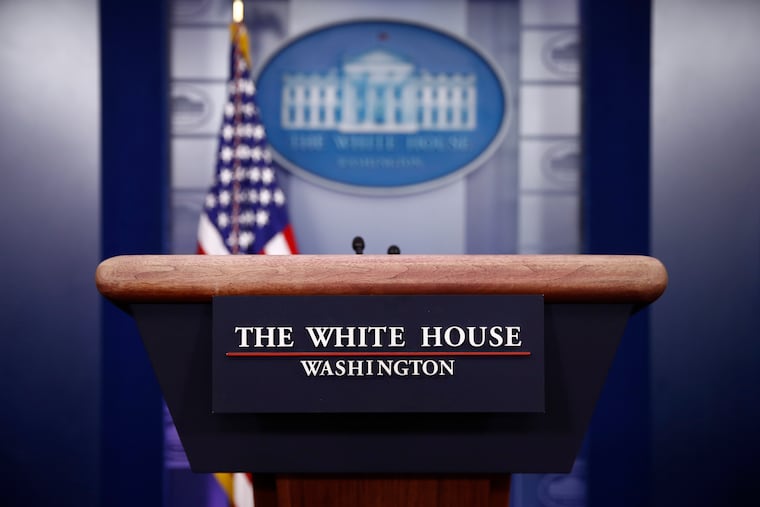
Trump will meet on Monday at the White House with Netanyahu, who is now talking about annexing all or parts of the West Bank, and is permitting violent settlers to level villages and create homelessness there. Trump has said “no annexation,” but reports say discussions continue.
The writing is on the wall, and Trump has an immediate choice.
He can stand by and let the peace process die while Netanyahu pursues the ethnic cleansing of Gaza and the West Bank — which will threaten the peace treaties with Egypt and Jordan, and destroy any hope for expanding the Abraham Accords. Or Trump can use America’s huge leverage to end the Israeli leader’s Riviera dreams - and to force him, as well as Hamas, toward a ceasefire and a serious peace plan.
The lives of millions of Palestinians, along with 20 Israeli hostages and untold numbers of Israeli soldiers, hang in the balance. And so does America’s standing in the Middle East.