Trump’s immigration crackdown also threatens Americans’ pocketbooks
Under the president’s policies, which also curtail legal immigration, families will end up paying an extra $2,150 a year for goods and services by 2028.
Regardless of how you feel about immigration, President Donald Trump has made a mess of his promise to deport the estimated 13 million people who are in the U.S. illegally. A vow that more than half the country supported last year, and which undoubtedly (along with the high cost of eggs) helped him take back the White House.
Today, not only has a majority of the electorate soured on the idea — including some Trump voters — but almost half are also ready to abolish U.S. Immigration and Customs Enforcement after the administration’s heavy-handed tactics have cost two U.S. citizens their lives in Minneapolis.
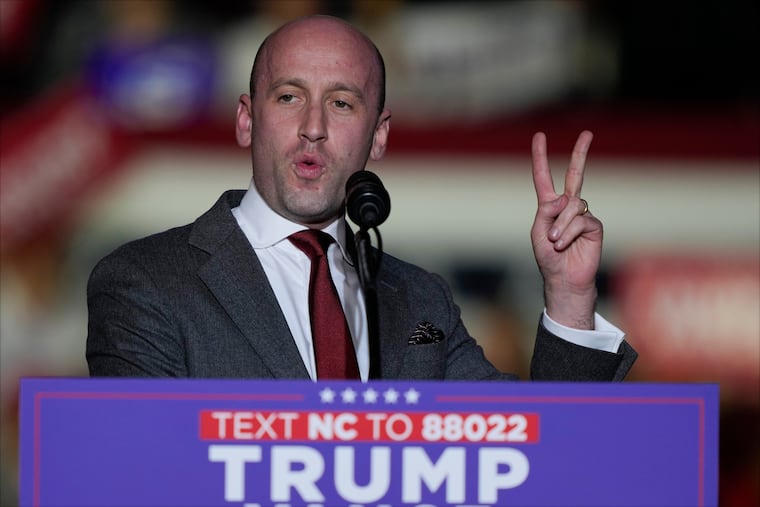
But let’s step back for a moment and imagine a world where Trump’s agenda was not being implemented by a white supremacist like homeland security adviser Stephen Miller or run by incompetents like Homeland Security chief Kristi Noem.
In that world, members of the administration would still have their work cut out for them, and protests would surely erupt. But ICE methodically engaging in workplace raids, for example, would prove a much more palatable (and effective) strategy than having masked federal agents arrest people using weapons and tactics that scream invasion, not law enforcement.
Still, at the end of a year or two of those more restrained efforts, we would likely be where we are now — with most Americans realizing mass deportations and limiting legal immigration don’t make much sense.
It wouldn’t even be about the human cost of blanket immigration enforcement; it would be about the expense.
» READ MORE: Alex Pretti is the latest victim in the Trump administration’s drive for dominance | Luis F. Carrasco
No, not just the $170 billion devoted to detention and deportation in Trump’s Big Beautiful Bill Act. Under the president’s immigration policies, American families will end up paying an additional $2,150 a year for goods and services by 2028.
That’s a 14.5% increase on food, 6.1% on housing, and almost 4% on leisure and hospitality services, according to a study by FWD.us discussed at a panel Tuesday, hosted by the nonpartisan policy group and the Economy League of Greater Philadelphia.
Researchers say that one of the most striking long-term impacts will be the tens of thousands of first-generation American children who are forced to become breadwinners as foreign-born members of their families are deported. There’s also the matter of billions of dollars in lifelong earning contributions to the U.S. economy lost, as well as the unquantifiable innovation and economic growth that will go missing as immigrants take their entrepreneurial spirit elsewhere. Remember that nearly half of Fortune 500 companies were founded or cofounded by immigrants or their children.
Like the United States as a whole, the Keystone State and the Philadelphia area reap the benefits of immigration.
More than a million immigrants live in Pennsylvania — about 80% of them in the Philadelphia area. They possess almost $40 billion in annual spending power and pay about $13 billion in taxes. In Greater Philadelphia, immigrants make up an estimated 21% of the construction industry, 48% of agricultural work, 18% of manufacturing, 16% of business services, and 15% of leisure and hospitality.
About 367,000 immigrants in Philadelphia are U.S. citizens, 202,000 are legal permanent residents, and 64,000 are foreign nationals here on a work visa or as international students. Immigrants protected from deportation through policies implemented by past administrations that are now in jeopardy — including Temporary Protected Status, Deferred Action for Childhood Arrivals, and those waiting on asylum decisions — number about 84,000.
If you think it’s unfair to include legal immigrants in a discussion about the president’s immigration crackdown, then you haven’t been paying attention to the Trump administration’s broader plans.
Immigration visa processing has been indefinitely shut down for 75 countries, including Brazil, Colombia, Egypt, Pakistan, and Thailand. The administration has frozen refugee resettlement, placed exorbitant fees on new H-1B visas for skilled workers, made international students feel unwelcome, and instituted new restrictions on family-based immigration.
» READ MORE: Trump wants to control Latin America, but he can’t even manage to sell oil to energy interests | Luis F. Carrasco
A recent study by the nonpartisan National Foundation for American Policy found that Trump’s proposals will reduce legal immigration by as much as 50% through 2028. New numbers released by the Census Bureau on Tuesday already show a sharp slowdown in the U.S. population, as immigration of all kinds is curtailed.
As the nation’s birthrate continues to decline, reducing immigration will stunt economic growth and further endanger Social Security as fewer young workers contribute to that crucial program, which helps keep many older Americans from slipping into poverty.
I’ll refrain from using whataboutism regarding an administration that has shown open contempt for the rule of law and say that the appeal of Trump’s promise to deport those who entered the country illegally is understandable. In black-and-white terms, these people broke the law, and they should be held accountable.
But reality is somewhere in the middle. The truth is that we depend on and greatly benefit from immigration — of all kinds — and we should work to make legally coming to the U.S. easier, not harder.
As Trump’s reaction to the backlash prompted by the ICE killings in Minneapolis shows, the president responds to political pressure and can change tack. He should realize that much like immigration and the high cost of groceries helped him win the 2024 election, it may be the same issues that cost his party the 2026 midterms and beyond.

Inquirer Opinion Newsletter