To stop Hezbollah, Trump must prevent Israel from creating another Gaza in Lebanon
Defeating Iran and its proxies can’t be done by force alone, but requires skilled diplomacy and help from allies.
Early Tuesday morning, President Donald Trump claimed, yet again, that a peace deal with Iran could be closed “in two or three days.” This was the 38th time since a U.S.-Iran ceasefire in April that he predicted a deal was around the corner.
But never mind.
By later Tuesday, Israel was heavily bombing the historic city of Tyre in southern Lebanon, despite Trump’s earlier, profanity-laden demand to Prime Minister Benjamin “Bibi” Netanyahu to stop such attacks.
Yet, Bibi seems determined to occupy southern Lebanon, drive out its population, and raze its villages and towns in an effort to finally stop Iran’s Shiite proxy militia Hezbollah from firing into northern Israel. Meantime, Tehran insists there will be no deal on opening the Strait of Hormuz, and no nuclear talks before ending Israel’s attacks on Hezbollah.
So Lebanon has become the new flashpoint of the conflict. Events there will be more critical to the outcome of the Iran war, I believe, than the limited U.S. military strike on Iran in retaliation for the shootdown of a U.S. helicopter near the Strait of Hormuz.
Why so? For me, Lebanon provokes a painful case of déjà vu, because I spent two years as a foreign correspondent covering the 1982 Israeli invasion of Lebanon, and watched it give birth to Hezbollah, unnecessarily. I watched Israel — and the United States — make mistakes they are repeating today, which will trap both of them in a self-induced Iran quagmire.
I reported that Israel (and the Reagan administration) learned the hard way that defeating an ideological movement cannot be done by military pressure alone, but must involve winning over the local population. And that includes offering hope that they can gain more from rejecting the ideologues, despite the risk that is involved, especially if those abusive ideologues have already alienated them deeply.
Based in Beirut, at the legendary Commodore Hotel, I used to make regular trips to southern Lebanon, a poor Shiite region that was neglected by Sunni and Christian Lebanese leaders who deprived it of resources.
And many Shiites resented the tens of thousands of Palestinian refugees who fled or were driven out of Palestine in 1947-49 during Israel’s war for independence. Although the refugees lived in shantytown camps, they received lots of international aid, including education, hospitals, and jobs.
In Sidon and Tyre, I met with numerous middle-class Shiites who had emigrated to West Africa to earn money and returned to build homes and small businesses. Many were members of the strongest Shiite political movement in that region, known as Amal (or Hope), and led by Nabih Berri, which agitated for more government help for their region.
They resented the growing power of the Palestine Liberation Organization, based in the camps and nearby cities, which, according to my sources, treated the Palestinians unfairly.
When Israel invaded southern Lebanon in 1982, I was told by Amal leaders that they were not displeased at Israel’s effort to eject the PLO, but wanted the war to end as soon as possible.
They were worried about a new group called Hezbollah, backed by Iran, that was emerging to fight the occupation. Berri wanted the Israeli military and government to negotiate directly with Amal leaders. He pledged they would protect the border with Israel and cooperate in preventing any Hezbollahis from attacking across the boundary.
Instead, Israel chose to ally with a Christian leader, Bachir Gemayel, who was soon assassinated by a member of the Syrian Socialist Nationalist Party, an ally of Iran. No peace deal with Lebanon was signed.
With Iran’s help, Hezbollah grew into the most powerful military and political force in Lebanon, far more powerful and better armed than the Lebanese army, with the more moderate Amal reduced to a secondary force. Israel remained in south Lebanon as an occupying power until 2000, immersed in a quagmire that took the lives of innumerable soldiers and embittered thousands more.
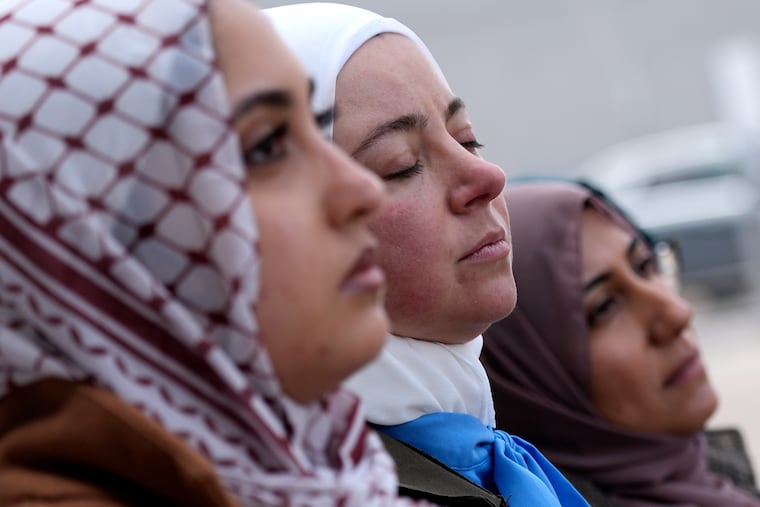
Fast-forward to today. Most Lebanese are fed up with Hezbollah, which dragged Lebanon into the Gaza war by attacking Israel in sympathy with Hamas. Syria has a new government, which is hostile to Iran and Hezbollah. Moderate Sunni Arab leaders in the region feel the same. So do many Shiite leaders in southern Lebanon, where Hezbollah was based, and from which Israel has now driven out much of the population. (Longtime survivor Berri is currently the speaker of the Lebanese parliament.)
And Lebanon, for the first time in decades, has a president, Joseph Aoun, who is willing to stand up to Hezbollah, negotiate directly with Israel, and try to replace Hezbollah with the Lebanese army, which is too weak to do so without external help.
Instead, choosing to rely on force, Israel has been trying to make southern Lebanon into another Gaza, razing villages and towns to the ground, and making it impossible for the population to return. This can only lead to another occupation quagmire for Israel, just like 1982-2000. It will only restore Hezbollah’s credibility and assist Iran.
This threat was summed up acutely by Ehud Barak, the former Israeli prime minister, who finally withdrew Israeli troops from Lebanon in 2000.
“To eradicate Hezbollah,” he wrote in Haaretz, “we would need to occupy all of Lebanon, which is simply unrealistic. The only way to disarm the organization is through a diplomatic process in coordination with the governments of Lebanon, the U.S. and others of the region.”
In addition, France, Gulf Arab countries, along with Jordan and Egypt, might contribute to policing the south and the border with Israel. (Forget about U.N. peacekeepers who failed miserably for decades.) “Anyone, without a plan like that,” Barak continued, “is destined to sink into the Lebanese quagmire and spill years of blood without results. We’ve already been there, done that, and believe me, it is not easy to get out of it.”
The mistake Netanyahu made, and Trump endorsed when both attacked Iran in February, was to assume that force alone could resolve the Iran problem. This has left POTUS on the back foot, still dreaming he can get Iran to surrender without any concessions.
After Trump’s mistaken handling of the Iran war, it will be tremendously difficult to devise any deal with Iran that doesn’t leave its leaders strategically stronger than they were before the war started, although the economic price Iran has paid may inspire a domestic revolution after the fighting ends. But if POTUS doesn’t want to join Israel in a Lebanon quagmire and end any prospects of opening the Strait of Hormuz, he had better find negotiators who know a bit of Lebanese history.
Once more, there is a small chance to save Lebanon from Iran’s clutches and end the rule of its Hezbollah proxies. But that chance will die if Israel insists on dispossessing one million Lebanese Shiites and subjecting them to horrors such as those Netanyahu permitted in Gaza.
Trump claims he can control Bibi. He failed wretchedly (and he never really tried) in Gaza. The test now is in Lebanon.