Letters to the Editor | Aug. 7, 2025
Inquirer readers on the state budget, Rep. Brian Fitzpatrick, and executive power.
Missing budget
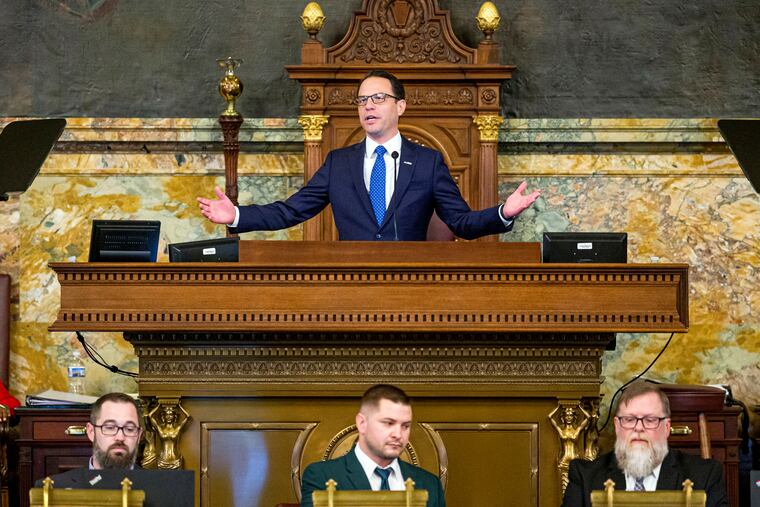
It is patently absurd and galling that our highly compensated members of the Pennsylvania General Assembly are now well into the second month of a protracted budget standoff, bringing uncertainty and worry to organizations and individuals that depend on state funding. Prominently included in that group are public school districts, many of which can ill afford to have their state revenue held in abeyance. The constitutional requirement that a budget be enacted by June 30 is meaningless to the members, as it is accompanied by no sanctions for failure, failure which has traditionally occurred more often than not. Compromise should be the watchword. Gov. Josh Shapiro and House Democrats cannot get everything they want, nor can Senate Republicans. There must be some meeting of the minds that will enable a responsible budget to be enacted that is beneficial to state residents. The longer the standoff goes on, the lower our opinion of those we have elected to lead us.
Oren Spiegler, Peters Township
Moderate facade
It was hilarious to read this quote by Rep. Brian Fitzpatrick in Julia Terruso’s recent article: “The only people that I report to are the residents of Pennsylvania’s First Congressional District — they are my bosses, and I answer to them and them alone.” How would he know what his constituents want? For almost 10 years now, afraid to answer tough questions about his MAGA votes, Fitzpatrick has had only one in-person town hall. I personally wrote him 52 letters in one year, and he answered only one. Many people I know have filled out dozens of issue forms in his office over several years that were never responded to.
The article was headlined in print as, “Was rogue vote by Fitzpatrick ‘gutsy’ or strategic?” And Fitzpatrick’s focus is indeed strategic: staying in good standing with his megadonors and his MAGA base. His 2026 Democratic opponent, Bob Harvie, said it perfectly: “He’s doing what his party is allowing him to do. When they need his vote, he’s there with them. When they don’t, they tell him he can pretend to be an independent.” Fitzpatrick could have killed that big, ugly bill that will slash Medicaid and SNAP, cutting off critical medicine and food to the sick and poor, only to shovel billions to the rich. But he didn’t. He only voted against the final version when his party didn’t need his vote.
Steve Cickay, Newtown
Executive power
President Donald Trump’s use of executive privilege has illustrated the fickle nature of this power. Yes, it has been used in one way or another by most, if not all, modern-day presidents. Yes, it is a tool presidents can utilize to further their agenda. But does it give too much power to the executive branch? Is that something that serves our country’s best interest? We’ve seen the seesaw effect this has on our government when the sitting president uses this power, only to have it reversed by the next administration. This is no way to run an effective government, let alone our country.
We’ve witnessed a U.S. Supreme Court that has given license to our sitting president to basically do whatever he deems necessary to enforce his agenda, many instances of which have either directly or indirectly usurped Congress’s power to legislate. All well and good for the party in power. But power shifts. Today’s majority inevitably becomes tomorrow’s minority. Fiats beget fiats. This is a slippery slope. Congress needs to claw back its power and subsequently limit the powers of the executive branch to reflect what has historically been the balance of power our forefathers and the framers of our Constitution envisioned 250 years ago.
Tim Reed, Philadelphia
Join the conversation: Send letters to letters@inquirer.com. Limit length to 200 words and include home address and day and evening phone number. Letters run in The Inquirer six days a week on the editorial pages and online.