Letters to the Editor | June 10, 2026
Inquirer readers weigh in on budget deficits at the Philadelphia School District and Temple University.
Solutions needed
This is a tumultuous week for Philadelphia’s schoolchildren. If members of City Council and the school board can find a path forward before lawmakers take a final vote on the budget on June 11, 340 school staff jobs will be saved. More than 3,700 Philadelphia students will enter the summer knowing that when they come back to school next year, their teachers, counselors, and climate staff will still be there.
A lot could still go right in the final days of the city budget negotiations. To its credit, City Council worked hard to find $48 million this year to save the jobs for a year. But the school district can’t reverse the cuts without recurring funding. That would not be sound fiscal management. If these positions are cut, critical school staff will be forced to find other jobs, and it will be almost impossible to bring them back.
City Council, the school district, and the mayor are ultimately on the same side — the side of the kids. Finding a way to keep the 340 school staff jobs is about more than balancing budgets; it is about protecting the educators, counselors, and support staff whose work shapes students’ lives. The decisions made in the coming days will determine whether our students start the next school year with stability or disruption.
Priyanka Reyes-Kaura, K-12 education policy director, Children First, Philadelphia
Budget questions
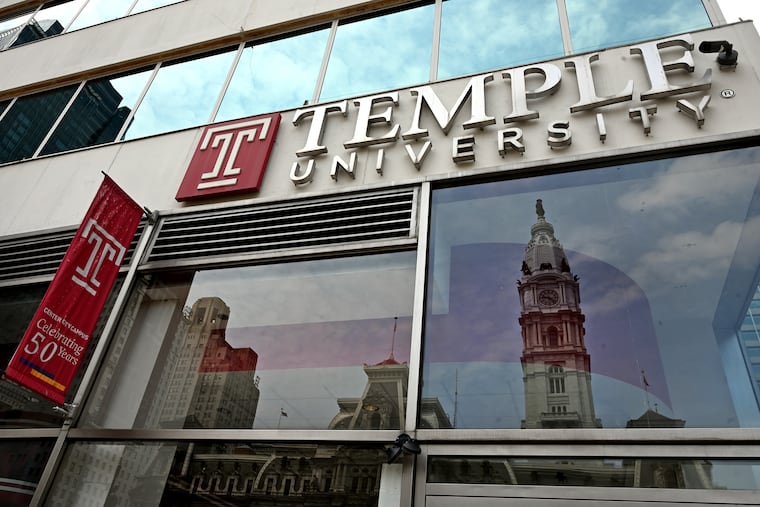
After reading that Jason Wingard was paid $1.5 million by Temple University — a year after resigning as president — I’m looking at my alma mater’s current budget situation in a different light.
In April, Wingard’s successor, John Fry, announced that the operating budget for next year was projected to have an $85 million deficit, a figure that has since come down.
But not even three months earlier, the university announced a new campus development plan.
I know capital budgets are in a separate category from other spending, but this doesn’t look good for the university. And has anyone calculated the increased operating expenses related to these new buildings? Or is it assumed that the cost will be covered by tuition from declining enrollment?
As a triple alum, I only want the best for the university, the students, and the staff. Hopefully, whoever’s reading this wants the same.
Ronnyjane Goldsmith, Palm Beach, Fla.
Join the conversation: Send letters to letters@inquirer.com. Limit length to 150 words and include home address and day and evening phone number. Letters run in The Inquirer six days a week on the editorial pages and online.