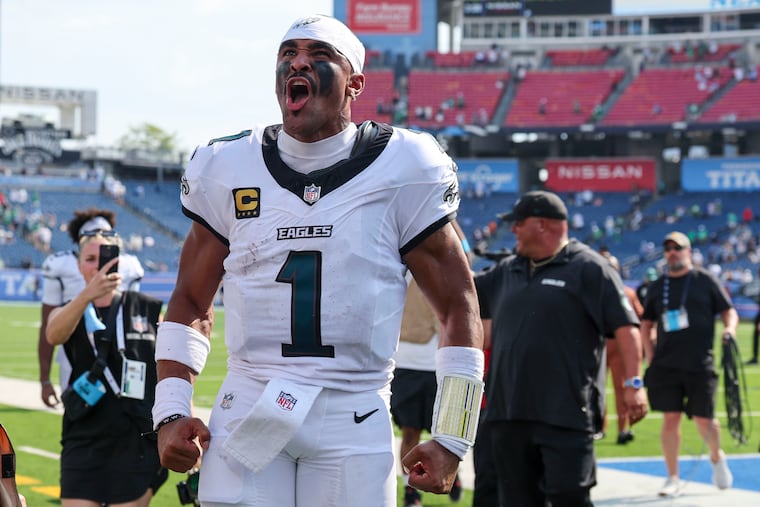
Letters to the Editor | Oct. 19, 2025
Inquirer readers on SEPTA's aging Regional Rail cars and the $49 million buyout for Penn State's former head football coach, James Franklin.
Why Americans should care
As second-year medical students in Philadelphia, one being a military veteran and the other an immigrant, we are alarmed by the government shutdown’s devastating impact on global health.
This is not a distant problem; it has immediate, life-and-death consequences. Programs that fight HIV, tuberculosis, and malaria are facing severe funding cuts.
The funding freeze is already shuttering vital clinics in places like Kenya, forcing patients to ration lifesaving medications, as reported by the Washington Post. These aren’t just statistics.
UNAIDS warns that even modest disruptions in U.S. aid could lead to millions of preventable HIV infections and deaths in the coming years. Halting this support unravels decades of bipartisan progress — a legacy of cooperation still championed by leaders like our own Sen. Dave McCormick. When global health programs falter, disease surveillance weakens, and outbreaks become more likely to spread beyond borders.
We urge Sens. McCormick and John Fetterman to take immediate action to ensure the Office of Management and Budget releases the full $6.045 billion in congressionally approved U.S. President’s Emergency Plan for AIDS Relief funding, and that the State Department releases the approved $1.25 billion for the Global Fund. Withdrawing support now would mean abandoning both our humanitarian commitments and our own humanity.
Evonne Pinto and Alyster Alcudia, Philadelphia
Withhold lawmakers’ pay
During government shutdowns, federal employees — including active-duty military — are forced to go without pay, yet members of Congress continue to collect their $174,000 salaries without interruption.
This is not just unfair — it’s outrageous.
If lawmakers can’t pass a budget, they shouldn’t be shielded from the consequences of doing what we, as taxpayers, fund their salaries to do. Shared sacrifice should start at the top.
I urge our Pennsylvania delegation to support legislation suspending congressional pay during any shutdown. Constituents deserve accountability — not immunity.
Geoff Walker, Chesterbrook
Dire straits for SEPTA
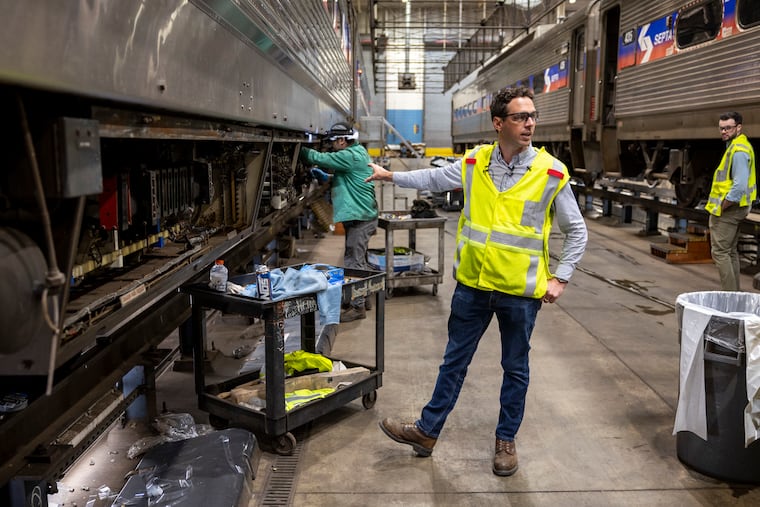
I have been a regular commuter on Regional Rail for decades, relying on the train to get me to work and home again, except in the occasional snowstorm or dire emergency. That trust is at the breaking point due to the state politicians’ abandonment of their core mission of service, and what is clearly many years of dangerous and irresponsible deferred maintenance by SEPTA, enabled by city government.
The fact that SEPTA has waited this long to consider the need to replace many Silverliner IV cars that are already around 30 years old — a move that will cost billions and take a decade to accomplish — just shows SEPTA (and Philadelphians) were hoping for some sort of miracle that will not materialize while Republicans control our commonwealth and our country.
I am at my wits’ end, and yet I still have to find a way to get to work.
Alisa Kraut, Philadelphia
On vacation? Now?
The government shutdown is hurting real people — federal employees, families, and communities across Pennsylvania who depend on government services. While workers are being sent home without pay, Speaker Mike Johnson has extended the House recess until Sunday. Members of Congress continue to collect their salaries while thousands of Americans are struggling to pay their bills.
This is not normal, and it’s unacceptable. Instead of working around the clock to reopen the government, Speaker Johnson is avoiding a vote to release the Jeffrey Epstein files — protecting the powerful while ignoring the people he was elected to serve. Where is the media outrage? Why isn’t there more coverage of this hypocrisy and neglect of duty?
Philadelphians know what hard work and accountability mean. It’s time Congress learned the same lesson. Stop the paid vacations, release the truth, and get back to work for the American people.
Maria Duca, Philadelphia
A coach’s dismissal
As a longtime Penn State football fan, I was saddened and deeply disappointed by what I witnessed as head coach James Franklin left the field after the Northwestern game. The reaction from some students crossed a line — it was not mere frustration, but hostility that stripped the moment of respect and humanity.
Coach Franklin bore it with restraint and dignity. As he neared the tunnel, his family joined him, and he paused briefly to let them walk ahead, sparing them from the hostility and humiliation that had begun to overtake the moment. I could not see their faces, but the care he took and the way they moved made clear that no family should have to pass through such a moment at a university they call home.
I understand the emotions that come with losing, and how much this team means to our community. But how we behave in defeat reveals more about our character than how we act in victory.
We live in an anxious and uncertain age, one that may test us even more in the years ahead. When times grow harsher, we must hold fast to decency, empathy, and humanity — the values that make both Penn State and our civilization worth preserving.
Robert E. Griffin, Forty Fort, Pa.
. . .
Do I understand correctly that our great commonwealth university has $49 million available to get rid of the head football coach, but no money to keep public radio and television? Huh?
Carolyn Clein, Gladwyne
. . .
Several letter writers were outraged at the $49 million paid to James Franklin to fire him from his head coaching job. I agree. Did the administration create a financially poor contract with Franklin? Absolutely. But suggesting the money should have been spent on students and academic ventures is noble but misinformed. Where did they think this money came from? Student tuition and book sales? Not even close.
Penn State puts over 100,000 fans in the stands for home games. Tickets sell for prices ranging from about $50 to nearly $300. Parking passes — even to park in a grass field about a half mile from the stadium — cost about $50. Then there are the sales from Penn State apparel and concessions. Let’s not forget the millions paid to Penn State for games on prime-time television. The football program makes it possible for, and supports, numerous other sports teams that produce virtually no income. How many athletes, even from nonfootball sports, can receive scholarships because of the football program? Penn State’s national recognition is due, in part, to its high-profile football program, which attracts many nonfootball playing students.
For the football program to function well and have national recognition, it is imperative to have a good coach — and a good coach will not come cheaply. So it’s important to structure a contract that pays a coach well for his successes — but one that does not obligate the university to the coach for his failures.
A terrible mistake would be to close the purse strings and de-emphasize football. “We are Penn State” is a lot more than a football chant.
Jim McGogney, Marlton
Fast-track to the NFL
College sports are no longer amateur contests, and should no longer be funded from tuition revenue and state taxes. University of Texas quarterback Arch Manning, the nation’s highest-paid college football player, receives between $5 million and $6.8 million annually in name, image, and likeness fees. The recent House v. NCAA settlement will now allow Division I schools to share a portion of revenue directly with players — up to $20.5 million per school. Closer to home, it’s been announced that James Franklin, Penn State’s recently dismissed head football coach, will receive a $49.7 million contract buyout between now and 2031 to no longer coach.
College football often subsidizes the other athletic programs. Penn State can seat up to 107,000 football fans per game, yet it does receive appropriations from the state, which come from our tax dollars. The Big Ten now has 18 universities competing in the conference, including West Coast schools like the University of Southern California and the University of California, Los Angeles, to derive even greater TV revenue. Greed has no boundaries.
A solution exists. Let the NFL pay the entire cost of Division I college football programs. It is getting a free minor league system that develops its future players/employees. Imagine if the college athletic revenue were used to reduce tuition for all students?
Scott Smith, Ivyland
Join the conversation: Send letters to letters@inquirer.com. Limit length to 150 words and include home address and day and evening phone number. Letters run in The Inquirer six days a week on the editorial pages and online.