After five fires, federal safety agency urges SEPTA to retrofit or replace Regional Rail cars
NTSB recommended taking 225 Silverliner rail cars out of service. The Federal Railroad Administration ordered more oversight of SEPTA's remedial efforts but did not call for sidelining all the cars.
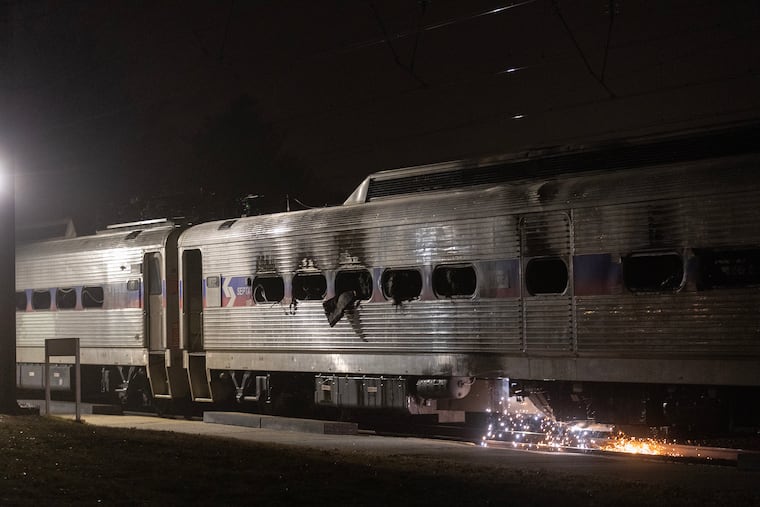
SEPTA should sideline its 225 Silverliner IV Regional Rail cars after the aging vehicles were involved in five train fires this year, the National Transportation Safety Board urgently recommended Wednesday.
But the Federal Railroad Administration, which regulates commuter rail systems, ordered SEPTA to perform additional emergency mechanical inspections on each car within 30 days, stopping short of saying all must be removed from service at once.
It was a whiplash moment for the mass transit agency, serving to highlight its dire need for more money for capital projects after years of underfunding.
“People should feel safe riding” Regional Rail, SEPTA General Manager Scott Sauer said in an interview. “We will not put vehicles on the street or on the rails that present a safety risk.”
The federal guidance comes less than a month after Gov. Josh Shapiro and legislative leaders failed to agree on a plan to provide new, long-term operating money to SEPTA and other transit agencies
As a temporary fix, the Shapiro administration allowed SEPTA to move $394 million in state capital funds set aside for its infrastructure projects to operations over two years.
“When anyone questioned my concerns and apprehension last month about SEPTA using capital dollars for operating costs, this moment is why,” Mayor Cherelle L. Parker said in an Instagram post.
“We cannot gamble … by diverting critical capital dollars away from infrastructure, maintenance, and safety,” Parker said.
The Silverliner IVs were built during the administrations of Presidents Richard M. Nixon and Gerald R. Ford, meaning the newest are 50 years old. They constitute two-thirds of the Regional Rail fleet.
SEPTA said it has been working alongside NTSB investigators and FRA experts to find the cause of the fires and has increased precautions since the first car of a Wilmington-bound train caught fire Feb. 6 as it pulled out of Crum Lynne Station in Delaware County.
Four other Silverliner IV fires have happened this year, the NTSB said — in Levittown on June 3, in Paoli on July 22, in Fort Washington Sept. 23, and in the city on Sept. 25.
Passengers were evacuated in all five incidents, with minor injuries reported.
NTSB investigators have traced the fires to electrical components associated with the train’s propulsion system, the dynamic braking system, and a traction motor.
Yet neither NTSB or SEPTA has identified a definite cause.
NTSB is an independent government agency that investigates significant transportation mishaps to determine what caused them; it makes recommendations for corrective action. While influential because of the board’s expertise, the recommendations are advisory rather than legally binding.
Noting that the cars’ “outdated design … represents an immediate and unacceptable safety risk,” the NTSB said that SEPTA needs to expedite replacement or overhaul of the cars — in addition to sidelining them until a cause of the fires can be pinpointed.
Sauer said: “We agree with the NTSB that this is a matter of urgency, and we have to find a way to replace these cars. They can’t last forever.”
The NTSB also found SEPTA’s “maintenance and operating practices” compounded the risks of the outmoded design of the cars.
Sauer said he respectfully disagrees with that conclusion and noted the transit agency has already implemented 40 changes to better monitor and report problems with the Silverliner IV cars.
The Federal Railroad Administration “has concluded that SEPTA’s maintenance and operation of its passenger rail equipment requires additional oversight and corrective action,” that agency’s order said.
Meanwhile, SEPTA is proceeding with plans to seek bids on new Silverliner models for Regional Rail but will need to find financing for the estimated $2 billion purchase.
“We have to find it,” Sauer said.
The mass transit agency intends to apply for a low-interest federal emergency loan to help pay for new rail cars, he said.