Letters to the Editor | Oct. 31, 2025
Inquirer readers on the government shutdown and the demise of military academies.
A message of healing
It was on a Halloween day, years ago, prior to an evening date to take our two little girls trick-or-treating, that I learned my marriage had ended. I ordered pizza for dinner and explained that Daddy was working. Somehow, some way, I managed not to disappoint my daughters and was able to experience a few fleeting moments of joy with them. Once home — after eating lots of candy — bath time was skipped, and bedtime awaited. After my daughters were asleep, I went to my bathroom, ran the sink and tub faucets, and allowed the tears to fall. Sobs grew into terrified screams, unlike anything I had ever heard. I could not believe they were coming from me, because they did not seem human. They sounded, instead, as if they came from a wounded animal. This trauma marked a necessary milestone in my growing up — taking responsibility for my life, my happiness, my fulfillment. Badly needing money, I developed my private practice as a clinical social worker, I began writing a column for this newspaper, and I turned those pieces into a first book. Through this work, I joined with others to lobby hard for much-needed divorce reforms in Pennsylvania — at the time, we were the only state bound by three brutal legal inequities: no “no fault” divorce, no equitable division of marital property, and no provisions for alimony. Our reform was accomplished; I was told parts of my columns were read on the floor of the General Assembly before the votes changing the laws were cast. Two years later, I met the wonderful, generous man I have now been married to for 45 years, and my small family of three grew into a boisterous one of six. I share these years in my life as we face a brutally difficult time in our country, when countless people are facing trauma and searching for a way forward. I’ve learned — and my work has validated — that fear can be willed into vital strength and direction. That begins with recognizing the value of, and power within, yourself.
SaraKay Smullens, Philadelphia
The GOP’s plan
President Donald Trump has successfully overreached his legal authority due to a compliant Congress abdicating its constitutional duties, and a misguided U.S. Supreme Court anointing the sitting president as sovereign. Checks and balances, embedded in the Constitution, are vestigial remnants of a shattered American Experiment. Sadly, the worst may lie ahead. Deployment of the National Guard on the streets of majority Democratic cities is a strategy to normalize such action. Once the voting public is inured to frequent and persistent domestic military mobilizations, the stage is set for the upcoming elections. When national polls predict Democrats regaining the House majority in 2026, we can expect military intervention at polling sites when the first allegation of impropriety occurs. National Guard members, authorized by presidential decree, will shut down those sites and confiscate ballots that were cast. Will any of those votes be counted, or will those precincts’ tabulations be rendered null and void, and subsequently confirmed as “dubious results” by the Trump-friendly SCOTUS? At the very least, precincts with large populations of recent immigrants and people of color will be unfairly criticized as “rigged” — accusations (without evidence) that will delay, and possibly cancel, any counting of targeted sites.
James L. DeBoy, Lancaster
Students need alternatives
Imagine a hospital with a 17% survival rate. Would you be willing to listen to the hospital’s CEO brag about his facility’s “groundbreaking health improvements”? Probably not.
So why celebrate a school district where only 17% of fourth graders can read at grade level?
That’s precisely what happened during the most recent Council of Great City Schools’ annual conference. Conference attendees celebrated the Philadelphia School District and its “groundbreaking academic improvements.” The district has trended in the right direction on some measures, but below projected targets and pre-pandemic levels.
Several other metrics reveal a disturbing reality. More than half of Philadelphia students attend a state-designated “low-achieving school.” Even worse, 70% of Philly schools would qualify as “persistently dangerous,” signifying alarming levels of school violence.
Despite massive funding increases, Philadelphia kids have endured a litany of issues, from rampant antisemitism to unabated asbestos — both of which have landed the district in trouble with the federal government.
Philadelphia kids don’t need hollow platitudes. They need better school options and the freedom to chart their own educational course regardless of their zip code. Only then will we see genuinely “groundbreaking academic improvements.”
Nathan Benefield, chief policy officer, Commonwealth Foundation
Demise of military academies
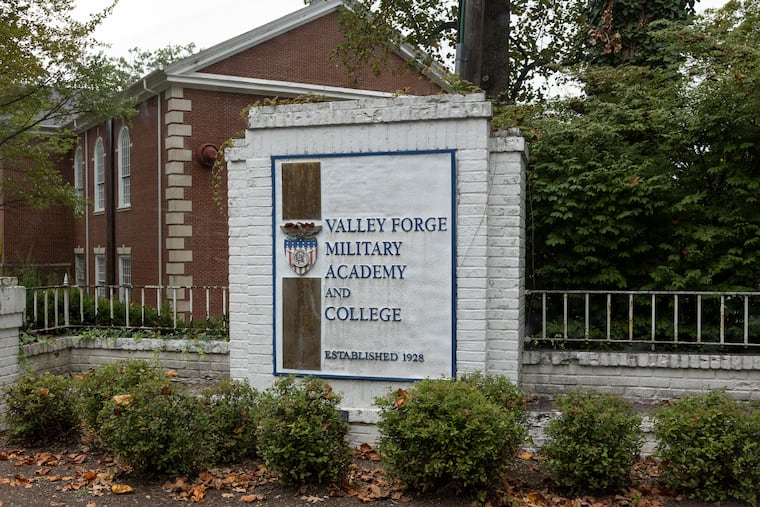
The closure of Valley Forge Military Academy highlights the decline of preparatory school prestige. Fifty years ago, having the name of a military academy on a résumé might have been enough to land an officer a highly sought-after position. The same cannot be said for today’s military. Simply put, institutional association alone does not predestinate effective leadership. Despite their antiquated checklist of what generates good officers, academies like “The Forge” are fraught with claims of hazing, harassment, and abuse. This is, in part, due to their inherently isolated structures that, when poorly led, overshadow trust and respect among cadets. Speaking as a veteran and former Army officer, the individual success of an officer cannot be predicted based solely on commissioning sources. Whether it be officer candidate school, ROTC, or the academies, a future officer’s ability to lead can be determined only by their individual actions.
Kasey Busko, Philadelphia
Do your jobs
Why is the U.S. government shut down once again? The former chief of staff to Sen. John Fetterman, Adam Jentleson, wrote a book called Kill Switch: The Rise of the Modern Senate and the Crippling of American Democracy. The book is about the nonconstitutional Senate legislative filibuster. The filibuster is an artifice created by the Senate in which you need 60 votes to pass legislation, purportedly to create consensus. It doesn’t. What it does is provide an easy excuse for the Senate to not do its job and create a lot of finger-pointing on who’s to blame for the shutdown. The Republicans control the Senate and have the power to call a vote to do away with the legislative filibuster, like they did in 2017 with the filibuster for U.S. Supreme Court nominees when they wanted Neil Gorsuch on the court. If they really want to end the shutdown, they have the power to do so. I recommend the Republicans do away with this “kill switch,” get on with governing, and then defend what they do at the polls next November. If the founders thought a supermajority to pass legislation was a good idea, it would be enshrined in the Constitution. Republicans have the power. If they don’t use it, the finger points at them.
Roy Lehman, Woolwich Township
Sugar tax soured
Kudos to Councilmember Jim Harrity for convening the Committee on Labor and Civil Service (which he chairs) on the efficacy, fairness, and future of the controversial sweetened beverage tax. It’s no secret that Teamsters Local 830 remains vehemently opposed to the regressive tax, which solely punishes the beverage industry on which our members rely for a living. Since the sweetened beverage tax was adopted by City Council, Teamsters Local 830 has lost 1,000 members who could no longer make ends meet as a result of the dramatically reduced sales of soda and thousands of other sweetened beverages, natural and artificial. Proponents of the tax cite the many pre-K slots it supports, but the truth is the city grows increasingly reliant on the General Fund to cover pre-K costs because sweetened beverage tax revenues drop significantly every year. Teamsters Local 830 supports the expansion of pre-K, but thinks it’s unfair to ask one industry sector to fund all of it. Let’s keep working toward a more equitable funding solution.
Daniel H. Grace, secretary-treasurer, Teamsters Local 830, Philadelphia
Odd depiction
An article by the Associated Press that recently appeared in The Inquirer stated that convicted terrorist Marwan Barghouti has “backed armed resistance to occupation.” Among the attacks Barghouti was convicted of masterminding was one in which three Palestinian Arab terrorists walked into a Tel Aviv, Israel, restaurant called the Seafood Market, and opened fire with automatic rifles, murdering three customers and wounding 35 others.
How can massacring diners in a Tel Aviv restaurant possibly constitute “resistance to occupation”? Who were Barghouti and his shooters “resisting”? And according to what criteria can Tel Aviv be described as “occupied territory”?
Rafael Medoff, director, The David S. Wyman Institute for Holocaust Studies, Washington, D.C.
Join the conversation: Send letters to letters@inquirer.com. Limit length to 150 words and include home address and day and evening phone number. Letters run in The Inquirer six days a week on the editorial pages and online.