The cowardice of the Trump administration’s attacks on history
The White House is afraid to admit the contradiction at the heart of our history: a nation that dedicated itself to human liberty also enslaved African Americans.
For centuries, white people in America depicted slavery as a benign institution developed to uplift and civilize “savage” Africans. They preached that myth in churches, taught it in schools, and memorialized it in statues.
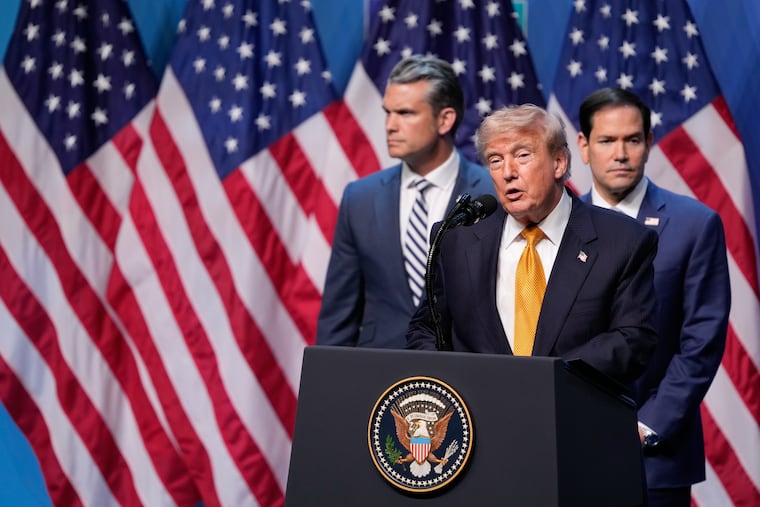
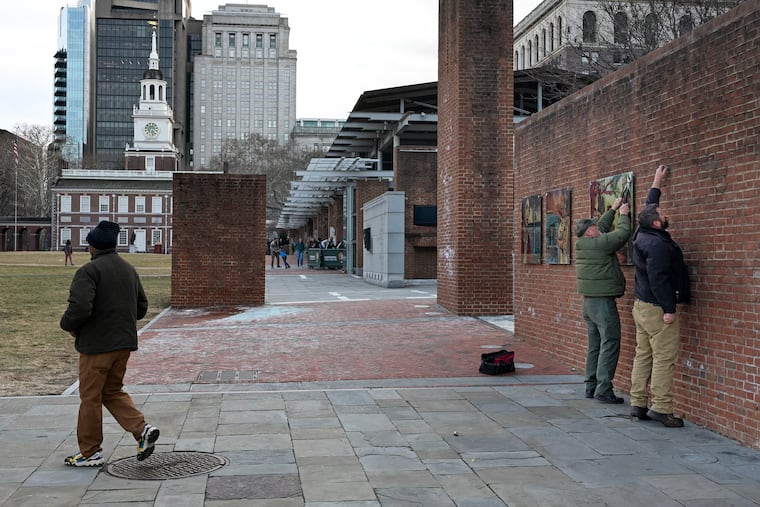
That’s not what the Trump administration was trying to do last week, in dismantling a display about nine Black people whom George Washington enslaved. The exhibit was removed from the President’s House in Independence National Historical Park in accordance with a White House directive to take down or cover up materials that “inappropriately disparage Americans.”
I suppose you could call that a small piece of progress, given that prior generations of Americans actively praised slavery. Federal officials know it was evil, which is why they are scrubbing displays about it from the President’s House and other historical sites around the country.
But I’ve got another word for their behavior: cowardice. They are afraid to admit the contradiction at the heart of our history: a nation that dedicated itself to human liberty also enslaved African Americans. And they do not trust the rest of us to grapple with it, either. It’s so much easier to just look away.
That was harder to do in the late 19th and early 20th centuries, when slavery was within living memory for millions of people. Especially in the South, white educators made extended efforts to excuse it. The problem wasn’t slavery, they said.
The problem was “the War of Northern Aggression” — a.k.a. the Civil War — which granted freedom to African Americans, whom, according to this twisted retelling of history, neither wanted nor deserved it.
The key figure in this campaign was Mildred Lewis Rutherford, the “historian-general” of the United Daughters of the Confederacy, or UDC. Born into a wealthy slaveholding family in 1851, Rutherford led the effort to purge Southern schoolbooks of so-called Yankee perspectives.
In 1919, “Miss Millie” — as she was affectionately known across the white South — published A Measuring Rod to Test Textbooks, which provided a checklist that UDC women could use to assess what their schools were teaching. “Reject a book … that speaks of the slaveholder of the South as cruel and unjust to his slaves,” Rutherford urged.
» READ MORE: Trump can try to hide it, but slavery is part of America’s story | Jenice Armstrong
Invoking the era’s rhetoric of progressive education — which stressed student activities rather than memorization from books — the UDC also sponsored essay contests for students who conducted research about slavery. Many of the essays drew on interviews from former slaveholders, who provided a predictably romantic view of the institution.
Slavery was “the happiest time of the negroes’ existence,” declared a winning essay in 1915 by a Virginia high school student. “The slave was a member of the family, often a privileged member. He was the playmate, brother, exemplar, friend and companion of the white man from cradle to grave.”
Despite Rutherford’s fears of encroaching Yankee doctrine, meanwhile, Northern schoolbooks often included similar falsehoods about slavery. In 1944, amid the World War II struggle against Nazism, Black activists in New York City complained that one history text used in their schools said those in bondage were “happy”; another congratulated the Ku Klux Klan for keeping “foolish Negroes” out of government after the Civil War. “Such passages … could well have come from the mouths of the fascist enemies of our nation,” the activists noted.
African American attacks on flawed textbooks came to a head during the civil rights movement of the 1960s, when the Urban League and the National Association for the Advancement of Colored People appointed committees to examine the books. Thanks to these efforts, most textbooks corrected their distortions of slavery. They also added new material about African Americans who fought against it, like Denmark Vesey and Frederick Douglass.
Today, outside the darkest corners of the internet, nobody celebrates the enslavement of African Americans. “It is disgusting and absurd to suggest that anyone inside this building would support slavery,” White House press secretary Sarah Huckabee Sanders said during President Donald Trump’s first term in office, when Chief of Staff John Kelly suggested Confederate Gen. Robert E. Lee was an “honorable man.”
In his second term, Trump has moved to restore the names of Confederates to military bases. Yet, I haven’t heard him — or anyone in his administration — say a good word about slavery. Again, that’s a very good thing.
But it also underscores their fundamental lack of courage. They’re not defending slavery, as earlier generations did. Instead, as happened at the President’s House, they’re simply eliminating it from sight because it doesn’t suit their happy picture of our history. To paraphrase the Jack Nicholson character in A Few Good Men, they can’t handle the truth.
And if visitors ask why the exhibit about Washington and slavery disappeared, National Park Service employees have been instructed to say that they don’t know. Talk about cowardice! First, we deny history, and then we deny knowing why we did so.
It’s enough to make a citizen embarrassed for his country. Trump and his aides say they took down the exhibit because it disparaged America. But they are the ones disparaging America, because they don’t believe in our ability to make sense of it: its glory and its tragedy, its achievements and its abuses. Shame on them.
Jonathan Zimmerman teaches history and education at the University of Pennsylvania. He is the author of “Whose America?: Culture Wars in the Public Schools.”