Gov. Josh Shapiro’s energy proposal may just make data centers popular | Shackamaxon
Plus: Parents push to ditch digital and go cursive, and City Councilmember Jamie Gauthier’s change of heart on councilmanic prerogative.
This week’s column covers analog vs. digital education fights, the rise of data centers, and how even reform-minded legislators fall under the spell of councilmanic prerogative.
Cursive vs. Chromebook
When I attended school decades ago, computers were already part of the education experience. But they didn’t dominate it. We had “computer class,” where we learned how to use now-obsolete technologies like floppy disks, played “educational” games like The Oregon Trail or the Zoombinis series, and practiced our typing skills.
Today’s students have no need for a computer lab, since from as early as kindergarten, they’re issued their own personal device. Meanwhile, parents are increasingly concerned that children simply aren’t learning effectively, and are instead wasting crucial formative years watching YouTube videos.
Families are starting to push back.
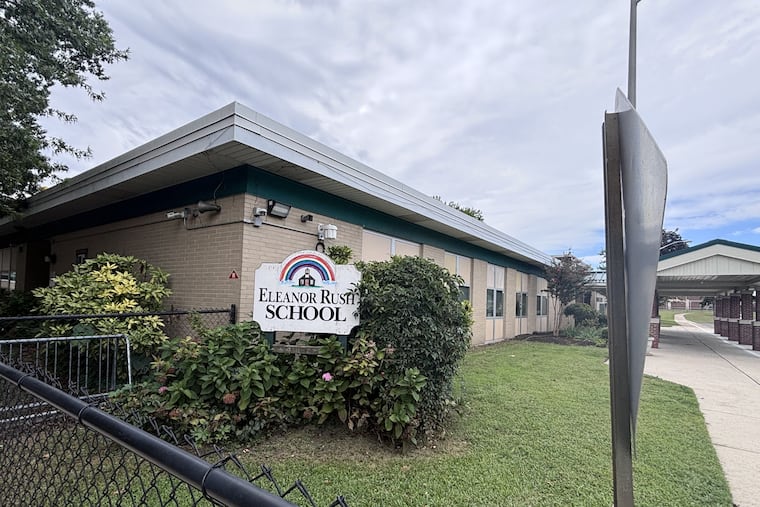
My newsroom colleague Maddie Hanna has written a series of articles about families in Lower Merion and other suburban districts who would like to opt their children out of digital learning, especially in the earliest grades.
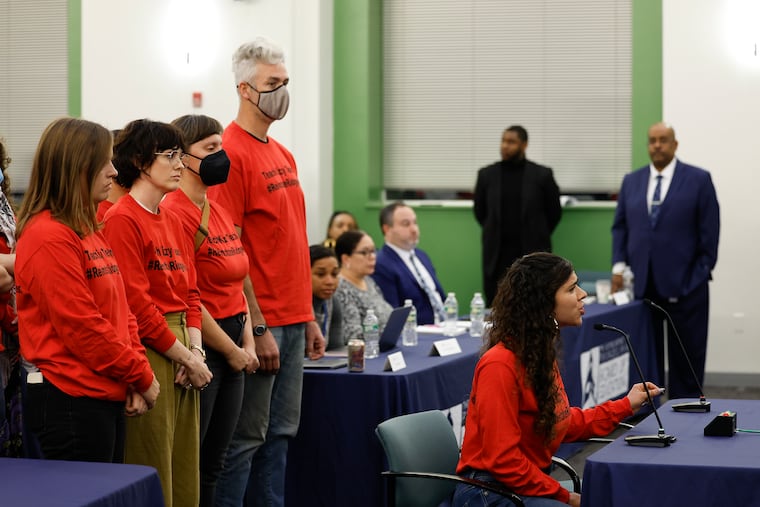
Since the COVID-19 pandemic, affluent suburban parents have taken an increasingly activist — and retro — approach to learning. First, they wondered why their children couldn’t attend school in person if bars, restaurants, and sporting events were back. Then there was a push for the reintroduction of phonics reading instruction, especially after the Sold a Story podcast series.
These movements aren’t sprouting up without cause. Literacy and test scores are declining nationally, and both parents and experts have identified screens and now-discredited learning theories as a potential culprit.
Gov. Josh Shapiro, ever in tune with public opinion, has also jumped into the fray. He’s pushing a bipartisan effort to bring back teaching cursive in schools. The elimination of cursive writing instruction has led to a growing number of adults who cannot sign their names or read historical documents. Advocates also say that learning cursive will improve penmanship and fine motor skills, and that taking notes by hand is better for retention.
Personally, I welcome the reversion to a more analog approach to learning. After all, the folks who invented Chromebooks learned how to read and write without them. The biggest point, however, may be the behavior of the tech moguls themselves. Facebook founder Mark Zuckerberg limits screen time for his own children. So does YouTube CEO Neal Mohan. Microsoft’s Bill Gates went as far as banning cell phones for his children entirely until age 14, which is when most of my peers got their own primitive versions. I just hope districts that serve low-income children, whose parents typically have less time and money available for advocacy, aren’t left behind.
Perhaps memorization will be the next old-school educational practice to make a comeback.
The data center opportunity
Outrage over data centers has become a bipartisan cause. According to a Gallup poll, 71% of Americans oppose hosting one in their community. Their environmental impact, particularly their energy consumption, is the top reason for opposition.
With energy bills already skyrocketing due to increased consumption and a lack of investment in transmitting power across distances, this is a legitimate gripe.
At the same time, banning data centers altogether is likely untenable. While state law enables municipalities to regulate land use through zoning, it also prevents them from using zoning to ban a specific use entirely.
That’s what makes Pennsylvania’s unique approach to the issue fairly savvy.
Gov. Shapiro aims to force the centers to produce their own energy, rather than relying on the existing supply. If handled deftly, the rise of data centers may actually enable further decarbonization, fund needed expansions of solar and wind energy, cover the cost of installing and maintaining transmission lines, and replace many of the benefits of the Inflation Reduction Act, which was partly repealed by President Donald Trump’s signature legislation, the One Big Beautiful Bill Act.
That’s because tech companies have an abundance of cash and are desperate to expand quickly enough to meet the growing demand generated by artificial intelligence and other applications. This can be leveraged by regulators like the Pennsylvania Public Utilities Commission (PUC). Imagine, for example, a data center supplying nearby residents with solar panels and batteries, paying for weatherization and insulation, or covering the cost of burying or upgrading transmission lines.
Even some environmental advocates are cautiously optimistic. As Mike Zimmerman from the Environmental Defense Fund told me: “The PUC has set an important precedent by making clear that data centers should pay for all the grid infrastructure they require. Now Pennsylvania must follow through by rigorously implementing this principle, while advancing other reforms that can turn data centers from grid burdens into grid assets, such as pairing them with distributed energy sources in ways that benefit all Pennsylvanians.”
Precious prerogative
When Jamie Gauthier challenged longtime incumbent 3rd District City Councilmember Jannie Blackwell in 2019, she ran as an opponent of councilmanic prerogative. “When you have this tradition where you are almost solely abdicating issues around land use and land disposition and zoning to one person, I think it’s kind of ripe for misuse or even just the appearance of misuse,” said candidate Gauthier.
Councilmember Gauthier, on the other hand, has taken prerogative to new heights, calling it a valuable policy tool. According to a tranche of emails and documents uncovered by local lawyer and Right-to-Know enthusiast Megan Shannon, Gauthier has taken unprecedented steps to compel St. Joseph’s University to heed her advice on the sale of the University of the Sciences campus.
In a March 2025 email, Gauthier told the university to furnish the names of all bidders, their proposed purchase prices, and details about potential reuse, giving them three business days to fulfill her request, writing that “our relationship depends on what you do next.” At one point, Gauthier, members of her staff, and designated community representatives signed nondisclosure agreements with the university.
Gauthier has said her actions came at the behest of concerned neighbors, and I believe her. She also reminded me that, however the process began, the zoning bill she ultimately passed is less onerous than her rhetoric may have suggested. That does not negate the fact that St. Joe’s, like all property owners, has the right to sell land without being compelled by a member of City Council.
The community interest is important, but so is the university’s own self-interest. Stakeholder institutions are a part of the city’s fabric, and we risk losing even more of them if they feel like operating elsewhere would be easier.
If readers will forgive a journey into nerdom, Gauthier’s embrace of prerogative for ostensibly wholesome purposes reminds me a bit of the Council of Elrond from The Lord of the Rings. Like Boromir, Gauthier believes she can use the One Ring to protect long-suffering people.
For my part, I agree with Gandalf. Prerogative, like the ring, must be destroyed.