State House bills could help round out Gov. Shapiro’s ambitious housing plan | Shackamaxon
Plus: The case against the school district over its admissions policy is back on again, and Jeffery “Jay” Young holds one bad bill but raises Philadelphia two more.
This week’s column covers housing debates in Harrisburg, admissions policies at the school district, and more bad zoning overlays.
Go big or go home
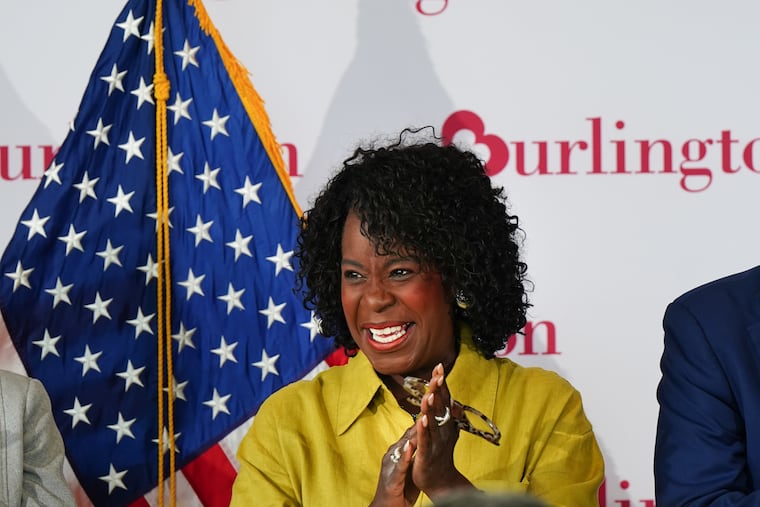
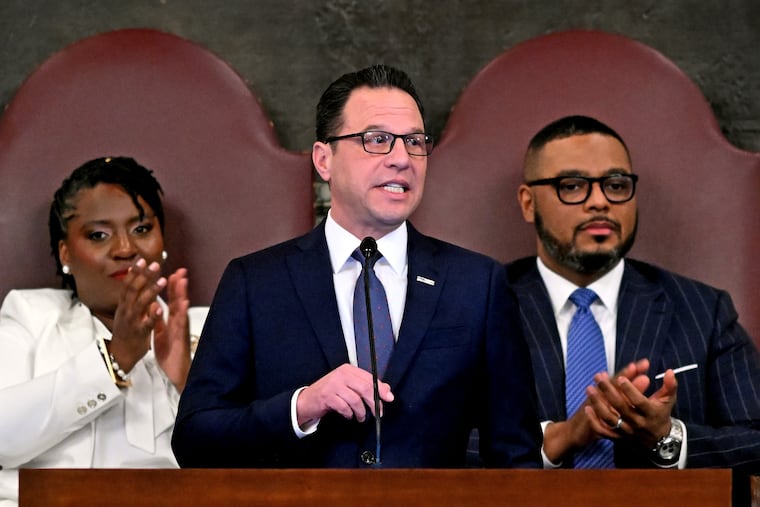
Philadelphia Mayor Cherelle L. Parker is no longer the only person with an ambitious housing plan. Gov. Josh Shapiro joined her this week, pledging in his budget address to create a billion-dollar state fund to encourage housing production in local communities. The guv is echoing a bipartisan consensus that there simply aren’t enough homes to meet the demand. There’s just one problem: Many housing experts say Shapiro’s ideas won’t move the needle on production.
That’s because his plan is based entirely on carrots, avoiding the creation of the kind of statewide building standards that have been most effective elsewhere.
While factors like interest rates and the cost of construction impact housing starts, local zoning rules are also a key constraint on homebuilding. Many municipalities maintain strict rules that make it impossible to build anything other than McMansions. In the few towns that do allow for new construction, the mismatch between supply and demand means developers can charge outlandish prices. The new Coulter Place in Ardmore starts at around $3,000 a month for a one-bedroom unit.
In states like California, the debate over housing has been going on for over a decade. State leaders there also sought to use an incremental approach and avoid attracting the ire of interest groups that are committed to the current system of regulating housing. The result has been the legislature routinely needing to revise the plan. Instead of starting with a half-measure, Pennsylvania should get things right the first time.
Thankfully, there are plenty of initiatives to do exactly that. State Sen. Sharif Street (who is also running for Congress) is circulating a bill that would align Pennsylvania with international standards on stairwell construction. Advocates claim that allowing for buildings with just one set of stairs will facilitate construction on unique parcels, increase access to natural light for residents, and do so without increasing any safety risks.
State Rep. Tarik Khan has proposed what he calls the “Golden Girls Law,” named after the famed ‘80s sitcom. Many municipalities restrict unrelated women from living together, which would have made scofflaws out of Blanche, Rose, Dorothy, and her mother if the show were set in Pennsylvania. Khan’s bill would end those bans.
State Rep. Greg Scott wants to eliminate parking minimums, and State Rep. John Inglis III has introduced bills that would require municipalities to allow for more duplexes and triplexes. Shapiro should put his weight behind these efforts, as well.
Polarizing magnets
During the pandemic, the Philadelphia School District was faced with a conundrum: how to decide who got spots at the city’s well-regarded magnet schools, given the state’s cancellation of the Pennsylvania System of School Assessment, or PSSA, standardized tests.
The schools — and standardized tests — have often been criticized for having cultural and socioeconomic biases. The demographics at Masterman and Central (where I attended) do not match those of the district overall, while standardized test scores tend to reflect the socioeconomic status of the students taking them. To many, this is enough evidence to scrap the magnet system, the tests, or both.
The district’s solution was to take over admissions, which had traditionally been handled by the schools themselves, and subject applicants to a lottery process. To address equity concerns, some zip codes were given priority access to the schools. Students at predominantly Black George Washington Carver Middle School, who had been promised a spot at the partner high school if they maintained good grades, saw those pledges revoked. The district also created a computer-graded writing test, although that was quickly phased out. Some parents saw the revamp as a blatant attempt to discriminate against Asian students. A bipartisan federal appeals court ruled this week that these families have a case.
With the state once again administering PSSAs, and with the new lottery system not having a substantial impact on demographics at the schools, it is worth questioning whether the new process represents any improvement at all.
Day of Jay
This column’s favorite City Council member, the 5th District’s Jeffery “Jay” Young Jr., decided not to advance his controversial bill to ban housing construction on or near the former Hahnemann University Hospital campus after serious pushback from local community groups and the Planning Commission. Unfortunately, the attention given to the Hahnemann bill may have helped two of his other bad ideas evade scrutiny.
Young got two bills through the Rules Committee. One bill is aimed at preventing blight by restricting demolitions of vacant property. Ironically, most development experts say the bill will likely increase blight by incentivizing owners to create hazards to justify demolition or providing more space for squatters to operate.
Young also introduced a bill creating an 11 p.m. curfew for some businesses within his district, which he said is aimed at stopping nuisance businesses that are selling drug paraphernalia and, per Young, sometimes the drugs themselves.
By that logic, selling drugs at 10:59 p.m. will still be allowed.