The Philly School District’s admissions policy could be viewed as unconstitutional and discriminatory, federal judges rule
A federal appeals court revived a lawsuit challenging the legality of the special-admissions process, which could have long-term implications for the school district if the case now proceeds to trial.
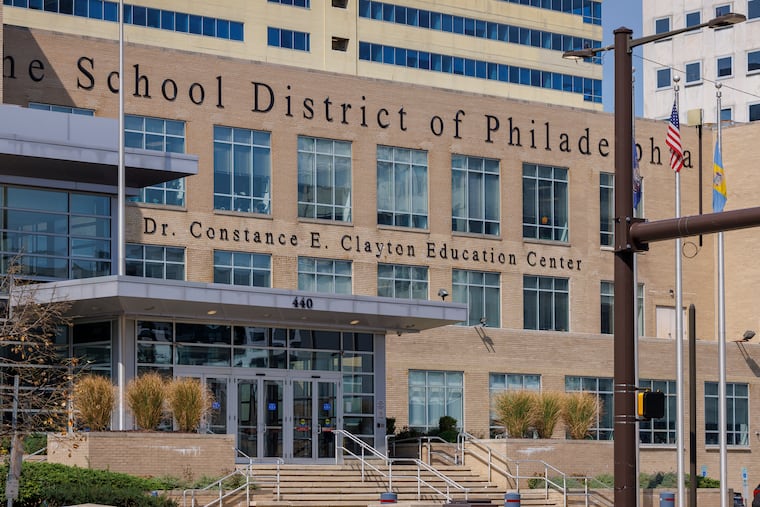
A federal appeals court revived a lawsuit challenging the legality of Philadelphia School District’s special-admissions process Monday, ruling the policy could be seen as “blatantly unconstitutional” and ”race-based.”
The U.S. Court of Appeals for the Third Circuit sent the case filed by three Philadelphia parents — which a federal judge tossed in 2024 — back to a lower court.
The ruling could have long-term implications for the admission process for citywide magnet and special-admissions schools, which has been controversial since its inception.
While it will have no immediate impact on the school district’s process, the ruling means the case could now proceed to trial.
The district changed the way it admits students to criteria-based schools in 2021, moving from a system where principals had discretion over who got into the district’s 37 special-admissions schools to a centralized, computer-based lottery for any student who met academic criteria.
For the city’s five top magnets, all students who met the standards and lived in certain underrepresented zip codes gained automatic admission.
Officials at the time said they were changing the policy as they “made a commitment to being an antiracist organization” after an “equity lens review” of admissions practices.
The demographics of some selective public schools do not match the city’s demographics. Masterman, for instance, has much higher concentrations of white and Asian students than the district does as a whole.
Although the school district has defended its policy change, a panel of federal judges on Monday ruled that it could be viewed as discriminatory.
“School District officials made public and private statements — both before and after the enactment of the Admissions Policy — that could support a finding that the Policy was intended to alter (and did alter) the racial makeup of the schools," Judge Thomas Michael Hardiman wrote for the three-member panel.
“So a reasonable fact finder could conclude that the School District acted with a discriminatory purpose,” the panel wrote. The panel included Hardiman, a George W. Bush appointee; Cheryl Ann Krause, a Barack Obama appointee; and Arianna Julia Freeman, a Joe Biden appointee.
A district spokesperson said Monday that the school system does not comment on ongoing litigation.
The legal team representing parents Sherice Sargent, Fallon Girini, and Michele Sheridan — including lawyers from America First, an organization formed by Stephen Miller, a top aide to President Donald Trump called the action “a major victory.”
“School officials don’t get to rig admissions systems to satisfy ideological goals,” said Gene Hamilton, America First Legal’s president, and a former Trump deputy counsel. “This ruling affirms a basic constitutional principle: government cannot discriminate by race, whether openly or by proxy. AFL will continue fighting to secure accountability and restore equal protection.”
What did the initial lawsuit argue?
Sargent, Girini, and Sheridan sued in 2022 to end the policy, to stop the district from using “racially discriminatory criteria” for magnet school admissions, and to award damages to those who might have been damaged by the “gerrymandered lottery” policy.
A federal judge ruled in favor of the school district in 2024 without a trial, writing that “no fair-minded jury could find that the changes to the admissions process were implemented with racially discriminatory intent or purpose.”
The district has defended its position, saying it was geography, not race, that gave certain students preferential admission to magnets like Masterman, Central, the Academy at Palumbo, and George Washington Carver High School of Engineering and Science.
Five admissions cycles have happened since the overhaul.
Adjustments have been made since the initial rollout — including dropping a controversial, computer-graded essay, adding ranked choice, adding sibling preference, and giving automatic admission to students who attend middle schools with attached high schools and meet academic standards — but the underpinnings remain, as does the preference for qualified students from underrepresented zip codes at selected schools.
Sargent’s daughter, who is Black, qualified academically for the George Washington Carver High School of Engineering and Science; Girini’s son, who is white, qualified for Academy at Palumbo; Sheridan’s child, who is biracial, met standards for Palumbo. All were denied admission to their top-choice schools, though they gained admission to other district magnets.
As a result of the shift to the lottery — and changes to admissions criteria — admissions offers to Black and Hispanic students increased significantly at most of the highest-profile schools, and offers to white and Asian students decreased at most.
What did Monday’s ruling say about the admissions policy?
District lawyers have said the admissions overhaul “was race-neutral and motivated by legitimate goals, such as increasing objectivity and improving access for qualified students from underrepresented geographic areas.”
But the appeals panel found that the federal judge who dismissed the case “did not adequately consider the evidence of why the School District implemented the Policy in the first place, including the School District’s stated goals, the historical context behind the ‘equity’ aims, and statements made by School District officials.”
Before the admissions changes took effect, then-Superintendent William R. Hite Jr. issued an anti-racism declaration in 2020 following the killing of George Floyd by Minneapolis police and the resulting racial justice movement.
Hite said it was “imperative that we take a laser focus on acknowledging and dismantling systems of racial inequity. For us, this goes deeper and far beyond focusing on individual acts of prejudice and discrimination, but refers to uprooting policies, deconstructing processes, and eradicating practices that create systems of privilege and power for one racial group over another.”
The school board also included in its Goals and Guardrails, guiding principles by which it judges district progress, a guardrail asking the district to increase the percentage of qualified Black or Hispanic students who qualify for criteria-based schools.
“These statements and actions, taken together in context, could support a finding that the School District adopted the Admissions Policy to achieve racial proportionality,” the appeals panel wrote.
What comes next?
Monday’s ruling has no impact on the existing admissions process, which is already underway for the 2026-27 school year.
And it is not yet clear what will come of the case after it returns to a lower federal court, but it could potentially now proceed to trial.