Trump’s kowtow to China on Taiwan risks tech disaster for the U.S. and the world
Taiwan produces most of the world’s advanced chips, including for America’s artificial intelligence systems. Bringing even a modest amount of the needed production to the U.S. will take years.
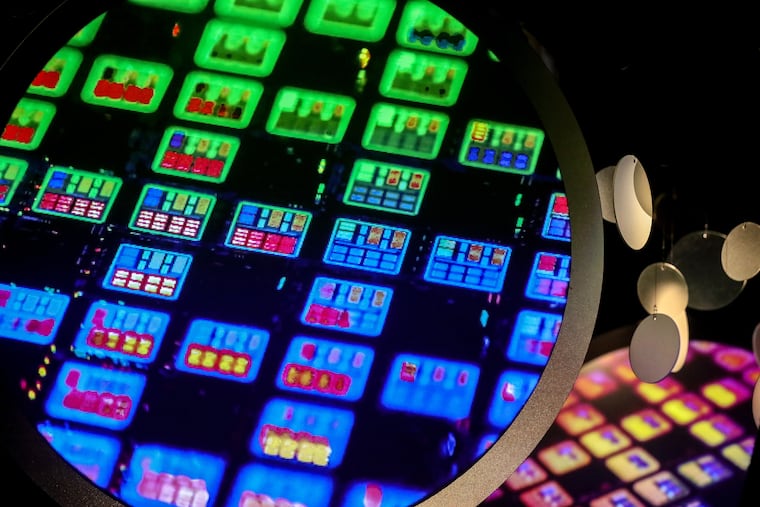
Recently, I attended a showing of a fascinating documentary called A Chip Odyssey that laid out the history of how that small self-governing island democracy of Taiwan came to manufacture around 90% of the world’s most advanced semiconductor chips.
It was not at all, as President Donald Trump keeps insisting, because Taiwan “stole our chip industry.” The real reason is one Americans need to understand: if China ever manages to take control of Taiwan, it will cause a U.S. and global economic disaster that would make the Strait of Hormuz blockade look like child’s play.
It would halt America’s global dominance in the field of artificial intelligence, since U.S. AI companies all depend on sophisticated chips fabricated by the Taiwan Semiconductor Manufacturing Co., known as TSMC. As the Wall Street Journal put it, “the island is now the factory floor” for U.S. leadership in AI.
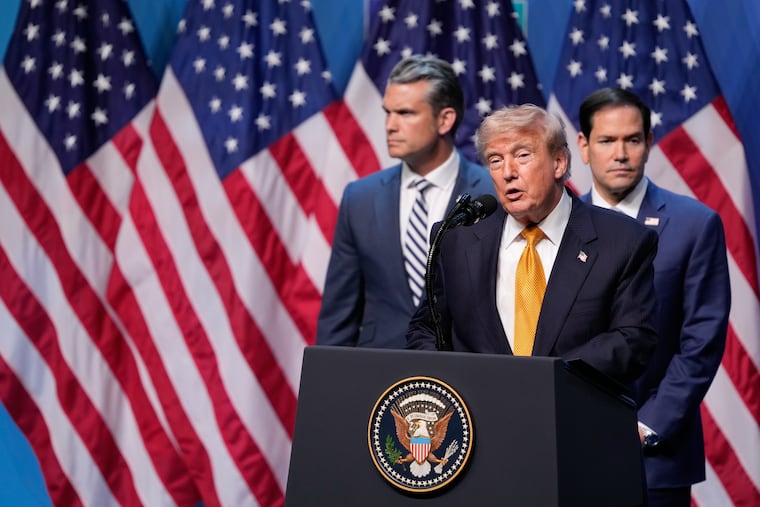
Yet, Trump, before, during, and after his May summit with Xi Jinping, has continued to belittle Taiwan. He discussed a planned $14 billion U.S. arms sale with Xi, despite a long-standing pledge to Taiwan, made by President Ronald Reagan, that U.S. weapons support for the island would never be subject to China’s approval.
Trump has now frozen the weapons sale, saying it could be “a bargaining chip” with Beijing.
The president has repeatedly hinted at his reluctance to defend a place that’s “9,500 miles away.” And he frequently argues that the production of advanced chips could and should be moved to the United States.
My conversations with the director of A Chip Odyssey, Hsiao Chu-Chen, and coproducer Ben Tsiang (along with my recent trip to Taiwan) made clear why it will be years before the U.S. can onshore production of even a modest percentage of its chip needs. The film offers a moving history of how a small, poor island became a tech giant because it had no choice.
“I wanted to tell the history of Taiwan’s semiconductor industry, not just about the achievement itself, but how people strived to achieve what they did,” Hsiao told me over coffee in Philadelphia. Fifty years ago, the island was almost abandoned by the international community after the United Nations switched the China seat to Beijing and expelled Taiwan, she told me. “Taiwan is so tiny, with no minerals, so we needed to find a way we could survive.”
After consulting with Taiwanese American engineers working in the United States, the Taipei government decided to focus on high tech. In the mid-1970s, it licensed and paid for semiconductor technology transfer from RCA, a common process. Nothing was stolen — and, at the time, this technology wasn’t new or mainstream, and was only a minor focus at RCA.
» READ MORE: The biggest threat to U.S. security isn’t Iran, it’s President Trump | Trudy Rubin
Taiwanese engineers traveled to the United States to master manufacturing technology, returned, and vastly improved it. They began transferring it to the manufacture of consumer electronics such as watches, personal computers, and cell phones.
Fast-forward, when a brilliant Chinese American engineer and star at Texas Instruments named Morris Chang was recruited by Taipei in 1987 to advance its semiconductor industry. He conceived the idea of a “fab-less” process, where small companies in Taiwan and elsewhere, and huge ones in the U.S., could focus on design and research to constantly update the technology, while Taiwan would be the foundry that manufactured complex chips to their specifications.
For example, Hsiao explained, “TSMC makes chips based specifically on designs from Nvidia [a global leader in technology, based in California], so it is not competing with them.” And TSMC has built up the trust of its many U.S. and international partners because it never leaks information. In fact, it hardly ever allows journalists (myself included) within its sprawling precincts at the Hsinchu Science Park, an hour outside Taipei.
“The most important principle [of TSMC] is integrity,” said the film’s director. “Companies don’t have to worry that their technology will be stolen, as it has been in China.” Moreover, TSMC invests massively in research and development to keep its foundry on the cutting edge.
Fabricating chips “is not like manufacturing nails,” I was told by one scientist who studies TSMC and preferred not to be named, “but it is an intense, complex, and layered process. You need to update, improve the technology all the time.”
» READ MORE: Iran busts the myth of Trump as master of the art of the deal | Trudy Rubin
When Chang pioneered his “fab-less” concept, making Taiwan the world’s semiconductor foundry, it was a huge risk, but it paid off beyond his dreams.
“I understand that some Americans are anxious about losing leadership in the semiconductor industry, but Taiwan earned its place with decades of talent, tireless innovation,” producer Tsiang said intently. “It took daring investment across generations to build what we have today. That is what we were trying to show.
“But it is not a zero-sum game with America. Taiwan’s rise is deeply connected to collaboration with U.S. companies, and will be in the future.”
Indeed, the choice by companies such as Nvidia or Intel to outsource fabrication of chips to Taiwan was based on profit-seeking, since it vastly lowered costs.
The Americans could also rely on the massive Taiwanese production and talent ecosystem that feeds into TSMC. As the film shows, engineers there rotate in three shifts, so they are always present and are ready to show up at 2 a.m. if machinery needs adjusting.
Which brings us to the question of whether a huge chunk of the foundry production could easily be moved from Taiwan and installed in the United States, as Trump demands.
TSMC has committed $165 billion to build six “fabs” (as fabrication plants are called) in Phoenix. Yet, only one is operating, and one more will come online this year.
The difficulties are obvious. Besides far higher operating costs than in Taiwan and the far more casual American work ethic, there is the huge problem of finding the engineering talent in the United States — both to maintain complex machinery and oversee complex operating processes.
“In Taiwan, all the top university graduates go to TSMC,” Tsiang told me. “In the United States, the top university graduates go to Washington, D.C., or Silicon Valley. There is a real test in how the U.S. can develop a talent pool.”
Links are being established with the University of Arizona and other potential feeder schools to programs aimed at filling TSMC positions. But this is a process that will take years.
At present, the Phoenix fabs depend on around 2,000 Taiwanese engineers and staff. There are seven direct flights a week from Taipei to Phoenix.
In Taiwan, audiences tear up at showings of A Chip Odyssey as they listen to elderly scientists reminisce about their years of building TSMC from the ground up. I wish more Americans could see the film, but it is only available for now at special showings. (However, you can watch the trailer as well as an extended interview with the director and producer on YouTube.)
Yet, the cost to America of a possible Chinese takeover of Taiwan in the next decade is almost unimaginable, even though Trump seems to dismiss it. His ignorance of the real story of Taiwanese semiconductors is infuriating and dangerous.
Perhaps some of Trump’s tech-bro pals can get the message across to him before we all suffer the consequences of losing TSMC.

Inquirer Opinion Newsletter