‘2000 Meters to Andriivka’ captures the horror and the hope of Ukraine’s battle against Russia
“Stop and you are dead, or fight and you have a chance to survive as a country and with your family,” documentary filmmaker Mstyslav Chernov tells Trudy Rubin.
How do Ukrainians fight on when the front line is so painful, the Russian bombing of civilians so brutal, and pro-Putin President Donald Trump so eager to stab Kyiv in the back?
I put that question to Associated Press journalist and filmmaker Mstyslav Chernov, whose 20 Days in Mariupol won the Academy Award for best documentary in 2024. His new masterpiece, 2000 Meters to Andriivka, will premiere on PBS’s Frontline and also begin streaming on Tuesday, Nov. 25.
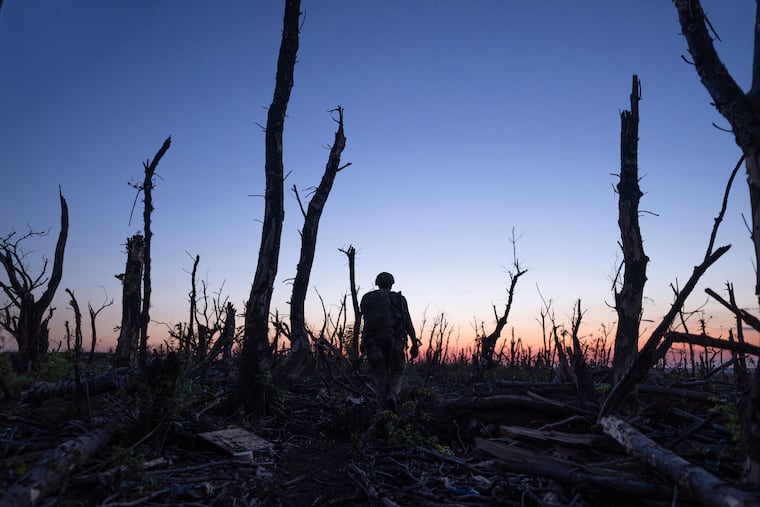
The film follows a unit of military volunteers in Ukraine’s fabled 3rd Assault Brigade who come from all walks of life, from young to middle-aged. They are trying to advance a little more than a mile along a narrow, mostly destroyed tree line between heavily mined fields,in order to liberate a small village in eastern Ukraine and help cut a Russian supply line to the then-besieged city of Bakhmut.
This is a raw film, shot from the soldiers’ point of view, not only by Chernov and his AP colleague, videographer Alex Babenko, but by the video cameras many fighters wear on their helmets.
“I wanted to be as realistic as possible,” Chernov told me. “Showing courage and sacrifice, but also how horrifying and disgusting war is at the core. We try to keep this paradox in the film.”
What Chernov also achieves, through his voice-over and brief interviews during downtime, is a portrait of why these men won’t stop fighting, no matter the odds, until the Russian aggressor is forced to recognize the sovereignty of the Ukrainian state.
When he started this film in 2023, Chernov said, he wanted to make a documentary “about fighting back.” That was a hopeful year, in which Ukrainians were mounting a large counteroffensive against Russia.
“I searched for hope as much as any Ukrainian,” he recounted. “Raising the flag as a symbol of victory.” He also sought to honor the sacrifice of 3rd Assault Brigade fighters who were liberating the area surrounding his hometown of Kharkiv.
By the time the film was completed, though, the counteroffensive had failed. Bakhmut had fallen, and Ukrainian forces were weary and undermanned.
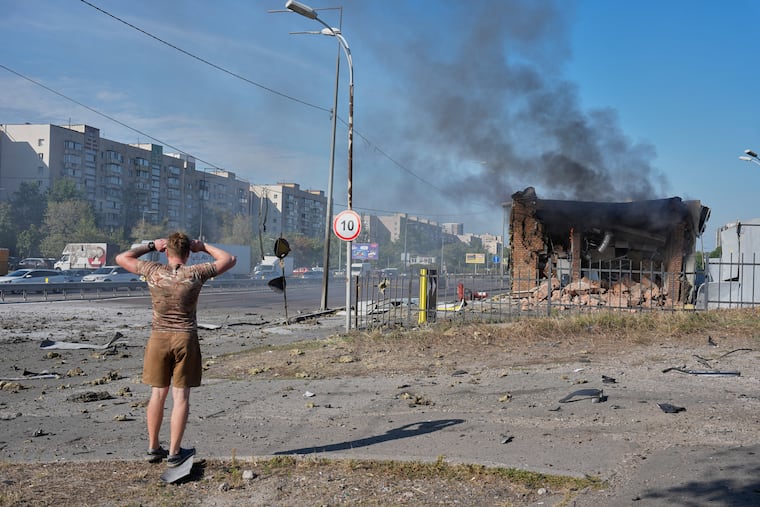
Today, technology has shifted the battlefront into a war of attrition dominated by drones, which can inflict terrible casualties on anything that moves. The Russians are making small advances, and Ukrainian leader Volodymyr Zelensky is fending off a corruption scandal.
Yet, says Chernov, what you see in 2023 is similar to now.
The reason Ukrainians keep fighting remains the same, even though many Americans don’t grasp it. “It is a fight for survival, not for a piece of land, but a fight for your life,” he told me. “Stop and you are dead, or fight and you have a chance to survive as a country and with your family.”
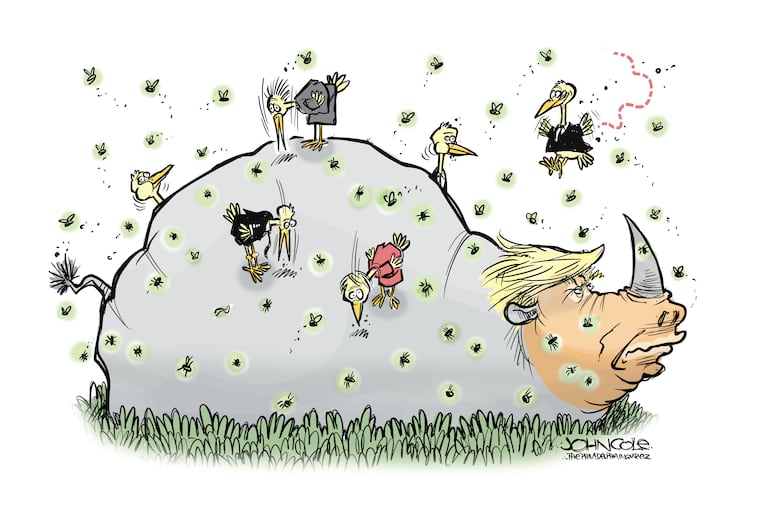
These are the basic truths President Trump and real estate mogul-turned-peace negotiator Steve Witkoff are far too blinkered to grasp.
Russia’s war is not about real estate deals or land swaps. Vladimir Putin has insisted publicly for years that Ukraine has no right to exist as a state, and that it must be returned to the Russian empire as a subordinate province.
Any peace plan that hands territory to Russia and fails to provide ironclad military guarantees to Ukraine will only encourage Putin to restart the war. Yet, Witkoff secretly devised a 28-point draft plan with Putin pal Kirill Dmitriev, without consulting Kyiv or our European allies — a plan that leaves Ukraine virtually defenseless.
This capitulation plan would hand Russia parts of Ukraine that aren’t occupied, while shrinking and largely disarming Kyiv’s forces — and banning the purchase of new Western weapons. It would also ban Ukraine’s future membership in NATO or any peacekeeping troops from NATO members.
Of course, Putin has endorsed Trump’s plan, which could have and may indeed have been, written in the Kremlin. This shameful document virtually invites the Russian dictator to rebuild his depleted forces and try to end Ukrainian sovereignty for good.
We already know what has happened in Ukrainian territory that Russia has occupied: the Ukrainian language is banned in schools and from official use, and Ukrainian books are burned. The Ukrainian Orthodox Church is banned, and its priests arrested.
Ukrainian children in areas under Russian rule are taught that Kyiv is the enemy. They are sent to military camps in Crimea or Russia, and then drafted to fight against fellow Ukrainians. Many younger children have been kidnapped and adopted by Russian families.
“If Ukrainians lose,” said Chernov, “not only will Ukraine cease to exist, but it means millions of Ukrainian children will be taken, their Ukrainian identities stolen, and they will be trained to fight for Russia against Europeans. It creates the opportunities for Russia to get more people to fight.”
“Many people in the U.S. don’t grasp how destructive the Russian narrative is,” the filmmaker added, “how they say the U.S. is the archenemy. Reality can be seen in the Russian media. They laugh at the United States and love the idea of civil war in your country.
“Russian existence [under Putin] is based on an anti-American narrative. What you see is that they are already at war with the United States and Europe.”
Indeed, if Ukraine ultimately falls to Russian control — with Trump’s help — the Russian border will move westward, and many NATO countries will be in danger.
Trump doesn’t care.
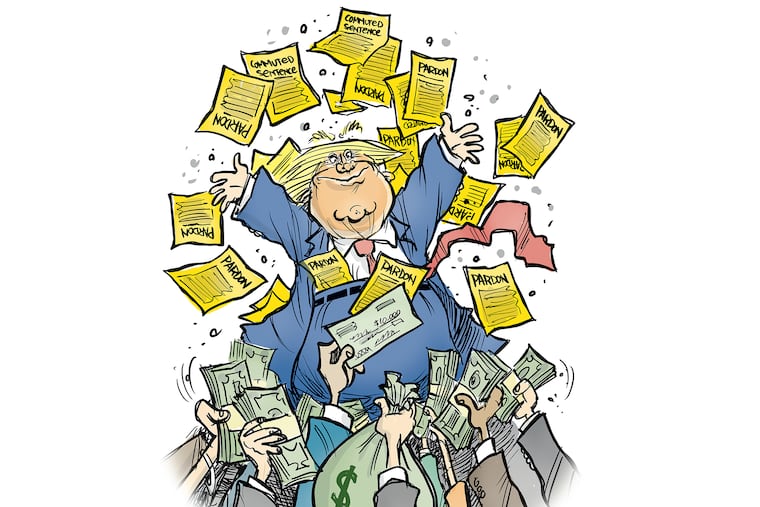
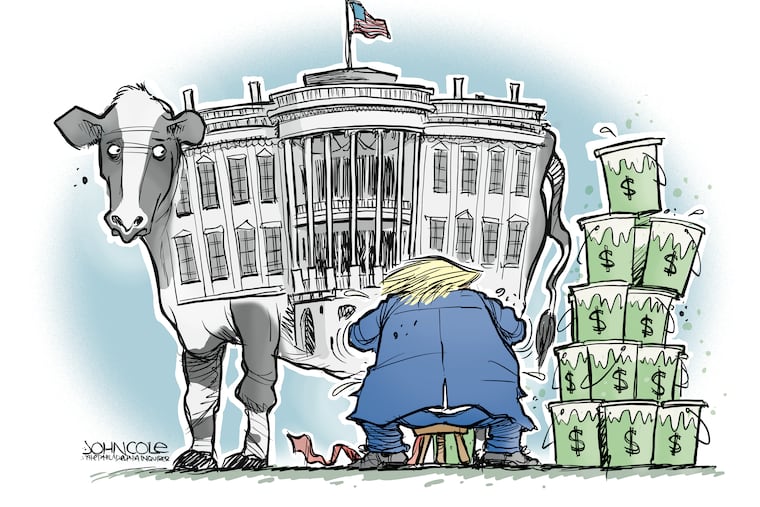
Wooed by visions of U.S.-Russian business deals that have been dangled by Dmitriev, Trump and Witkoff are focused on dollar signs. Like a mafia don, Trump is blackmailing Zelensky to sign this surrender by Thanksgiving, or lose all U.S. support for the war.
Yet, unlike Trump, Ukrainian soldiers on the front don’t have the luxury of denying the harsh realities they face if Russia isn’t pushed back by force.
Every soldier I’ve met knows full well that if Russia wins, they and their families have no future. The Kremlin calls brave Ukrainian fighters “Nazis,” and regularly tortures and murders POWs. Under Kremlin rule, any veteran or army member would almost certainly be targeted for prison or death.
So, as Chernov explained, the question of future international aid for Ukraine’s defense “is rarely discussed on the battlefield, because there were so many words of support but so little action. They know they have to fight for survival.”
After the first meeting of Zelensky and Trump, when the president scolded the Ukrainian leader before the cameras, all illusions were gone, said the filmmaker. “We know the truth of our situation. The only person you can rely on is right next to you or with your unit.”
The changing nature of the war means the future depends on which country — Ukraine or Russia — can beat the other in the race for technological advantage. “Until Russia feels it can lose they will not want peace, Chernov stated. ”We are bracing for a very long winter.”
And yet, despite his depiction of the brutality of an unending war in a film that left me in tears, Chernov retains a core of optimism. Drawing strength from the men whose steadfastness he captures with his camera.
“Seeing those guys, fellow students, policemen, workers being there, making that choice to fight back against all odds. When I watch them …” He paused. “Whenever I lose hope, I go to the front, and I get my hope back.”