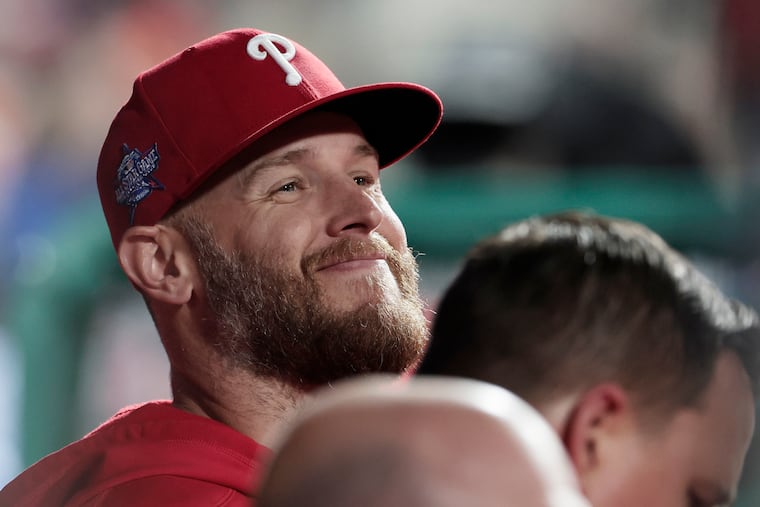
Phillies deserve big props for spending big on Brad Keller, the setup man they sorely needed
The addition of Keller gives the Phillies an assortment of high-leverage arms unlike any they’ve had in a long time.
Sometimes, it’s the thought that counts.
As recently as Tuesday, Dave Dombrowski sounded like a man who didn’t feel much of a sense of urgency with regard to his bullpen.
“I guess we’d look for arms in the bullpen, but we’ve also got five solid guys out there that are of veteran status,” the Phillies president said.
» READ MORE: Source: Phillies agree to two-year, $22 million deal with reliever Brad Keller
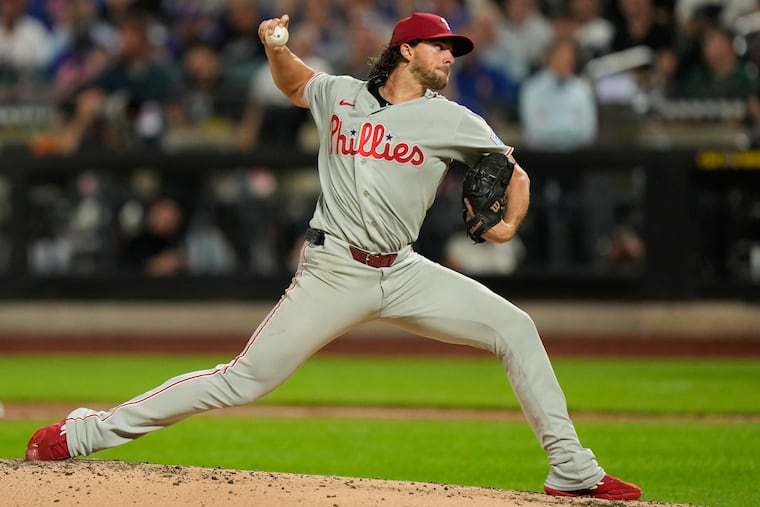
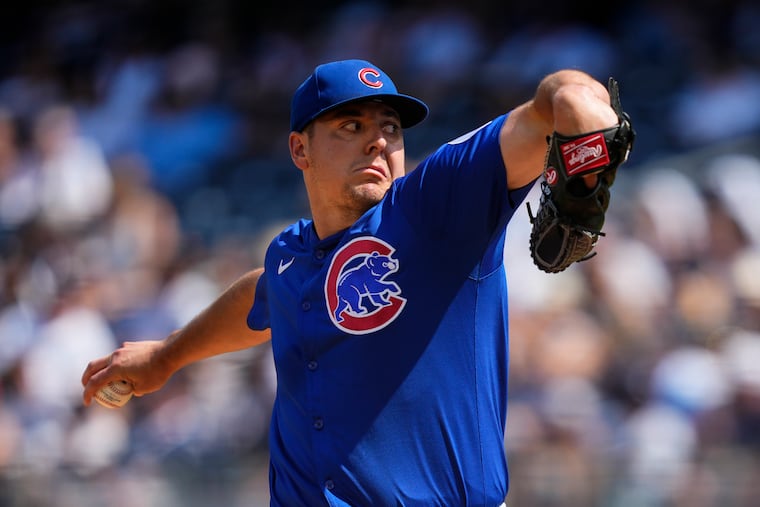
It was encouraging, then, when news leaked on Wednesday that the Phillies were closing in on a two-year, $22 million contract for former Cubs setup man Brad Keller. Set aside the question of who Keller is and whether or not Rob Thomson can count on a repeat of the veteran righty’s breakout 2025 campaign. The mere fact that the Phillies saw a pressing enough need to spend this sort of money on another reliever is commendable.
And, let’s be clear. This is real money that the Phillies are spending. The relief market has exploded this offseason. That’s true at the top of the market, where former Mets closer Edwin Díaz accepted a whopping $21 million AAV on a three-year contract, all the way down to erratic former Phillies lefty Gregory Soto, who somehow landed $7.75 million from the Pirates on a one-year deal. Keller is the 11th reliever to sign a deal worth at least $9.5 million per year and the seventh to sign for at least $11 million.
He is also the youngest of that group, which is a key fact to consider. Heading into his 30-year-old season, Keller doesn’t have the wear-and-tear that relievers tend to accumulate by the time they hit free agency. He spent the first six years of his career moving into and then out of the Royals rotation. In 2024, he bounced back and forth between the minors and the Red Sox big-league roster, later landing with the White Sox.
Last offseason, the Cubs nabbed Keller on a minor league deal and gave him a job in their bullpen. His velocity jumped from the low-90s to a Statcast average of 97 in 2025, and he quickly worked his way to the back of the Cubs’ bullpen. He thrived in high-leverage situations, holding opponents to just four extra-base hits and a .582 OPS with 28 strikeouts and 10 walks in 101 plate appearances. His numbers after the All-Star break were as good as you’ll see: 35 strikeouts, eight walks, a 0.33 ERA in 99 plate appearances.
» READ MORE: In moving on from Harrison Bader, the Phillies are putting an awful lot of faith in Justin Crawford
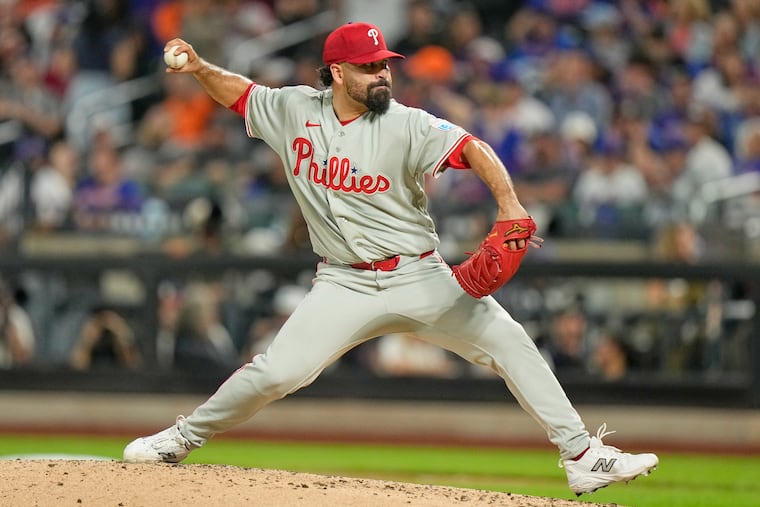
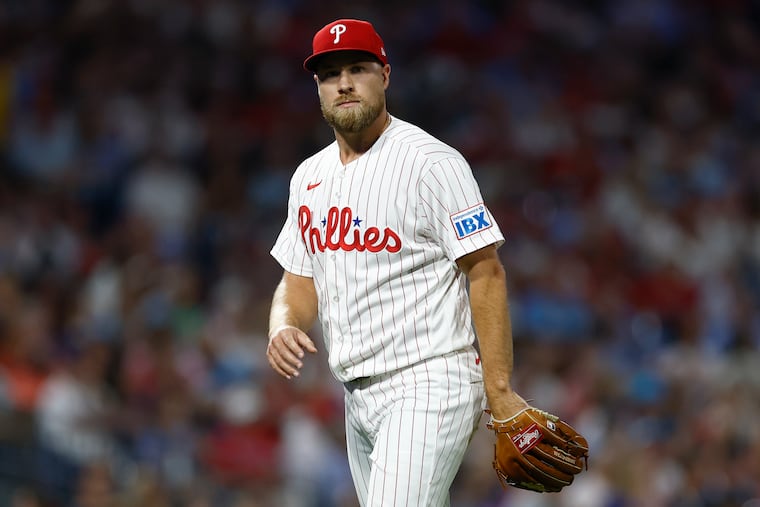
The addition of Keller gives the Phillies an assortment of high-leverage arms unlike any they’ve had in a long time. At 6-foot-5, 250 pounds, he is built like a closer. The Phillies will enter spring training with the thought that he will pair with Jhoan Duran as an elite setup/closer combo in the eighth and ninth innings. Between Keller, Duran and Matt Strahm, they have three of the 34 big-league relievers who finished last season with an ERA+ of 160 or better (minimum 40 innings). Lefty José Alvarado, back on a team option after a suspension-marred 2025, remains a quality high-leverage option. That gives Thomson four legitimate options for the late innings of close games, with lefty specialist Tanner Banks and young righty Orion Kerkering also bringing plenty of experience and potential upside.

David Murphy alerts
The Phillies easily could have convinced themselves that they could make due without making a significant investment in another arm. They tried to ham-and-egg their way through last offseason, signing Jordan Romano and Joe Ross for about the same amount they’ll pay Keller. Though the Phillies won 96 games, they arrived in the postseason without the back-end horsepower to complement their best-in-class rotation. It cost them against the Dodgers. As much as the offense struggled, a dominant bullpen would have given them a clear edge in the series.
Who knows if it will work out? The relief market is little different from a roulette wheel. You ante up and then cross your fingers. But if the bullpen again emerges as a concern next season, it at least won’t be for a lack of trying.

Matt Klentak's fingerprints are still on the Phillies' roster six years after he was the team's general manager. These days, Klentak is part of the front office for the Brewers, who recently clinched their fourth consecutive NL Central title. With the Brewers coming to town Tuesday, Klentak joined Phillies Extra to discuss his current and former teams. Watch here.
You can also subscribe to the podcast version of Phillies Extra on Spotify or Apple Podcasts.
Previous episodes: Jeff Francoeur | Luke Murton | Mike Hazen | Tony Gwynn Jr. | Kevin Stocker | Bobby Dickerson | Jim Bowden | John Middleton | Ryan Howard | Dan Baker