‘Phillies Extra’ Q&A: Cole Hamels on Kyle Schwarber’s return, his debut on the Hall of Fame ballot, and more
Hamels made a return appearance to The Inquirer's baseball podcast to chat about a wide variety of topics, including the honor of being considered for Cooperstown.
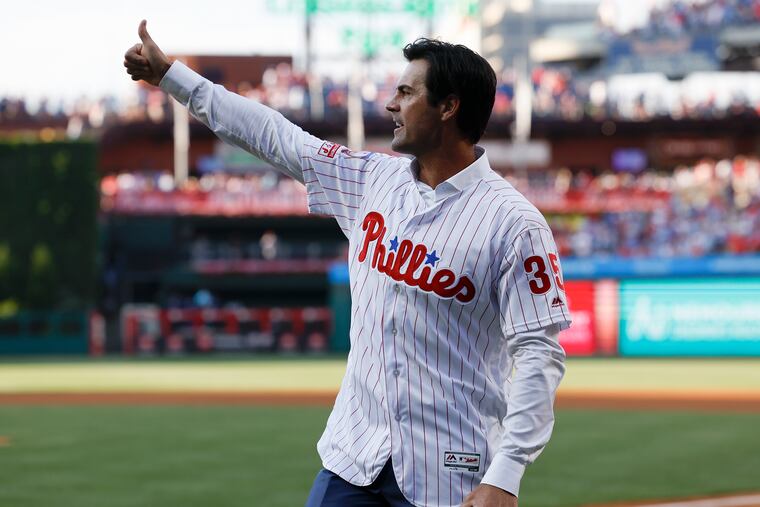
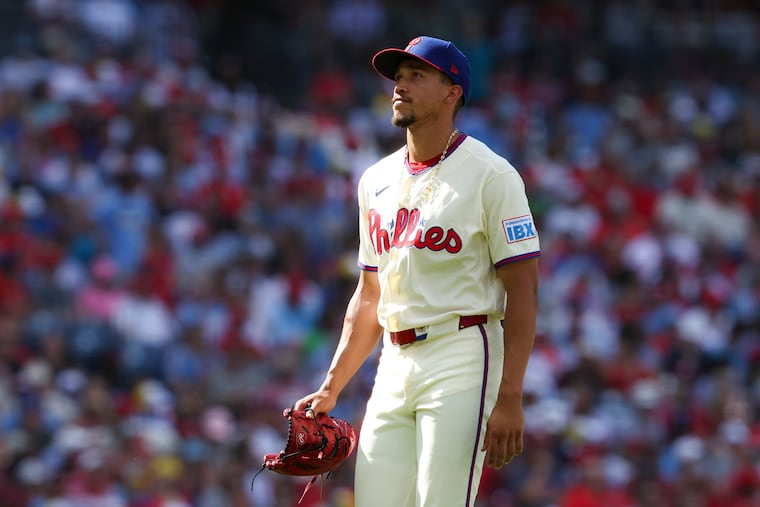
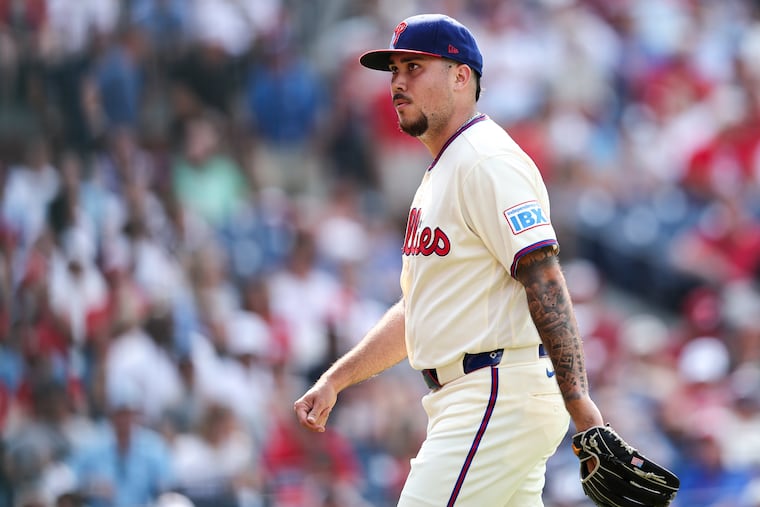
Cole Hamels was among the best pitchers in baseball for 15 seasons. He was the MVP of the World Series in 2008. The history of the Phillies can’t be written without him.
And for the first time, he’s on the Hall of Fame ballot.
Hamels was the first guest when The Inquirer launched the Phillies Extra podcast in February. He made a return appearance to chat about a variety of topics, including Kyle Schwarber’s return to the Phillies, what’s next in the team’s offseason, and, oh yeah, the honor of being considered for Cooperstown.
Watch the full interview below and subscribe to the Phillies Extra podcast on Spotify or Apple Podcasts.
Q: What did you think of Schwarber coming back for five more years on the largest contract ever for a DH?
A: I never doubted what Schwarber means to the team and what he means to the organization and the city. I didn’t think he was going to go somewhere else. But it’s the game you have to play. It’s understanding free agency. It’s understanding you not wanting to have to think about it during the year. You have agents. But to be able to see, it was the first of what the Phillies are really trying to do this offseason, and to finally get their guy — I don’t think they were going to let him get away.
» READ MORE: Kyle Schwarber found his way back to the Phillies, and he hopes J.T. Realmuto does the same
And it’s just a testament to John [Middleton] and Dave [Dombrowski] and Preston [Mattingly]. They know who he is as a player. They’ve had him for a couple of years. I think a lot of organizations who have had him know how special he is, and they didn’t want him to go. And for the Phillies to lock him up, they do know it’s ‘go’ time, and this is a person that they need in the clubhouse, and they need him in the lineup. He produces runs, and he’s so patient, and especially to see his lines on lefty-on-lefty. That was something I always favored. I didn’t mind lefties coming up. I knew I was going to succeed more. But Schwarber comes up, he’s not the type of guy that you want to see in the box in a big moment when you’re facing him because he’s a tough, tough hitter. So it’s good. I think there’s going to be a lot of moves that are going to start to kind of roll, but I think he was first. I’m glad it’s done. He’s a big part of this organization, and it’s good to see for five more years.
Q: Now the focus shifts now to J.T. Realmuto, and I can’t help thinking back to the 2013-14 offseason when Carlos Ruiz was a free agent. He was 34 going on 35, just like J.T. is now, and, also like J.T., all the pitchers love throwing to him. I know you swore by him. Do you see any similarities with where the Phillies are now with J.T.?
A: So, the hardest part about a catcher is, most of the time, you just look at what you can try to perceive as some sort of statistical value, and that’s how they hit, how they receive. But there’s something else that’s really difficult to measure, and that’s just his presence and confidence behind the plate in making a pitcher feel good, to want to execute, and to listen to a game plan, and then adjusting on the fly. And that’s something that [Realmuto] has really shown over the last couple of years.
» READ MORE: The Phillies are sticking with a veteran core in 2026. But this time the kids have to play too.
He’s been a tremendous receiver, but he throws guys out. And you can never count them out with his bat. And you got to see that in the playoffs. He comes through in big moments. He’s an incredible athlete, and I think that’s what is the difference. When you look at age, it’s how athletic he is. He sets a bar that’s a lot different. And then you have to look at what is available, and on the given market, there’s not really much available that are comps to him. So he’s kind of in the driver’s seat.
But at the same time, when you have a catcher that is really good and instills confidence in a pitching staff — both the starters and the relievers — you don’t want to let those guys get away. And you can see that in all the greatest catchers in the history of the game is you don’t let the good ones get away.
Q: I don’t think we spend enough time celebrating what it means to be on the Hall of Fame ballot. When you think about how few people actually get to the big leagues in the first place, and then you’ve got to play at least 10 years to be eligible for consideration, and then there’s a screening committee that whittles it down even more. It’s like the top 5% all-time of players that actually get on that ballot. What does it mean to you to be on that ballot for the first time?
A: I think a lot of us, we all kind of say the same thing, to really be recognized, it’s incredibly rewarding for a job that is so humbling. This job is a career that you fail a lot, and you fail more than everybody else. In order to play that sort of period of time, you had big successes, but you probably failed twice as many times as you had successes. And that’s why we were able to create a career out of it [because] we always knew how to get back up, and we always knew how to never doubt ourselves, and to keep trying. That is probably the one thing that happens, is when they do put you on the ballot, they send you a letter, and you get to read, and you see statistics of percentages, and that is the wildest thing. You’re going, ‘Oh my gosh, 13% of drafted players make the big leagues?’ And then you’ll go see a smaller percentage, and we just start to see that. Wow.
» READ MORE: Jeff Kent is bound for the Hall of Fame. What does that mean for the chances of Chase Utley and Pete Rose?
We were so fortunate to be able to play the game of baseball as a career and a job that we loved as a kid, and it never changed. And now getting recognized, it’s a very special moment, and I’m incredibly thankful. I put in a ton of time and effort. My family devoted a ton of time and effort to try to get to have the career that I had, and then for it to actually be somewhat recognized, to be as one of the best ever. … It’s a small percentage, and I look at names that are in the Hall of Fame. I was lucky enough to go there [to Cooperstown, N.Y.] and pitch in the Hall of Fame Game, and we took a tour. And just the nostalgia of baseball and what it means to America’s pastime, I have a part in that history in certain moments. And I’m just lucky to do what I did. I loved every minute of it, and now this is kind of the reward.
Check out the full episode for Hamels’ thoughts on how Hall of Fame voting for pitchers has changed, the Cooperstown cases for former teammates Jimmy Rollins and Chase Utley, and more.

Phillies Extra is your deep dive into all things Phillies on Gameday Central! Hosted by Scott Lauber, each episode brings you insider analysis, exclusive interviews with players and experts, reader emails, and more to cover the hottest topics with the Phillies and across Major League Baseball. Don’t miss it — the conversation starts here!
You can also subscribe to the podcast version of Phillies Extra on Spotify or Apple Podcasts.