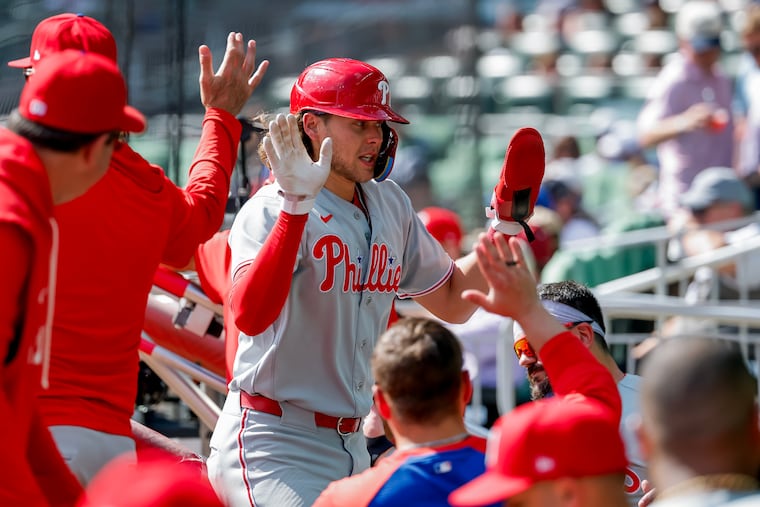
Phillies catcher Garrett Stubbs has lots of experience with robot umpires. Here’s what he says to expect.
Stubbs played most of last season in triple A, where MLB tested the automated ball-strike challenge system that will be implemented this year. He shared his experience on "Phillies Extra."
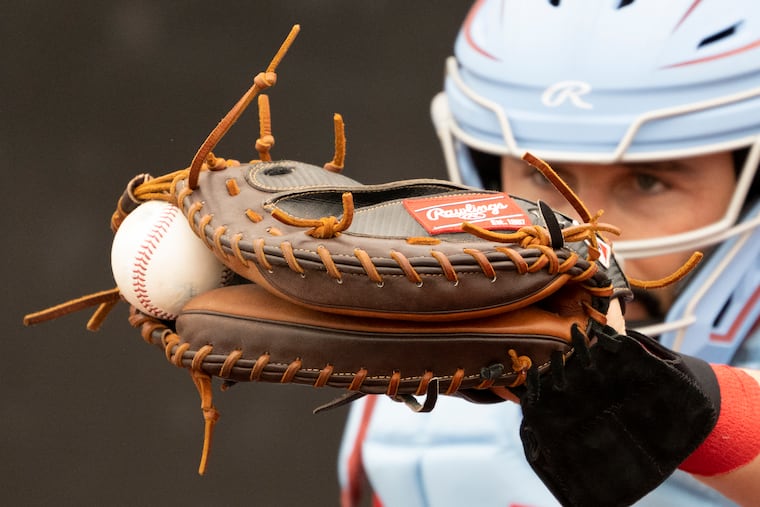
Got a question about MLB’s new robot umpires?
Ask Garrett Stubbs.
Stubbs played most of last season in triple A, where MLB tested the automated ball-strike challenge system that it will implement this year. That would seem to make the Phillies backup catcher an expert on the mechanics and strategy behind the new technology.
» READ MORE: John Middleton on Phillies’ high payroll amid looming labor war, Dave Dombrowski-Bryce Harper saga, and more
Last week, as he prepared to play for Israel in the World Baseball Classic, Stubbs sat down with Phillies Extra, The Inquirer’s baseball podcast, to discuss several topics, including the ABS system.
Here are a few excerpts from the conversation. Watch the full interview below and subscribe to the Phillies Extra podcast on Spotify or Apple Podcasts.
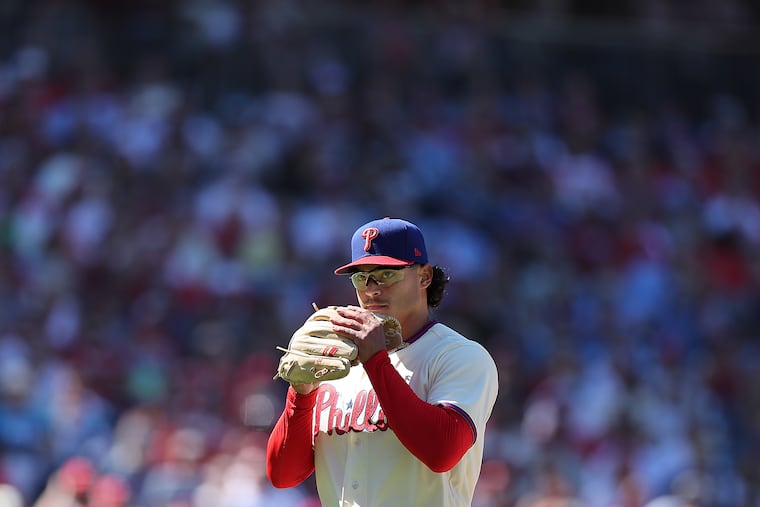
Q: How much did ABS change the game in triple A? Because I think our minds go right to Game 4 of the NLDS last year and the two-strike pitch by Cristopher Sánchez to Alex Call. In an ABS world, if the Phillies had a challenge, maybe they get that call reversed. Maybe it changes the inning and ultimately the game. Can you recall times in Lehigh Valley last year when an inning was changed in a meaningful way by a challenge?
A: The key word is maybe, right? And I think [Game 4] sure is an extreme situation. But those situations do pop up. Nothing comes to mind specifically of an example in Lehigh last year where that happened. But the maybe piece is another big part, where the catcher or the pitcher or the hitter, at any time, they feel it was the wrong call, they do have to take action and actually challenge. Now, in that situation [Game 4 of the NLDS], in that spot, with that pitch, pretty confident that would have been challenged.
There’ll be times this year, though, especially with TV, that people are watching the games, and it looks very easy to challenge, but as a hitter, catcher, pitcher who can challenge, they might not challenge it because it was a close pitch and they’re unsure, and the situation maybe doesn’t dictate it. Or maybe it will, and they’re still feeling like, ‘I’m not sure if it was a ball or a strike.’ So those things do happen, and you’ll see plenty of challenges, too, where they get them wrong. Umpires are good, and I think it keeps them focused on every single pitch. Not to say that they’re not focused on every single pitch, but it’s just like an extra layer of accountability during the game. Just like we’re accountable during the game, our fans keep us accountable all the time.
» READ MORE: Why has Dave Dombrowski invested even more in the Phillies’ starting pitching? Check his record: ‘It’s worked’
I think this is an extra wrinkle in the game that situations like last year with Sánchy, there is an opportunity for the game to be swayed one way or the other in a correct manner if somebody challenges. So, there will be times this year where games are swayed in a certain direction because of a challenge, and I think it’s great. I think it just adds that extra layer of making sure the game is being called correctly. And also it limits the, for lack of a better term, the back-and-forth kind of [complaining] between each other, because you can challenge. So, you’ll hear umpires say, ‘You can challenge it,’ and hitters will and catchers will get mad at umpires saying that to them. But it is a part of the game now, so you’ve got to do it.
Q: I was going to ask, does ABS change those previous, innocuous interactions catchers have with umpires where maybe you’re asking about the location of a certain pitch just to ascertain what the strike zone is on that particular night?
A: One, teams will run out of challenges, and then you cannot challenge. And so, the game will be called without challenges, and there will be the back-and-forth between players and umpires, and there still is that rapport of getting to know the strike zone. So, it doesn’t completely eliminate it. It will eliminate it to a certain degree. And I’m sure fans love watching players get after it with umpires. It’s an extra dramatic piece of the game. But it still happens. You still have opinions, and you don’t necessarily want to use challenges. That’s kind of the point, right?
The umpire is still supposed to do his job. So, when they tell you, ‘Well, challenge it,’ you’re like, ’I shouldn’t have to challenge it. Just get the call right.’ And there are times where that will happen this year. It happened last year. So, there still is a back-and-forth. There’s just the extra piece that you can make that move to make whatever call change the other way. So, there still will be back-and-forth. People can still enjoy that between umpire and player.
Q: How often did you find last year that you were right?
A: I was a little above 50, like 55%, something like that. I think it was right on par with the rest. I think it’s like 55-56% [of the time] catchers get it right. The other piece, too, is that you’ll get challenges wrong in certain situations because you think it’s close, and it’s towards the end of the game where you feel like it’s worth it to challenge here because it was close enough, and you’ll get it wrong and you’re like, whatever. You know it was worth challenging right there, because we had two left and it’s the ninth inning, or it’s the eighth inning, or whatever it may be. And so, you take a chance, and you’ll get it wrong. But I found that I was pretty aware of the zone.
I think I should have challenged more. There were a lot of times where there were close pitches, and I really wasn’t used to challenging. It’s kind of an uncomfortable thing to do, especially with the relationship that you end up building with umpires over time, so challenging wasn’t like my first reaction a lot of times. So, I think that getting used to challenging more would be something that I would make an adjustment for.

Phillies Extra is your deep dive into all things Phillies on Gameday Central! Hosted by Scott Lauber, each episode brings you insider analysis, exclusive interviews with players and experts, reader emails, and more to cover the hottest topics with the Phillies and across Major League Baseball. Don’t miss it — the conversation starts here!
You can also subscribe to the podcast version of Phillies Extra on Spotify or Apple Podcasts.