Phillies change direction on offense, but stick with questionable rotation | Bob Ford
The Phillies did it all this offseason. Well, almost all.

The Phillies will open the 2019 season Thursday after their most exciting offseason since, well, since maybe ever. Recent events tend to be larger in the rear-view mirror, of course, and these are the Phillies who brought in Pete Rose to put them over the top once upon a time, and traded for Brad Lidge to do the same thing on another occasion.
But the mother lode of talent that came in the door since last season finished with a thud has been incredibly impressive. There’s no guarantee that a third championship in the franchise’s 136-year history will follow the previous two celebrated by Rose and Lidge, but that’s pretty much where expectations are headed.
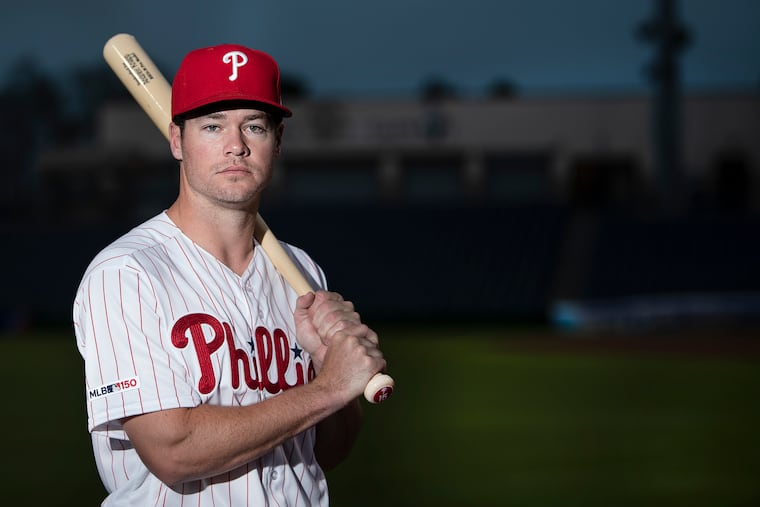
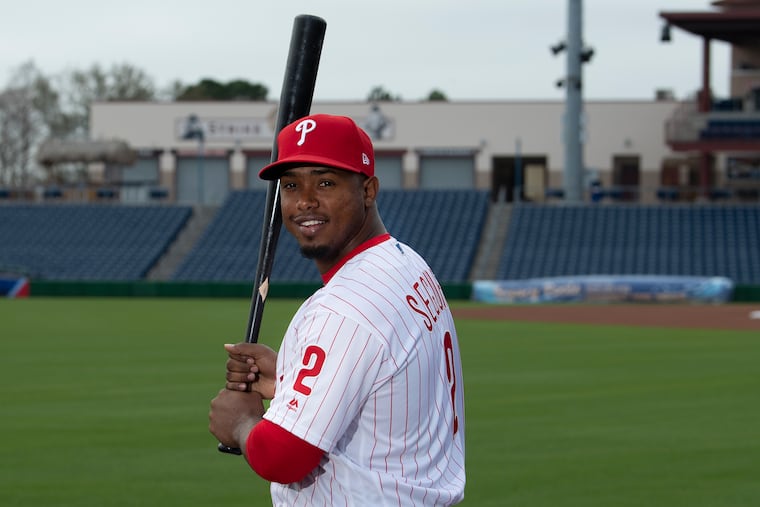
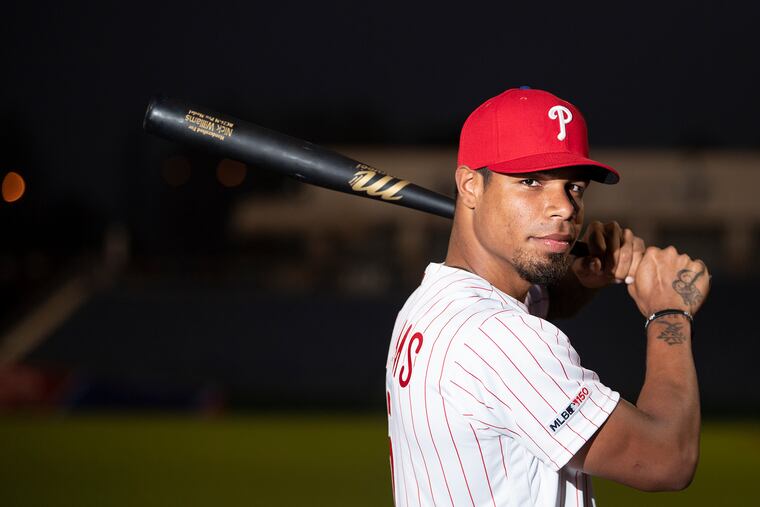
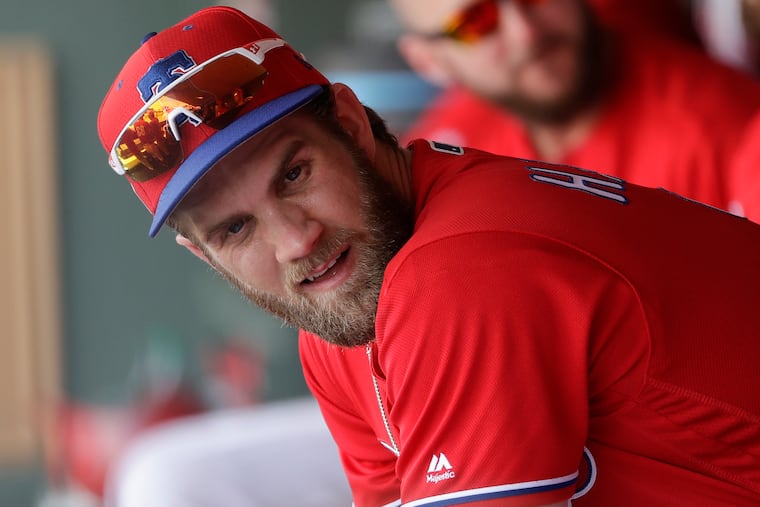
General manager Matt Klentak did well enough upgrading the field positions with Jean Segura, Andrew McCutchen, and J.T. Realmuto, and the bullpen with David Robertson and others, before all that was capped by the signing of right fielder Bryce Harper. The Phils made Harper the contractual king of baseball as a show of their commitment to winning, even if Harper did become a poor man’s Mike Trout by the end of spring training.
The narrative is that the Phillies are built to win, and built to win right now. That’s hard to argue with when you look at the batting order, but let’s give it a try, anyway.
The lesson that baseball has imparted since the game’s infancy is that success and failure eventually rest with what happens on that little bump in the middle of the infield. It isn’t that the Phillies have ignored their pitching staff, but particularly with the starting rotation, they have chosen to rely more on good fortune than good arms. This is not a course of action baseball generally rewards.
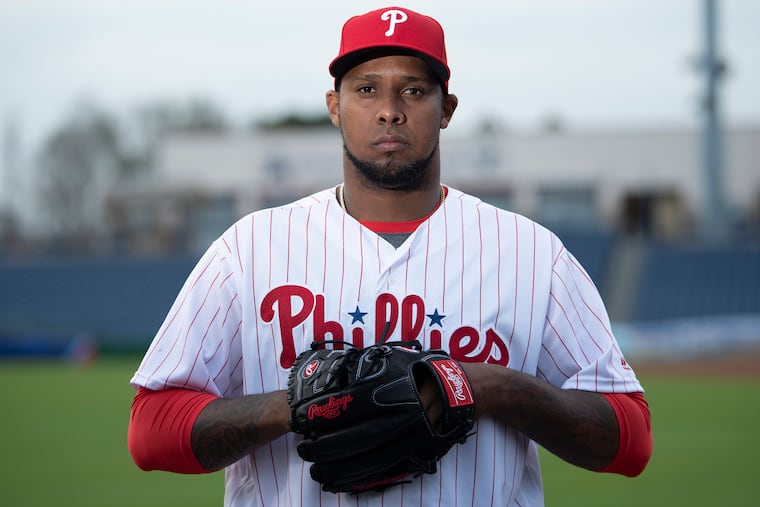
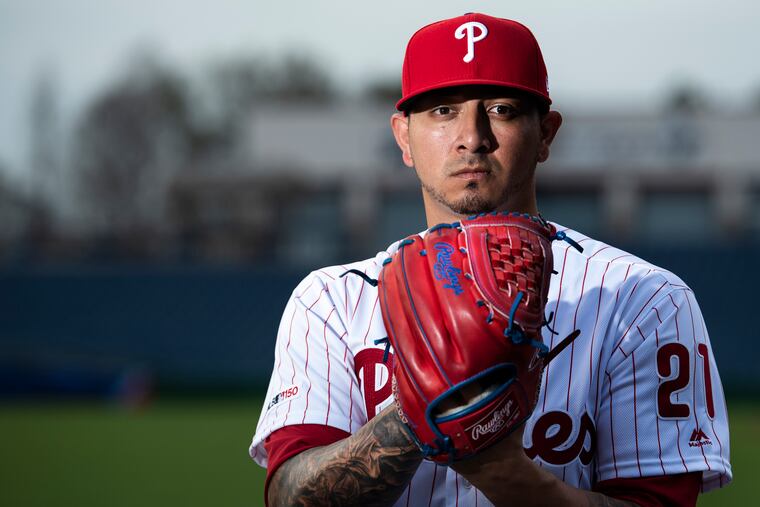
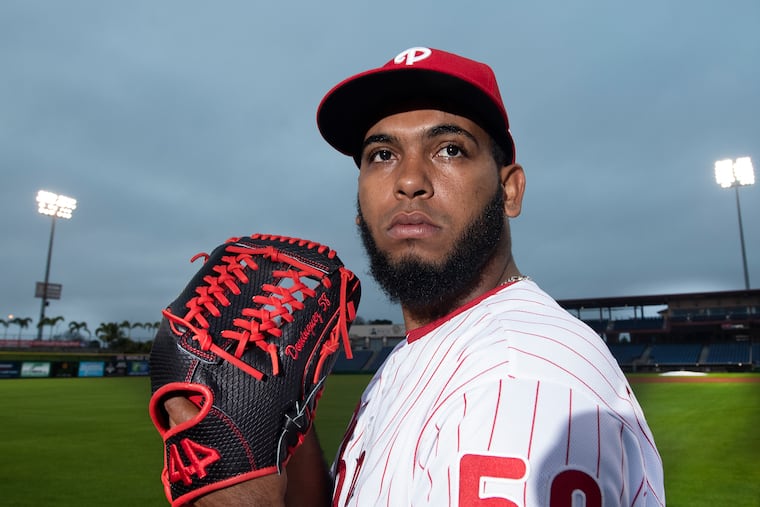
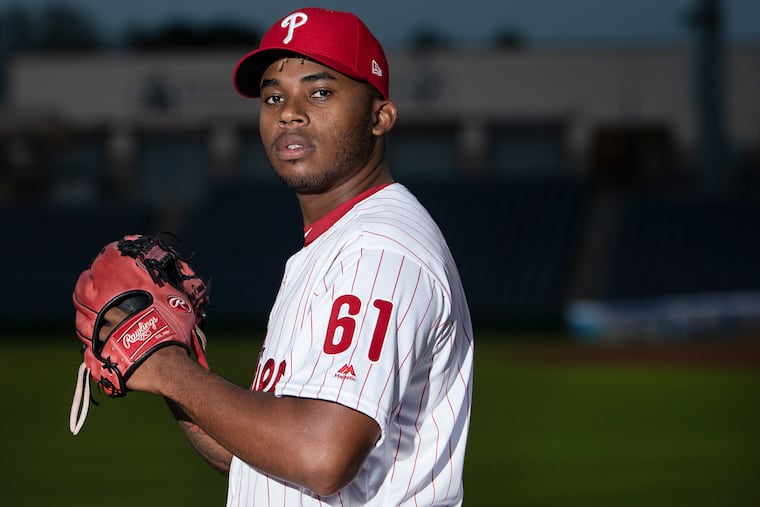
At the moment, the Phils trot out a rotation of Aaron Nola, Jake Arrieta, Nick Pivetta, Vince Velasquez, and Zach Eflin. It is the same rotation that finished 2018, and, aside from Nola, not in a way that would inspire confidence. All five are stubbornly right-handed, which is a drawback, and there is the real question of whether it is a rotation good enough for a true contender.
If something comes apart, there are other options within the organization such as Jared Eickhoff, Drew Anderson, Enyel De Los Santos, and JoJo Romero (a left-hander!), but best prospect Adonis Medina will begin the season in Reading, and better prospect Sixto Sanchez was lost in the somewhat-heavy Realmuto trade.
For better or worse, this is the rotation for the Phillies as the season opens. Klentak stayed out of the marketplace for free-agent starters, although he could obviously upgrade before the trade deadline.
Part of that decision is a belief in the guys they have, which is admirable, and part is the new-age thinking that starting pitching isn’t as important as it once was. There’s some truth there. Starters pitched more than 70 percent of innings 30 years ago, and that has fallen to about 60 percent these days. The analytics of allowing a starter to go through an opposing order for the third time dictate a greater reliance on the bullpen, and, heaven knows, the Phillies love their analytics.
Well, fine, but nine of the 10 teams that made the postseason in 2018 were ranked among the top dozen in baseball for fewest runs allowed per game by their starting pitchers. The only outlier was Colorado, for obvious reasons.
Additionally, the five American League playoff teams were all ranked among the top six for team ERA, while four of the five NL playoff teams were in the top five for team ERA. Again, the Rockies were the exception.
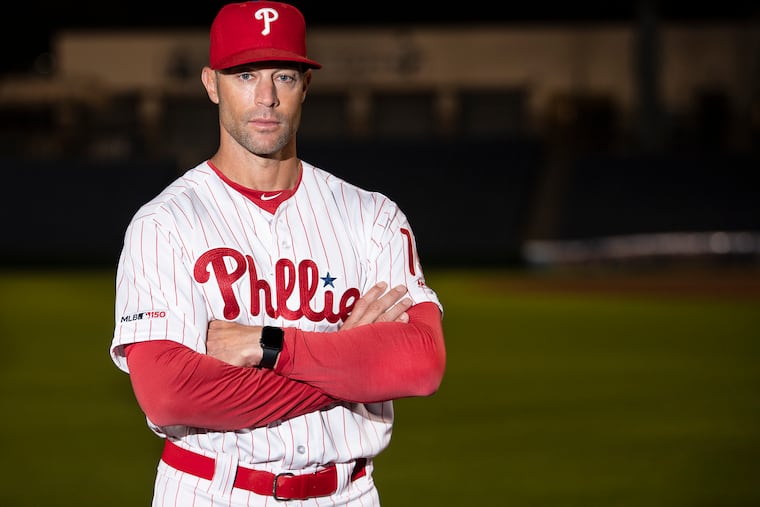
The Phillies will tell you — over and over again — that advanced stats such as xFIP (Expected Fielding Independent Pitching) are better tests than ERA, but actual success, as opposed to projected success, is easier to understand. Pivetta’s xFIP is off-the-charts good, according to manager Gabe Kapler, which doesn’t really explain why the pitcher had just one win after July 12 in 13 starts.
Looking ahead, let’s assume that Nola is as good as he appears to be, and work from there. Lots of luck if he isn’t.
Arrieta, who just turned 33, won the Cy Young Award in 2015, but his ERA has risen in each of the three seasons since. He hit the wall in August, finishing with a 1-5 record and a 6.35 ERA in his final nine starts.
Pivetta, the king of xFIP, lost twice as many as he won in 2018, and looked for much of the season like the low-ceiling prospect who toiled at New Mexico Junior College and languished for several years in the minors before landing in the Phillies rotation.
Velasquez had his moments, but he struggled, too, particularly if the opposition happened to have a left-hander or two in its lineup. Lefties batted .288 (oh my God, he’s using BA as a metric) and enjoyed an .890 OPS (that’s better) against him. Thirteen of the 16 home runs he allowed were to left-handed hitters. As a bonus, Velasquez had a 5.68 overall ERA after the All-Star break.
Eflin had the same breakdown as the season wore on. Before the All-Star break, he held batters to a .233 average and a .650 OPS. After the break, it was .290 and .847.
If you are willing to write off all those disappointments as the product of a team-wide meltdown, have at it. If you want to believe an improved bullpen will pick up whatever slack is left by the starters, go right ahead. If choosing to see the doughnut instead of the hole is your preferred outlook, then the Phillies are on their way to winning about 110 games by the score of 8-6. Well, it could happen that way.
That isn’t how baseball usually works, however, at least not for most of the last 150 years. It doesn’t take an advanced calculator to know that the combination of a poor pitching rotation and a championship rarely adds up. The Phillies might beat those odds, but might also be remembered this season as a team that signed the best on offense but merely hoped for the best on the mound.