
Partner Content
A Philadelphia Leader’s Commitment to LGBTQ+ Youth
Jasper Liem, the executive director of The Attic Youth Center, is passionate about offering a safe space and a diverse range of resources for LGBTQ+ youth, to safeguard their futures.
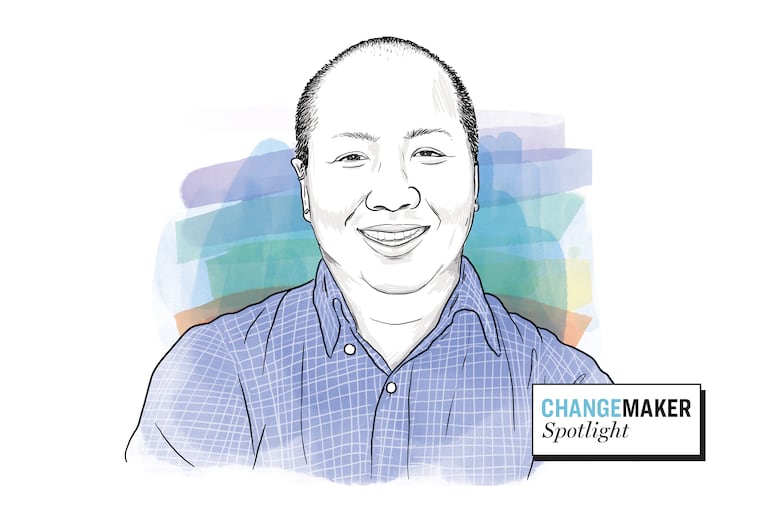
“When LGBTQ+ youth face prejudice or rejection, it deeply impacts their ability to thrive,” Jasper Liem, the executive director of The Attic Youth Center, said. “But acceptance, community, and belonging can reverse that harm.” Liem, who has a background in strategy, governance, and sustainable growth, joined the organization in 2013 and has since helped to strengthen its mission to offer a space for queer and transgender youth and to create a safe space for young people. For nearly 30 years, The Attic has provided an affirming place where LGBTQ+ youth can find community, access vital resources, and build a sense of belonging. Under Liem’s leadership, the center is strengthening its commitment to advocacy, equity, and inclusion. They are also expanding the organization’s reach and impact, ensuring that thousands of young people have the support they need to thrive.
Why did you decide to join The Attic Youth Center?
I first got involved in LGBTQ+ youth work because I was a queer young person myself. In high school, a few friends and I started a gay-straight alliance, and only later did I realize how much teachers and adults had advocated behind the scenes to make that possible. That support stuck with me.
In 2013, just as I was finishing my masters in social work, a friend on The Attic’s board encouraged me to join. I knew the center’s impact through friends and community members, and it felt like the perfect way to pay it forward. I had mentors who created space for me when I needed it most, and I wanted to do the same for today’s LGBTQ+ youth. I joined the board that year, became interim executive director in 2022, and later stepped into the permanent role.
What do you bring to the job that’s unique?
I bring an unusual mix of skills and experiences. I’m an out trans and queer person from Philly, with deep community knowledge. I also have clinical experience as a licensed social worker, so I understand the power of community for healing. On top of that, I was raised by two MBAs, so I’m comfortable with finances and strategic management, a rare mix in this field. Ultimately, it’s all driven by listening: hearing staff, youth, and community needs, and turning that into action.
Why was The Attic originally founded?
Back in 1993, Daren Wade and Carrie Jacobs launched The Attic as what was supposed to be an eight-week after-school pilot. At the time, most people didn’t even believe gay and lesbian youth existed, let alone deserved their own space. But when 41 young people showed up, it was clear the need was real.
What the founders realized was that beyond therapy or crisis groups, LGBTQ+ youth needed a place simply to be themselves. The hardest part in those early years wasn’t just funding. It was convincing people that such a space was necessary, in a time when adults could still be fired for coming out. And misinformation about HIV was everywhere.
What really sustained the vision, though, were the young people themselves. Their brilliance, resilience, and energy showed that creating a safe community was not optional; it was essential.
“I wish more people understood that LGBTQ+ youth are not “problems to be fixed.” …These young people are resilient, creative, and full of potential.”
What has made The Attic such a lasting institution?
I think what makes The Attic unique is that we are Philly’s only LGBTQ+ service focused on young people. Of course, there are amazing organizations in Philadelphia that are LGBTQ+, and a lot of them have programs specifically for youth. But at The Attic, that’s all we do. So young folks can come into the center and we serve them right now. We serve youth from ages 14 through 23. And they know that when they go to a group they’ll be surrounded by peers. They’re not going to have to explain their identity to someone from a different generation. That is really magical, because we’re not just protecting them as LGBTQ+ individuals but also creating a safe space for them as youth.
Beyond community, we connect youth to critical resources like housing, jobs, and health care. We also have case managers, therapists, and now a dedicated drop-in counselor who can provide immediate mental health support when something comes up. It’s about meeting both social and personal needs so youth feel supported and never alone.
What’s the day-to-day like?
About 400 individuals visit The Attic each year, with 15 to 30 young people dropping in on any given day. From 3 p.m. to 4 p.m., it’s mostly drop-in time to hang out, meet new people, and play games. From 4 p.m. to 5 p.m., we host small concurrent groups, led by therapists, case managers, or staff, covering topics like art therapy or gender euphoria. These groups help youth connect, discuss challenges in a safe space, and access resources. We also provide dinner and sometimes a second set of groups in the evening.
For many young people, The Attic is the first place they can truly be themselves. They might come in wearing a school uniform and change into the clothing or makeup that feels most affirming. Watching them emerge as their true selves is incredible, but it’s also bittersweet, because before leaving, many change back to feel safe outside the center.
Can you tell us an inspiring story from The Attic?
One young person came to The Attic around the time I became interim executive director. They had been kicked out of their home in the South and were bouncing between houses for years. When they arrived, they were cautious and quiet, understandably, given all the trauma they’d endured. Over time, coming almost daily, they found community, finished high school, secured stable housing, and started college. I’ll never forget seeing them in the big room, laughing and connecting with other youth — a vibrant, hilarious person finally able to emerge in a safe space. It’s moments like that that show just how essential this kind of support is.
What do you wish more people understood about the daily realities of these young people?
I wish more people understood that LGBTQ+ youth are not “problems to be fixed.” Too often, the outside world fixates only on the risk factors and the grim statistics, and yes, those realities are true. But I also want to emphasize the positives. These young people are resilient, creative, and full of potential. When they receive affirmation and support, they’re so much more than the statistics we hear about.
Take trans youth, for example. The data show higher rates of suicidality, but the core issue isn’t that they’re trans. It’s that they’re living in a world that rejects them. They struggle not because of who they are, but because of the stigma, rejection, and pressure to change. The problem isn’t their identity; the problem is society’s refusal to accept it. When LGBTQ+ youth face prejudice or rejection, it deeply impacts their ability to thrive. These teen and young adult years are critical for identity development, and if the message they receive is that something is wrong with them, they often internalize it. That can manifest as depression, anxiety, or other social and health challenges. We see higher risks of homelessness, and many young people avoid shelters or housing programs altogether because they don’t feel safe as queer youth.
But acceptance, community, and belonging can reverse that harm. They literally save lives. The opposite of suicidality is hope, and when young people are connected to a supportive community, they have people who can hold that hope for them, even when they can’t hold it for themselves.
Why does The Attic place so much emphasis on professional development?
Access to jobs, internships, and professional opportunities is essential because in a capitalist society, those things are directly tied to survival. Without stable housing, it’s hard to hold a job; without a job, it’s hard to put food on the table or take care of your health. Everyone needs those opportunities to grow and thrive.
For LGBTQ+ youth, especially those estranged or disconnected from their families of origin, there are additional barriers. Many don’t have the same chances to learn basic life skills, things like navigating professional environments or building financial stability, that their heterosexual, cisgender peers often pick up at home.
What of The Attic’s accomplishments are you most proud?
I’m deeply proud that The Attic has been a safe space for LGBTQ+ youth for over 30 years, walking alongside them through shifting eras, political climates, and societal changes. I think about the young people we met during the early fears around HIV, times when a diagnosis was still terrifying, if not the death sentence it had been in the ’80s. The fear, the uncertainty, the isolation they felt, it’s something I’ll never forget.
Today, those same conversations look very different. We can talk openly with youth about getting tested, connect them with resources if their results are positive, and walk with them through treatment with dedicated case managers. Seeing that transformation over decades — the way fear has been met with knowledge, support, and hope — is profoundly moving.
What do you hope for the next generation of LGBTQ+ youth?
I truly hope that future generations won’t have to fight so hard just for basic health care, dignity, and the freedom to be themselves. That they’ll have access to more affirming spaces, where they can be supported and celebrated. I love that The Attic exists and that there are places like it across the country. And my hope is that one day, there might be a time when organizations like ours aren’t needed, because the struggle is no longer so heavy, and being themselves is simply safe and accepted.
What do you want The Attic to look like in 10 years?
If I had a magic wand, I’d give The Attic more space: space to grow, to serve more youth, and to run concurrent programs for different age groups. Right now, we serve mostly 14- to 23-year-olds, but I get calls all the time from families of younger kids who are questioning and need support. Ten- to 12-year-olds have different needs and want to have different conversations than someone who is 18, or 19, or 20. Our current space forces us to choose between groups, and younger kids often can’t access programming alongside older youth. My dream is a place where every LGBTQ+ kid has room to feel safe, affirmed, and seen. Where they can come as they are and know they belong, no matter their age.
When somebody donates money to The Attic, what does it benefit?
When someone donates to The Attic, it directly supports the quality of our programming. At least 85% of our budget goes straight to programming: salaries, staff running activities, and providing meals. Donations ensure we can offer high-quality experiences for youth.
What are you reading?
I just finished Tourmaline’s Marsha: The Joy and Defiance of Marsha P. Johnson, the first comprehensive biography of the Black trans pioneer. The book reminds you that Marsha wasn’t some distant icon. Most of us picture her in the famous photo with flowers in her hair, smiling and glamorous, probably thinking she was in her 30s. But at Stonewall, she was no older than 19, the age of many of the youth we serve.
What do you like to do for fun?
I’m a tinkerer. I love taking things apart and figuring out how they work. During the pandemic, I even tried my hand at wood carving, though I wasn’t very good. I also love fishing, mostly up in the mountains about three hours from Philly. I just sit in a kayak, drown worms, and remind myself: it’s called fishing, not catching. Really, I just love anything that lets me lose track of time.
PHILLY QUICK ROUND
Favorite Philly food? Lately, my go-to has been Das Good Cafe in Germantown, which serves an incredible blend of Laotian and Hawaiian dishes.
Favorite Philly small business? Two Philly bookstores: Big Blue Marble, with a beautiful selection of kids’ books, and Giovanni’s Room, the oldest LGBTQ+ and feminist bookstore in the country.
Favorite sports team: The Eagles are the universal language of Philadelphia.
You don’t know Philly, until you’ve … seen someone peeing in an alley and realize it’s your friend! Not even necessarily after a long night. It could be 3 p.m. on a Tuesday.
How would you describe Philadelphians? We are gritty and loving at the same time. We might seem a little gruff, but it’s all in love.
Greatest Philadelphian: Bayard Rustin, the civil rights leader who was Martin Luther King Jr.’s right-hand man.
Favorite Philadelphia-born artist: The filmmaker Lee Daniels.
Lucy Danziger is a journalist, an author, and the former editor-in-chief of Self Magazine, Women’s Sports & Fitness, and The Beet.