Stock market cops investigate traders in wild price swings
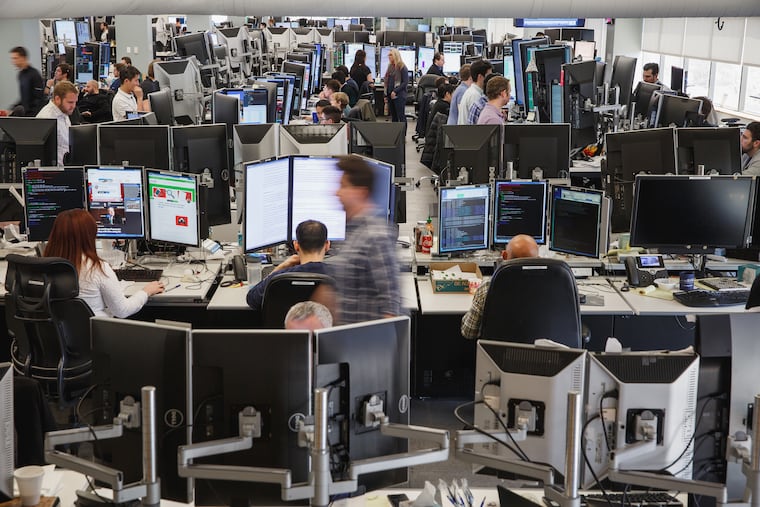
Regulators for the Nasdaq and New York stock exchanges are investigating whether traders manipulated share prices in the closing minutes of high-volume trading sessions earlier this month, in hopes of boosting prices before dumping shares.
"U.S. regulators are investigating whether investors manipulated end-of-day stock prices to avoid being forced by their brokers to sell holdings" at unfavorable prices, writes Edgar Ortega and his colleague Jeff Kearns of Bloomberg News in this story, whose accuracy was confirmed to me by staff at the Financial Institutions Regulatory Authority (FInRA) www.finra.org, which monitors and disciplines traders on the New York and Nasdaq exchanges.
The Dow-Jones Industrial Average has swung as much as 100 points in the last minute of trading earlier this month, Ortega noted. Those wild swings "suggest investment firms, faced with client redemptions and plunging markets, may be gaming the closing-auction system," in which the markets help "smooth" price changes by supervising sales near the end of the trading day.
| The Dow 30 stocks "swung 0.6 percent on average at the close the last two weeks, according to data compiled by Bloomberg. That's almost eight times greater than the average three months ago."
How does an investor game that system? "Traders could send small buy orders leading up to the close to prop up the price, only to place a larger sell order in the final trade...
What's at stake? "Closing prices are often used as benchmarks to value the collateral a client has set aside to guarantee a loan to invest in stock. They also influence the settlement of options and futures contracts, executive pay and the price of takeovers. Funds that track benchmark stock indexes typically rely on the exchange's closing auctions to complete trades."
``If markets are declining, people are going to try to mark up the close,'' Thomas Gira, executive vice president for market regulation at the Financial Institutions Regulatory Authority in Washington, which includes the New York and Nasdaq regulators, told Bloomberg. ``We want to make sure that closing prices are not artificial prices.''