Richard Pine
It's been more than 10 years since Richard Pine, amateur actor and CEO of a drug and alcohol treatment program, played the town drunk in a Bristol Riverside Theatre production.
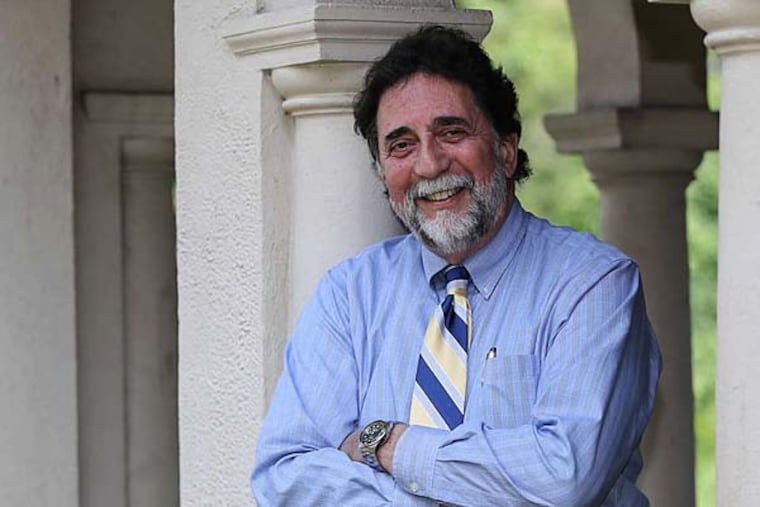
It's been more than 10 years since Richard Pine, amateur actor and CEO of a drug and alcohol treatment program, played the town drunk in a Bristol Riverside Theatre production.
The thing is, Pine, 64, doesn't drink, although he once did - socially, before first cutting back, then quitting.
"It was from the night we had to tell my son that his best friend, 10 years old, was killed by a drunken driver," said Pine, chief executive of the Livengrin Foundation, the inpatient and outpatient drug and alcohol addiction recovery program in Bensalem.
"I knew at that point that I never, ever, ever wanted to be in a situation where I had to even contemplate being behind a wheel after a drink, even when I'm not drunk," he said.
What don't people understand about drug and alcohol addiction?
People have a hard time grasping that telling an addict who has a full blown, diagnosable illness of addiction to just stop drinking or taking drugs is like telling you or me to stop breathing for the next hour. The natural body response is, "I've got to take a breath." [For the addict], the brain chemistry is saying, "I need a fix. I need a drink."
What should employers do if they suspect that an employee has an addiction problem?
We're big proponents of employee assistance programs. Any company, large or small, should have some program by which they can offer their employees confidential referral for any kind of life problem.
How do you get employees to use the program?
At Livengrin, we have at least one session a year that's put on by our [employee assistance] consultant to remind people how to make self-referrals. And we have sessions for supervisors on how to make supervisory referrals.
What's a supervisory referral?
If I know that Jane has been a good employee for the last two years, but over the last three months has been making a lot of mistakes and arguing with fellow employees, I'm going to say, "Before we take any other supervisory action, I strongly recommend that you give our employee assistance program a call." Once I make that referral, I can check. They can't tell me what's going on in your life, but they can tell whether you're taking steps to get help.
Livengrin has programs for firefighters, police, and other first responders, as well as for nurses and health professionals who suffer from drug and alcohol problems at work. Why?
Because they are entrusted with the safety and health of the public, [first responders and health-care professionals] often are saddled with a heavier burden of shame, which can create major obstacles to asking for help. But they will more readily share and get honest with their brother-and-sister responders or nurses.
How do you get along with the health insurance firms?
[Big sigh.] It's a struggle daily. We have a whole department staffed with professionals who are always on the phone with insurance companies, either trying to get approvals or, once we get approvals, trying to get continued-stay approvals.
Don't insurers have to pay if a doctor orders it?
Unfortunately, fewer and fewer people are covered under Pennsylvania Act 106 [which requires most group health insurance plans to include coverage for addiction treatment]. Self-insured plans are not covered by Act 106. Employers with less than 50 employees are not covered by Act 106.
How about insurance reimbursements?
Our insurance company, the folks who provide my employees with their health insurance, came back to us for renewal this year with a 46 percent increase in our premiums. The same company generously offered us a 3 percent increase in the rates they pay us for drug and alcohol treatment. So we get a 3 percent increase in rates and they want a 46 percent increase because their costs are rising. It's the bane of my existence.
Any other complaints?
Insurance companies that owe us a ton of money, who make any excuse not to pay or not pay on time.
What do you mean they don't pay? Are these reputable insurers?
Yes. We feel our bills should be paid within 60 days. We have bills out 120, 180 days.
You keep a guitar in your office. Is it to de-stress?
I keep one here with the idea of playing at work, but I almost never do.
215-854-2769@JaneVonBergen
Richard Pine
Home: Lower Makefield.
Family: Wife, Linda Kanner; children and stepchildren, Stephanie Bailey, Chadd Pine, Courtney Edelstein, Rebecca Trapani, Allie Ulrich, Mia Levy, Benjamin Levy.
Diplomas: University of Massachusetts, sociology; St. Joseph's University, master's in business.
Habit: Plays guitar daily. Gigs in the acoustic duo Delaware Crossing.
By the way: Lent a guitar pick to singer Rosanne Cash, who autographed it.
When I retire: I'm going to take a cooking class, and I'm going to take an astronomy class.