A bubble-proof economy needs slow, steady growth
During the last seven years, the economy has grown at a moderate 2.2 percent average annual pace. The unemployment rate was cut in half. Wage gains were modest, but so was inflation. In other words, we have experienced the third-longest expansion on record without any major bubbles forming.
If slow but steady wins the race, why can't that be the case when it comes to economic growth?
The president's budget expects growth to average a strong 3 percent a year for the next 10 years, a forecast not shared by most economists, including myself. But my real concern is that even a short period of 3 percent growth could lead to bubbles forming that would hasten the next recession.
During the last seven years, the economy has grown at a moderate 2.2 percent average annual pace. The unemployment rate was cut in half by decent, though hardly excessive, job increases. Wage gains were modest, but so was inflation. In other words, we have experienced the third-longest expansion on record without any major bubbles forming.
What might happen if the economy does surge for an extended period?
Businesses, and therefore the economy, can expand in just two ways: They can use more labor, or they can use labor more efficiently by increasing productivity. Consequently, the constraints on growth are the ability to expand the labor supply and the ability to improve productivity.
Consider labor supply. With the unemployment rate low, no matter how you measure it, the number of people unemployed or underemployed is limited. In addition, the number of young adults entering the labor force is pretty much set, especially if immigration is restricted. That means we know what the future labor supply will look like, and most estimates are that labor-force growth should be in the 0.5 percent range.
With the labor supply expanding slowly, the economy would need productivity to improve at a pace rarely seen over the last 20 years to hit the 3 percent growth target. As that pace would have to persist for a decade, the likelihood of achieving the hoped-for expansion is small.
And that's the rub: The economy cannot support a decade of 3 percent growth without straining labor supply. Even if all of the frustrated people found their way into the labor market, there simply would not be enough people to allow businesses to expand to meet the growing demand.
When demand persistently grows faster than supply, bubbles form. And when bubbles burst, bad things, such as recessions, follow.
In the 1990s, we had the tech bubble. Growth for much of the '90s was strong, averaging the magic 3 percent rate. But that was generated, in no small part, by a massive rise in stock prices that artificially bolstered wealth and spending.
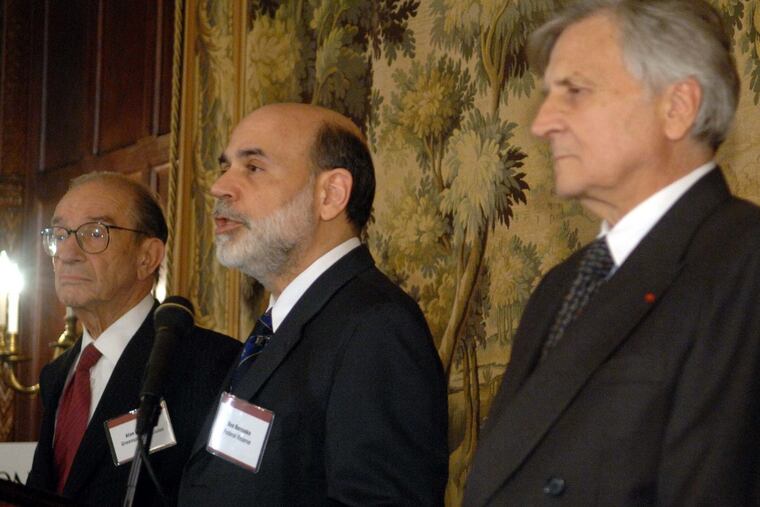
Unfortunately, the extent or even the existence of the bubble wasn't clear. In a speech in December 1996, then-Fed Chair Alan Greenspan called the equity price rise "irrational exuberance." However, the markets and the economy kept rising for more than three years, and Greenspan backed off. When the bubble burst, a recession followed.
In the 2000s, we had the housing bubble. Rising home values led to a surge in consumer spending, funded in no small part by home-equity loans backed by that same jump in home-equity values.
Growth in the first half of the 2000s hit the 3 percent pace, but the housing bubble powered it. And once again, the Fed chair, Ben Bernanke, didn't recognize the extent of the bubble. He believed it was "a localized problem" that wouldn't affect the national economy.
As we all know, the housing bubble burst, the economy crashed, and the Great Recession followed.
What will be the next bubble? It could readily be labor, especially if unsustainable strong growth is created by artificially hyping the economy with massive tax cuts and government spending.
When the tech bubble burst, the unemployment rate was 4.2 percent, while it was about 4.5 percent when the housing bubble was punctured. Today, the unemployment rate is once again in the 4.5 percent range.
Given the mathematics of labor-force growth, just 18 months of 3 percent economic growth could create a demand for labor that would drive down the unemployment rate to 4 percent or less. In the last 40 years, the rate was below 4 percent for only five months, all in 2000.
Years of strong growth, with the economy below full employment, would almost certainly cause wages and prices to jump. Rising inflation could cause the Fed to hit the brakes, and if that happens, a recession would likely follow.
Moderate growth that doesn't create the next bubble may be the best ticket to better economic conditions, especially if it lasts a lot longer than rapid growth.
We've been down that strong, bubble-driven growth road before. I hope we don't go there again.