School lunch program seeks to fill need
As the economy struggles to regain its footing, more children than ever receive free or reduced-price lunches in the nation's school cafeterias.
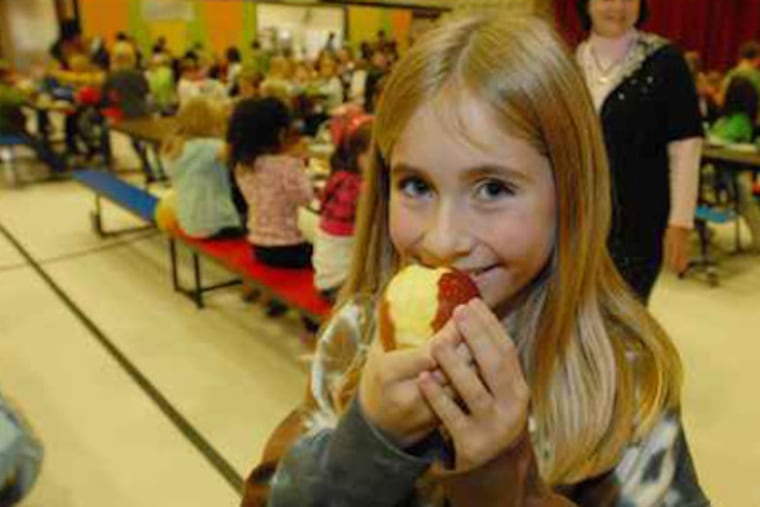
And some advocates suspect even more children could use the help.
As of this month, 62 percent of public school students who participate in the National School Lunch Program have shown they cannot afford the average
More than 31.2 million children receive the benefit.
"It's almost inconceivable to think, when we're walking around with our
A USDA study this year found wide disparities among states in signing up children who receive food stamps for the school lunch program. And although most families routinely receive applications before school starts, many don't know that they can sign up midyear if a parent loses a job or faces some other hardship.
"I suspect there is more need than is indicated," said
To qualify, a family of four must earn
"Kids shouldn't have to worry about that part of their lives," said
U.S. Rep.
In a letter to school principals in his district, Etheridge pointed out that nationally, federal nutrition assistance such as food stamps jumped 22 percent in the past year, while the applications for free and reduced lunches had risen just 3 percent.
"I am writing to encourage you to reach out to your students and their parents," he wrote. "Families who are newly experiencing economic stress may not be aware that they are eligible."
The federal government has worked on bringing more families on board. Under federal law, states were told five years ago to automatically sign up families who receive food stamps for the free and reduced-price lunch program.
This spring,
Now, the USDA gives back
Schuchart's group wants the reimbursement rate raised about
School officials say they often worry about whether children are eating well. A USDA study last month found that 17 million households face "food insecurity," meaning it's tough to put food on the table.
Privately run programs such as "Backpack Buddies" allow especially needy schoolchildren to take home a bag of food over the weekend to sustain their families. School officials worry about needy children at home over the long winter break, and whether their families have enough food.
Interfaith Shuttle, which runs the Backpack Buddies program in seven central
In rural
She remembers last January, when about five families came into her office asking for help.
"One father told me, 'You do not know what you've done to help me. This takes off the pressure, to know that my children can have lunch every day and there's not going to be a bill,' " recalled Carpenter, who is president of the
Carpenter said she fears more families will fall onto hard times in the new year.
"I'm nervous about it. I really am," she said. "The children whose parents don't have a lot of money, we're not sure how they eat."